
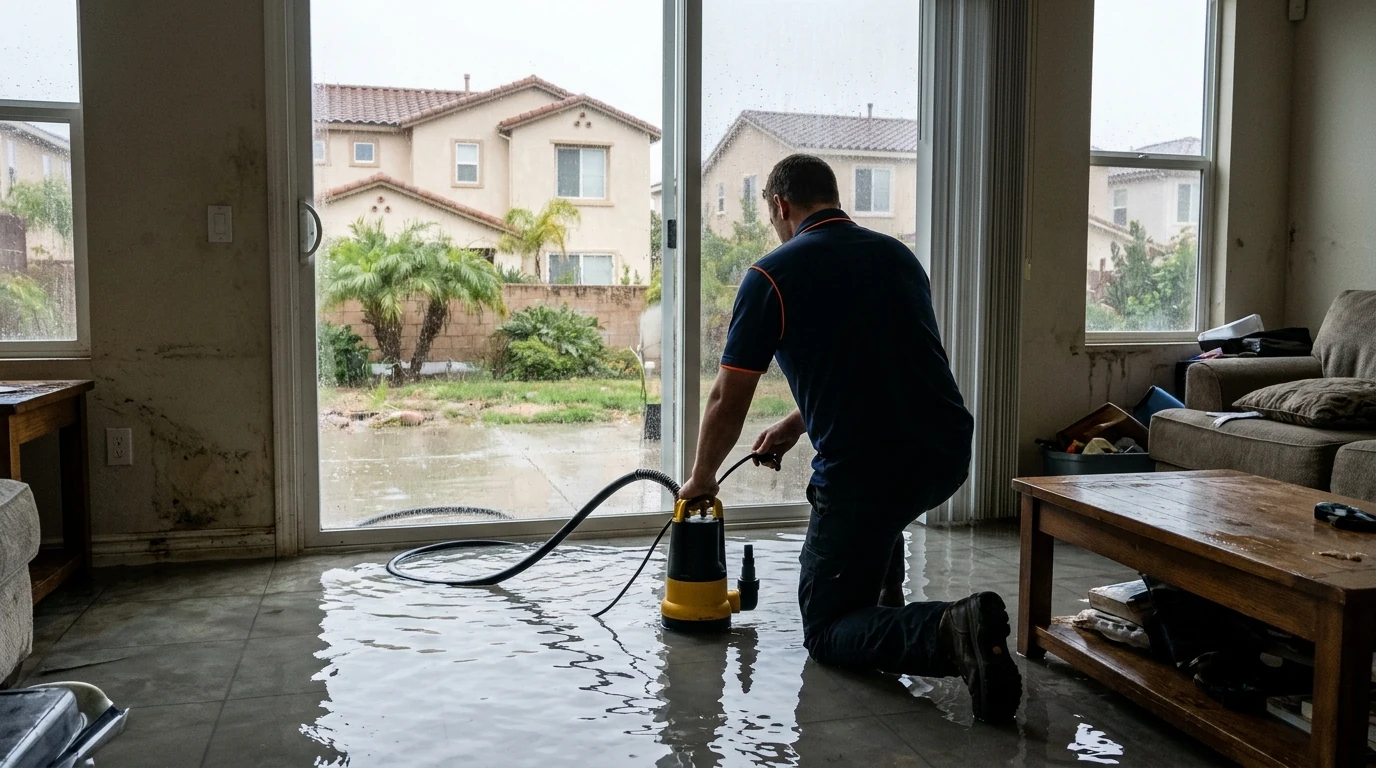
If rain is pushing under your doorframes right now, stop reading after this paragraph and start moving: shut off power to any outlet, switch, or panel that’s already wet or about to be, then get a restoration crew started on extraction before you call your insurer. Flood Fixers runs 24/7 emergency service for storm flooding across San Marcos, and the crew can be reached at (855) 204-1124.
San Marcos sits in a bowl of low lots and hillside canyons, so when an atmospheric-river storm dumps a heavy band of rain, runoff from the hills around Twin Oaks Valley and San Marcos Creek can overwhelm a yard drain or window well faster than most homeowners expect. Knowing the right order of calls, and why that order matters for your insurance claim, keeps a bad night from turning into a bad month.
What’s the right order of calls when storm water is coming into your San Marcos home?
Call for safety first, extraction second, and your insurer third, in that order. Calling out of sequence either puts you at risk or weakens your claim.
If water has reached an outlet, a power strip, or your electrical panel, don’t wade through it to reach the breaker. Call San Diego Gas & Electric or 911 if you can’t shut off power without standing in water. Once the scene is electrically safe, call a water damage restoration company for extraction and drying, not your insurance company. Standing water does more damage every hour it sits, and most homeowners’ policies require you to take reasonable steps to limit the loss. Photograph the water line and any visible entry point before extraction starts, then call your insurer once mitigation is underway so you can report what’s already being done about it.
Is storm water coming in under the door actually dangerous?
Yes. Treat any storm water that enters from outside as Category 3, also called black water, the most contaminated class defined by the ANSI/IICRC S500 standard. It earns that classification because it has already crossed yards, driveways, and street gutters, picking up fertilizer, oil residue, and whatever else sits on the ground, before it ever reaches your floor.
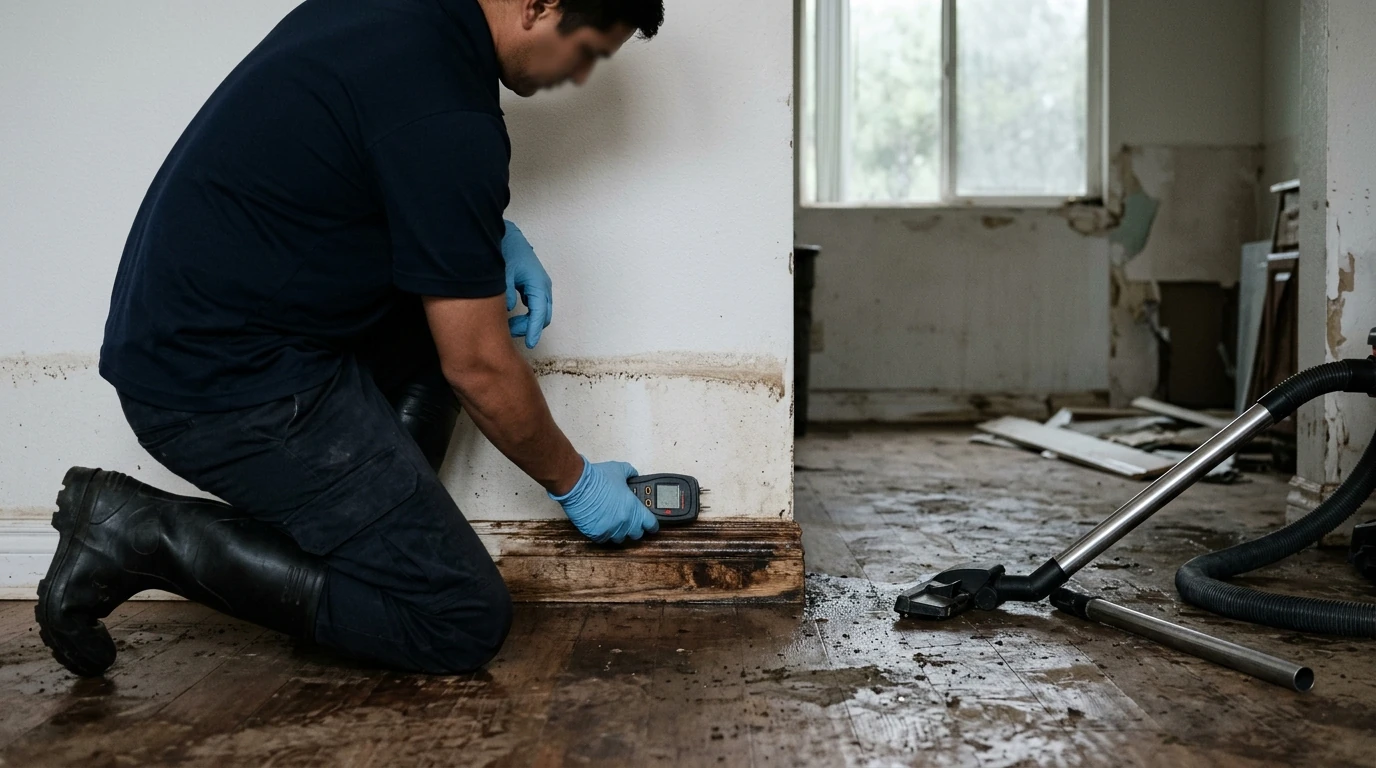
That matters for two practical reasons. First, porous materials that sat in Category 3 water, baseboards, carpet pad, the bottom few inches of drywall, usually get removed rather than dried in place. Second, anyone working in it needs gloves and boots at minimum, and the EPA’s flooded-homes cleanup guidance is a reasonable starting point if you’re doing any of the initial cleanup yourself before help arrives. For more on how this category is handled once a crew is on site, see what Category 3 water damage changes about the restoration process and the health risks of flood water generally.
What happens when you call for storm flood extraction?
A restoration crew arrives with pumps and extraction equipment, maps how far the water traveled, pulls the standing water, and sets drying equipment before leaving the first visit. Here’s roughly how that visit breaks down:
- Phone triage. You’re asked where the water entered, how deep it is, and whether any electrical systems are affected, so the crew arrives with the right pumps and extraction gear already loaded.
- Extraction. Submersible pumps clear standing water first; truck-mounted extractors pull the rest from carpet and flooring.
- Moisture mapping. Moisture meters check behind baseboards and inside wall cavities for water that migrated past the visible waterline.
- Material decisions. Anything porous that absorbed Category 3 water gets flagged for removal rather than drying in place.
- Drying setup. Air movers and LGR dehumidifiers go in, and moisture readings get logged daily until the structure hits dry standard.
For the general version of this process outside a storm event, the step-by-step water damage restoration process walks through the same phases.
Does homeowners insurance cover rain flooding in San Marcos?
Usually not on its own. Standard homeowners policies typically exclude rising surface water, which is exactly what happens when yard drains or hillside runoff overwhelm a lot during a storm, according to the Insurance Information Institute. Covering that kind of loss generally requires a separate flood policy through the National Flood Insurance Program or a private flood insurer.
That’s different from a pipe bursting inside the house, which most standard policies do cover as a sudden, accidental loss. If you’re not sure which bucket your situation falls into, the full breakdown of what homeowners insurance covers for water damage and the storm damage insurance claim checklist are both worth reading before you file. For a sense of what the mitigation and drying work itself typically runs in this area, San Marcos homeowners can check current restoration cost ranges here.
If storm water is already inside and you’re past the safety step, the next move is getting extraction started, not waiting to hear back from a claims adjuster. A flood damage restoration crew can begin pulling water and documenting the loss the same day you call, which protects both your home and your claim.
About Flood Fixers
This guide was prepared with the restoration team serving San Marcos and the surrounding San Diego County area. The company is IICRC Certified and EPA Lead-Safe Certified, runs 24/7 emergency service, and holds a 5.0 Google rating across 14 reviews. Crews handle water damage restoration, flood damage restoration, burst pipe repair, basement flooding cleanup, reconstruction, flooring installation, and general contracting for homes across San Diego, San Marcos, Escondido, Carlsbad, Vista, and nearby communities.
Need help now? Call Flood Fixers at (855) 204-1124.
Video Transcript
Rain pushing under your door in San Marcos? Here’s who to call, and in what order, before storm water turns into a bigger problem. First, safety. If water has reached an outlet or your electrical panel, don’t wade through it. Call SDG&E or 911 before touching anything. Second, call a restoration crew for extraction, not your insurer. Standing water damages more every hour, and your policy expects quick action. Storm water that crosses yards and streets is Category 3, black water. It’s contaminated, so carpet, pad, and lower drywall usually get removed. Photograph the water line and entry point before cleanup starts. That documentation helps support your claim once your insurer is called. When your contractor arrives, pumps and extractors go to work immediately, clearing standing water from floors, carpet, and crawl spaces fast. Moisture meters check behind baseboards and inside walls for hidden water, because what you see on the surface is rarely the whole story. Air movers and dehumidifiers go in next, running until every moisture reading hits dry standard, not just until things look dry. Standard homeowners insurance usually excludes rising surface water. Flood coverage through NFIP or a private insurer is typically separate from your regular policy. Don’t wait on an adjuster while water keeps spreading. Call Flood Fixers at (855) 204-1124 to schedule an assessment.