
If your roof, fence, or siding took a hit in the last storm, the single biggest mistake you can make is calling your insurance company before you’ve documented the damage. Insurers work from what you show them, not what you tell them. Before you dial, walk the property with your phone camera, note the date and time of the storm, and write down what you observe room by room. That record becomes the backbone of your claim and the difference between a smooth payout and a drawn-out dispute.
What Actually Counts as Storm Damage
Storm damage isn’t just a tree through the roof. It includes wind-driven rain that found its way past flashing, shingles lifted or cracked by gusts, gutters torn loose, fence panels blown down, and water that backed up because a storm drain couldn’t keep pace. In San Diego, a lot of storm damage shows up after the fact. Atmospheric river systems can dump an inch or more of rain in a few hours, and homes built mid-century with low-slope or flat roofs don’t always shed that volume fast enough. Water pools, finds a weak seam, and shows up as a ceiling stain two days later, long after the wind has died down.
That delay matters for your claim. Most policies require storm damage to be tied to a specific weather event, so if you notice a stain or soft spot in the days after a storm, connect it to that date explicitly in your notes and photos, not as a vague “I noticed this recently.”
Before You Call: Build Your Documentation
- Photograph everything, including the undamaged parts. Wide shots of each affected room, then close-ups of cracks, stains, buckled flooring, or missing shingles. Include a shot of the exterior from each side of the house.
- Note the date and approximate time the damage occurred or was discovered. If you can tie it to a specific storm (a named system, a reported wind event, a day with recorded rainfall), write that down too.
- List damaged belongings separately from structural damage. Furniture, electronics, and flooring are handled differently than roof or framing damage, and adjusters will ask for both.
- Pull your policy and find your deck page. Confirm your wind/hail deductible (often a percentage, not a flat dollar amount, in coastal California policies) and whether you carry separate coverage for water that enters through a storm-created opening versus general flood coverage, which most homeowner policies exclude entirely.
- Make temporary repairs only. Tarping an open roof section or boarding a broken window to stop further damage is expected and often required by your policy. Keep the receipt and photograph the tarp or board once it’s in place.
This is the point where a lot of homeowners either skip ahead and call the insurer with incomplete information, or they assume the adjuster will just “see it for themselves.” Adjusters move through a lot of claims after a regional storm event. The homeowner who hands over a clear, dated, organized record gets a faster and more accurate first offer.
What Not to Do
- Don’t throw away damaged materials before the adjuster has seen them or you’ve photographed them thoroughly. Wet drywall, ruined carpet, and broken fencing are evidence, not just mess.
- Don’t start full repairs before your claim is filed and, ideally, before an adjuster has inspected the property. Insurers can deny coverage for work they weren’t given the chance to evaluate.
- Don’t guess at cause over the phone. If you’re not certain whether a stain is from the storm or a slow plumbing leak that predates it, say so. Speculating in a recorded call can be used to question the claim later.
- Don’t accept the first verbal estimate as final without a written copy. Ask for the adjuster’s estimate in writing and compare it against at least one independent repair estimate.
- Don’t ignore a tarp or board-up deadline. Most policies include a clause requiring reasonable steps to prevent further damage. Waiting a week to cover an open roof can give an insurer grounds to deny the portion of damage caused by continued exposure.
When to Call a Professional Instead of a Handyman
A retired contractor neighbor or a handyman can patch a hole, but for anything involving water intrusion, saturated insulation, or structural framing, you want documentation that holds up to an adjuster’s scrutiny. A restoration company that handles storm damage regularly knows what moisture readings, photos, and scope documents an insurer expects, and can produce an estimate written in the same language your adjuster uses. That alignment speeds up approval and reduces back-and-forth.
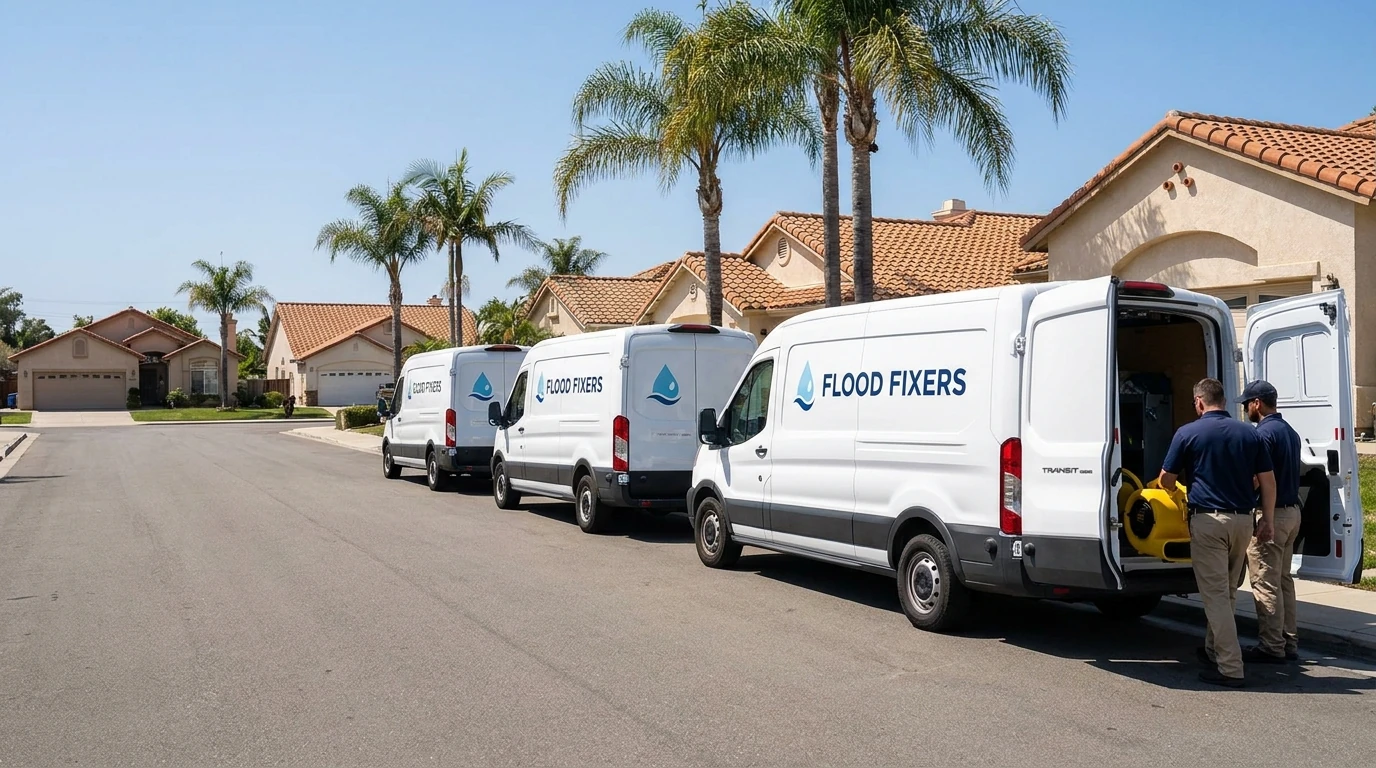
If you’re dealing with standing water in a crawlspace, a ceiling that’s sagging under saturated insulation, or exterior damage significant enough to expose the interior to weather, that’s the point to bring in a storm damage restoration team rather than attempting patchwork yourself. Flood Fixers handles storm damage restoration in San Diego and can document the loss properly while stabilizing the property, which keeps your claim and your home moving in the same direction.
The Recovery Timeline After You File
Once your claim is open, expect roughly this sequence:
- Adjuster inspection, usually scheduled within a week or two depending on how many claims the region is processing after a widespread storm.
- Scope of damage and estimate, which the insurer sends in writing. Read it against your own notes and photos. If something’s missing, roofs are a common omission when the interior damage is what’s visible, say so in writing.
- Repair authorization, where you select a contractor. You are not required to use one the insurer recommends.
- Mitigation and drying, if water was involved. Materials like drywall and subfloor that stayed wet for more than about 48 hours are at risk for mold colonization, which is a separate issue from the storm damage itself and can complicate your claim if it’s not addressed quickly.
- Final repairs and close-out, where remaining funds (recoverable depreciation, if your policy includes it) are released once the work is complete and documented.
The homeowners who come out of this process with the least friction are the ones who treated the first 24 to 48 hours as documentation time, not repair time.
If your property has storm damage right now and you’re not sure whether to call your insurer first or get a professional opinion, both can happen at once. Photograph what you can safely access, make temporary repairs to stop further damage, and call Flood Fixers at (855) 204-1124 to get an assessment started while your claim moves through your insurer. Having a documented, professional scope in hand before the adjuster visits tends to make the whole process move faster.