
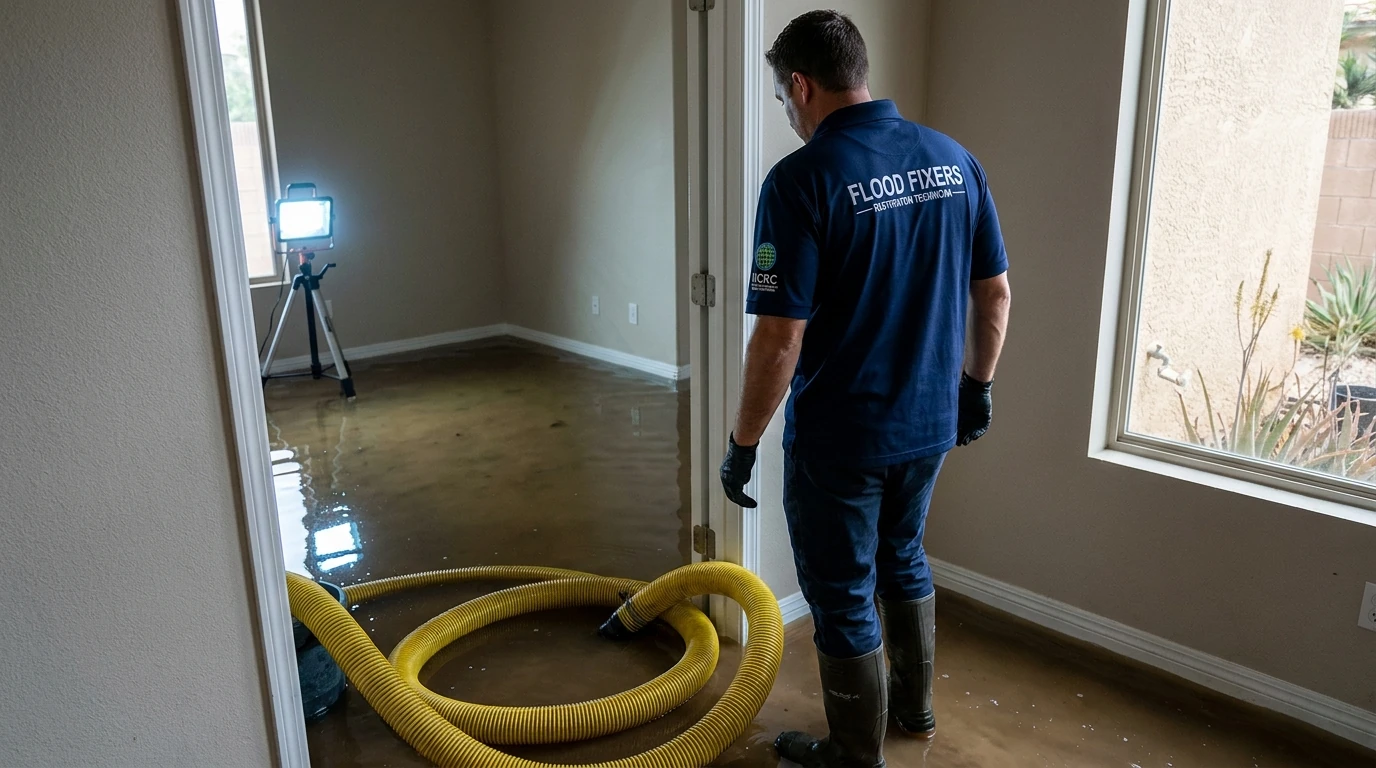
TL;DR: Yes, flood water is dangerous. It is almost always classified as Category 3 water, also called black water, meaning it contains sewage, bacteria, viruses, chemicals, and other pathogens. Direct contact can cause serious illness. You should not wade through it without proper protective gear, and DIY cleanup is risky without professional equipment and training. If your home has flooded, limit your exposure, document the damage, and call a certified restoration crew as soon as it is safe to re-enter.
You just walked into your basement and the water is up to your ankles. Or a flash flood pushed through your front door and soaked your floors. Before you grab a mop or start moving furniture, you need to know what is actually in that water. The answer is almost never good.
Is Flood Water Contaminated?
Virtually all flood water is contaminated, and most of it qualifies as Category 3 water under the IICRC S500 standard. Category 3, also called black water, is the most hazardous classification in water damage restoration. It contains one or more of the following: raw sewage, agricultural runoff, industrial chemicals, heavy metals, pesticides, and live pathogens including bacteria, viruses, and parasites.
When storm water overflows a street, it picks up everything on that surface: motor oil, fertilizer, animal waste, and whatever is flowing out of overwhelmed municipal sewer systems. When a river or creek floods, it carries sediment, debris, and contamination from miles upstream. Even water that looks relatively clear can carry invisible biological hazards.
The CDC advises avoiding contact with flood water whenever possible, and washing thoroughly with soap and clean water if contact does occur.
What Health Risks Does Flood Water Pose?
Flood water exposure can cause a range of illnesses, from skin infections to serious gastrointestinal disease. The specific risks depend on the contamination source, the duration of contact, and whether you have any open cuts or wounds.
Common health concerns from flood water contact include:
- Bacterial infections: Leptospirosis, E. coli, Salmonella, and Vibrio are all documented in flood events. Leptospirosis in particular spreads through water contaminated by animal urine and can cause kidney damage if untreated.
- Wound infections: Any open cut or abrasion exposed to flood water is at elevated risk of infection. Vibrio vulnificus, found in warm coastal water, can cause life-threatening wound infections.
- Gastrointestinal illness: Swallowing even small amounts of contaminated water can cause vomiting, diarrhea, and cramping.
- Respiratory hazards: Mold begins growing within 24 to 48 hours of a flood event. Disturbing wet materials without respiratory protection can expose you to mold spores. See our post on how quickly mold grows after water damage for the full timeline.
- Chemical exposure: Flood water in urban and suburban areas often contains gasoline, cleaning products, and pesticides from flooded garages, sheds, and storm drains.
Children, elderly adults, pregnant women, and anyone with a compromised immune system face higher risk from all of these exposures.
Is It Safe To Stay in a House After a Flood?
Staying in a flooded home is not safe until the water is removed, the structure is inspected, and the space is properly dried and disinfected. There are several hazards beyond the water itself.
Structural risk: Flood water weakens drywall, subfloors, and load-bearing elements. What looks solid may not be. Ceilings that have absorbed water can collapse.
Electrical hazard: Water and electricity are an immediately life-threatening combination. Do not enter a flooded space if the power has not been shut off at the breaker. If you are unsure whether the electrical system is safe, do not enter at all until a licensed electrician clears it.
Gas leaks: Flooding can damage gas lines and appliances. If you smell gas, leave immediately and call your utility company from outside.
Air quality: Standing water accelerates mold growth. Within 48 hours, airborne mold spore counts in a flooded interior can rise significantly. Breathing that air without an N95 respirator or better is a real risk.
For a step-by-step guide on what to do in the first 24 hours, see What To Do After a Flood in Your House.
What PPE Do You Need Around Flood Water?
If you must enter a flooded space before a restoration crew arrives, the minimum protective equipment is: rubber boots that extend above the waterline, waterproof gloves (nitrile or rubber, not fabric), an N95 respirator or better, and eye protection. If the water is deep or the contamination is severe, a Tyvek coverall adds another layer of protection.
Here is what each item protects against:
- Rubber boots: Prevent direct skin contact with contaminated water and protect against sharps hidden below the surface (broken glass, nails, debris).
- Waterproof gloves: Protect hands when moving materials or touching contaminated surfaces. Change gloves if they tear.
- N95 respirator: Filters airborne mold spores, dust, and some biological particles. Not a substitute for a full respirator in severe contamination scenarios, but a meaningful baseline.
- Eye protection: Splash protection from contaminated water. Flood water splashing into eyes is a real exposure route.
Do not wear open-toed shoes, shorts, or fabric gloves. Wash all clothing that contacts flood water separately from other laundry, in hot water.
Why Is DIY Flood Cleanup Risky?
DIY flood cleanup is risky because Category 3 water requires more than extraction and drying. It requires proper containment, antimicrobial treatment, and disposal of contaminated materials, all done in a way that protects both the occupants and the crew.
Here is where DIY attempts typically go wrong:
- Incomplete extraction: Consumer wet-vacs and mops cannot remove water from inside wall cavities, subfloor assemblies, or beneath flooring. That trapped moisture fuels mold growth for weeks.
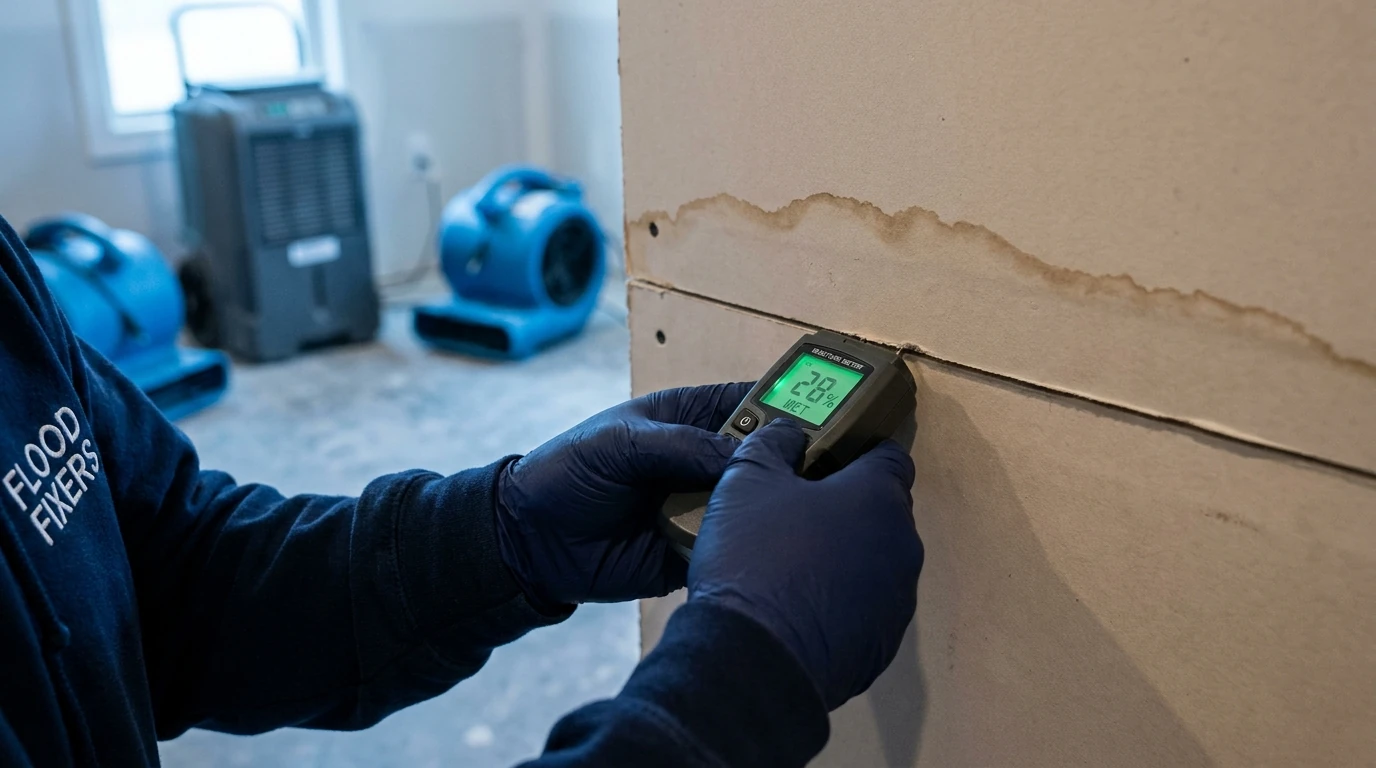
- No moisture verification: Without a calibrated moisture meter and thermal imaging, you cannot confirm a space is actually dry. Materials that feel dry to the touch can still hold enough moisture to sustain mold.
- Skipping antimicrobial treatment: Category 3 water leaves pathogens behind on every surface it touched. Cleaning with household bleach is not equivalent to professional antimicrobial application at the concentrations and dwell times required.
- Improper material disposal: Contaminated drywall, insulation, and flooring must be bagged and disposed of according to local regulations. Carrying it through a clean part of the house spreads contamination.
- No documentation for insurance: A professional restoration crew generates the moisture logs, photo documentation, and scope of work your insurance adjuster needs. DIY cleanup without that paper trail can complicate or void a claim. For more on coverage, see Does Homeowners Insurance Cover Flood Damage?
Professional crews use truck-mounted extractors, LGR dehumidifiers, and HEPA air scrubbers. They work to the IICRC S500 drying standard and document every step. That is not replicable with rental equipment and a weekend.
What Should You Do Right Now?
If your home has flooded, here is the sequence that protects both your health and your claim:
- Do not enter until the electrical system is safe. Call your utility if you are unsure.
- Document everything before touching it. Take photos and video of every affected room, every damaged item, every waterline.
- Limit exposure. Wear PPE if you must enter. Do not let children or pets into the flooded area.
- Call your insurance company to open a claim and ask about their preferred vendor process.
- Call a certified restoration company. The sooner extraction begins, the lower the total damage and the lower the mold risk.
Flood Fixers provides 24/7 emergency flood response across San Diego and surrounding communities. If you are looking at standing water right now, call (855) 204-1124 to get a crew dispatched. For flood damage restoration and basement flooding cleanup, the team is IICRC Certified and EPA Lead-Safe Certified.
About Flood Fixers
Flood Fixers is an IICRC Certified, EPA Lead-Safe Certified restoration company serving San Diego, CA and surrounding communities including Chula Vista, Oceanside, Escondido, Carlsbad, and El Cajon. The company provides 24/7 emergency response for flood damage restoration, water damage restoration, burst pipe cleanup, and basement flooding cleanup. Flood Fixers is licensed and insured, and handles insurance documentation from first call through final scope.