
TL;DR: After a flood, your first moves are safety (cut power to flooded areas, don’t enter if gas is leaking), then documentation (photos and video before touching anything), then stopping the water source if it’s still flowing. Mold can begin growing within 24 to 48 hours, so the clock starts the moment the water stops rising. If standing water covers more than a small area or came from outside your home, call a flood damage professional the same day.
You came home to water on the floor, or you woke up to it. Maybe it’s a few inches in the basement, maybe it’s worse. Either way, the decisions you make in the next few hours determine how much damage you end up with, whether your insurance claim holds up, and whether you’re dealing with a mold problem six weeks from now. Here’s what to do, in order.
Is It Safe to Enter the Flooded Area?
Do not walk into a flooded room until you know the power is off. Water and live electricity together can kill you. If your electrical panel is in the basement and the basement is flooded, call your utility company to cut power at the meter before you go in. If you smell gas, leave the house immediately, leave the door open behind you, and call your gas company from outside.
Floodwater from outside your home, a sewage backup, or an overflowing toilet is almost always Category 3 water, also called black water. The CDC is direct about this: floodwater can carry sewage, chemicals, and pathogens. Don’t wade through it without rubber boots and waterproof gloves at minimum. Keep children and pets out entirely.
Clean water from a burst supply line or appliance is safer to be around, but it degrades fast once it sits. After 24 hours, even clean-source water can become contaminated from the surfaces it’s touched.
How Do You Document Flood Damage for Insurance?
Before you move a single piece of furniture or pull up any wet carpet, document everything on video and in photos. Walk every affected room. Shoot wide angles showing the full scope, then close-ups of specific damage: waterlines on walls, soaked flooring, damaged appliances, ruined contents.
This documentation is the foundation of your insurance claim. Adjusters work from evidence. If you remove damaged items before photographing them, you may lose the ability to claim them. A few specific things to capture:
- The waterline height on walls (measure it and say the number out loud on video)
- Affected flooring, baseboards, and lower cabinets
- Any visible structural damage
- Serial numbers and model numbers on damaged appliances
- The source of the flooding, if visible (a cracked pipe, a failed sump pump, water coming under a door)
If you have a homeowners policy, call your insurer to open a claim as soon as you’ve documented the scene. Standard homeowners policies typically cover sudden, accidental water damage from internal sources but do NOT cover flooding from outside the home. That requires a separate flood insurance policy through the National Flood Insurance Program (NFIP). If you’re unsure what you have, pull your declarations page now. Our post on does homeowners insurance cover flood damage breaks down the difference in plain terms.
How Do You Stop the Water and Start Cleanup?
If the source is still flowing, stop it first. A burst pipe means shutting off the main water supply valve. An appliance leak means pulling the appliance away from the wall and closing the supply valve behind it. If the flooding came from outside, there’s nothing to shut off, but you can sandbag doorways and redirect flow away from the foundation if it’s still raining.
Once the source is stopped, here’s the order of operations:
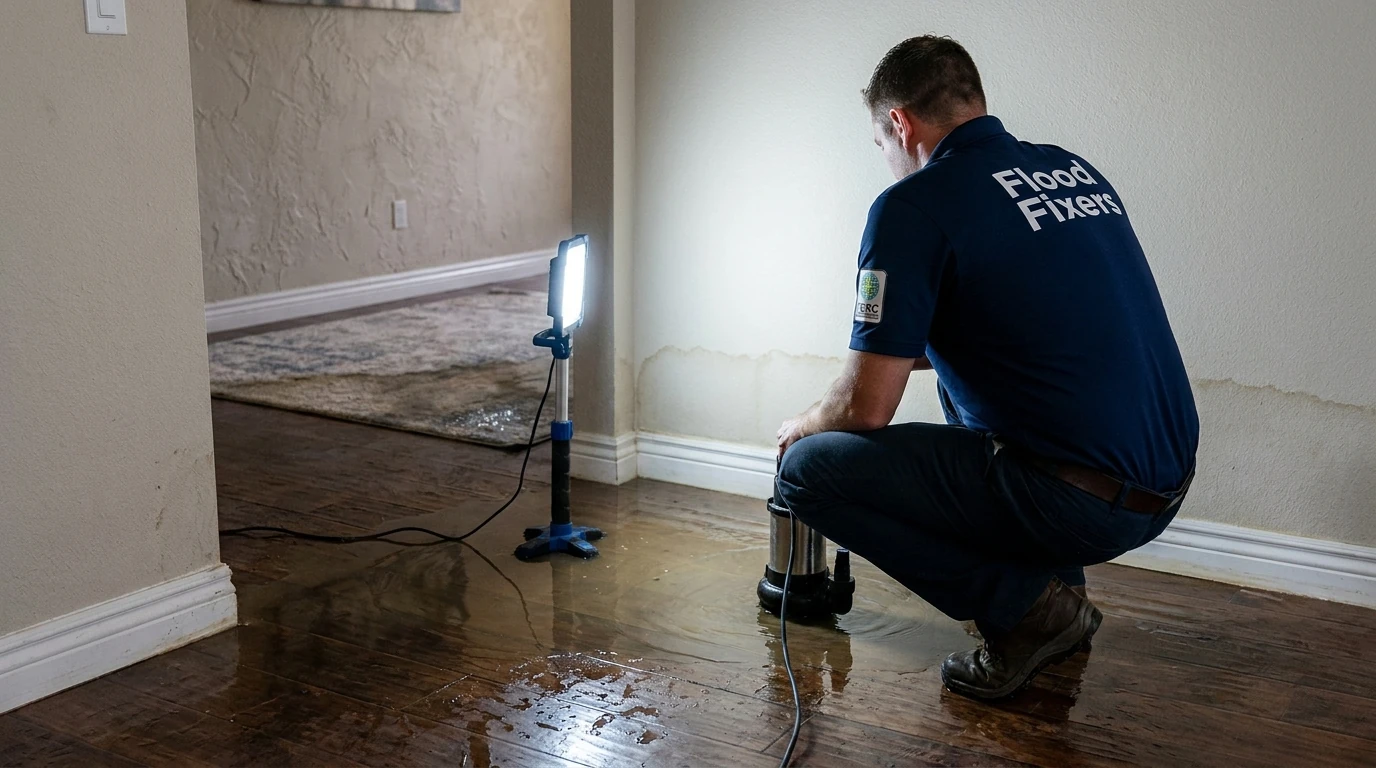
- Remove standing water first. A wet/dry shop vac handles small volumes. A submersible pump handles anything more than an inch or two. Get the bulk water out as fast as possible.
- Pull up wet materials. Saturated carpet and pad hold moisture for days and accelerate mold growth. Cut it out and remove it. Wet drywall below the waterline should be cut out as well, typically 12 inches above the visible waterline to account for wicking.
- Move wet contents out of the space. Furniture, boxes, anything that can be moved. Wet items sitting on wet floors make everything worse.
- Set up airflow. Open windows if outdoor humidity is lower than indoor humidity. Run fans. If you have a dehumidifier, run it continuously and empty it often.
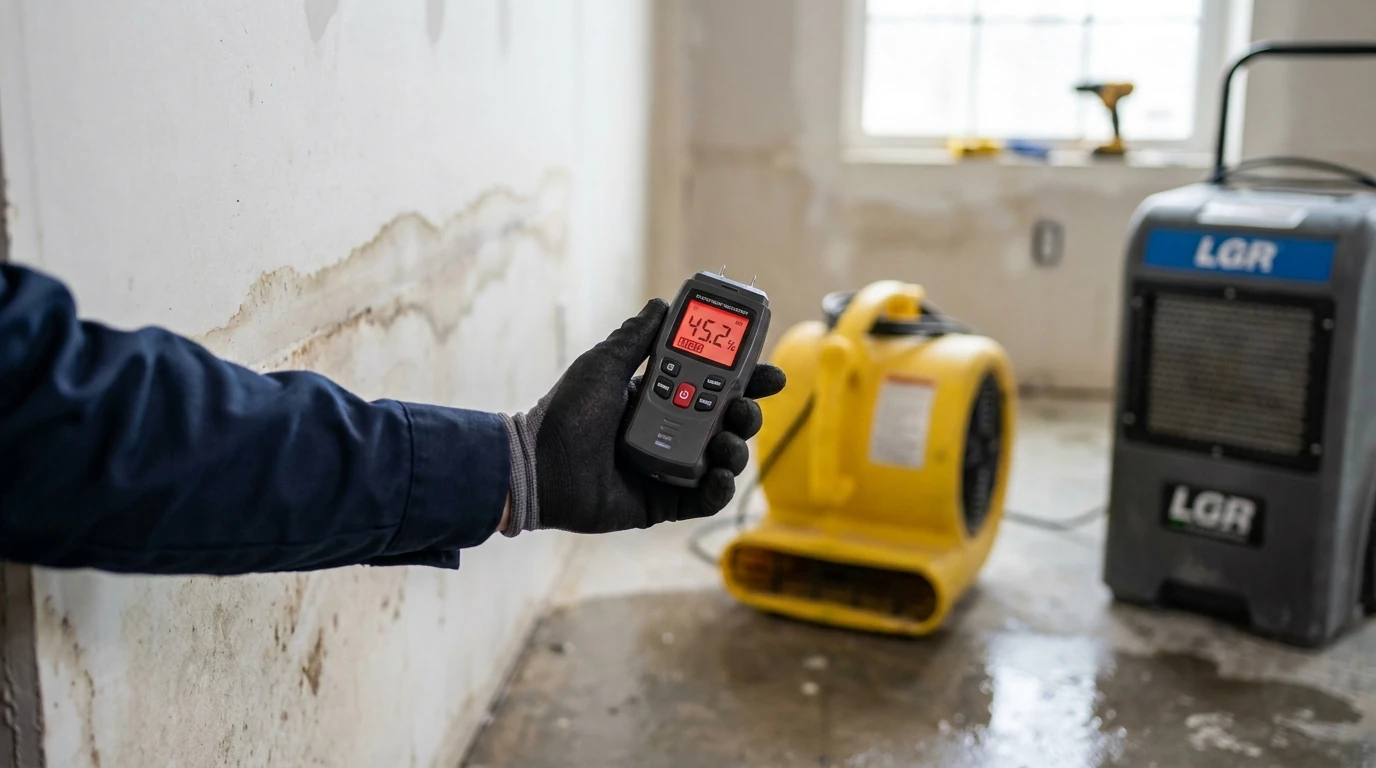
The goal of these steps is to get materials dry within 24 to 48 hours of the flooding event. The IICRC S500 standard for water damage restoration uses this window as the critical threshold for preventing secondary microbial growth. After 48 hours, mold colonies can establish on wet drywall, wood framing, and carpet backing. For more on that timeline, see our post on how quickly mold grows after water damage.
When Should You Call a Flood Damage Professional?
Call a professional the same day if any of the following are true:
- Standing water is more than an inch deep or covers a large area
- The water came from outside your home, a sewer line, or a toilet overflow (Category 3)
- The flooding affected a basement, crawl space, or any area with limited airflow
- You can see water behind walls or under flooring (bubbling paint, soft subfloor)
- You don’t have the equipment to dry the space within 48 hours
- Your insurance company requires a professional damage assessment
DIY cleanup works for small, clean-water events in well-ventilated spaces. It does not work reliably for anything larger, and the cost of getting it wrong, a mold remediation job weeks later, typically far exceeds the cost of professional drying equipment deployed immediately.
A certified restoration crew brings truck-mounted or portable extractors, LGR (low-grain refrigerant) dehumidifiers, and high-velocity air movers. They also document the drying process with daily moisture readings, which your insurance adjuster will want to see. That documentation is something a shop vac and a box fan cannot produce.
For basement flooding cleanup specifically, professional extraction matters even more because basements have poor natural airflow and high ambient humidity, conditions that accelerate mold growth significantly.
What Happens If You Wait?
Waiting even 12 to 24 hours beyond the initial event changes the outcome. Wet drywall that could have been dried in place becomes drywall that needs to be demolished. Wet wood framing that dries within 48 hours is structurally sound. Wood framing that stays wet for five days begins to swell, warp, and support mold growth.
The full untreated water damage timeline runs from cosmetic staining in the first few hours to structural compromise and active mold colonies within days. The 24-hour window is not marketing language. It reflects how fast building materials absorb and redistribute moisture.
If you’re reading this a day or two after the flooding happened, don’t assume the window has closed. Get drying equipment running now and get a professional assessment to find out what’s salvageable. Late action is better than no action.
Flood Fixers responds 24/7 to flood and water damage calls across San Diego County. If you need an assessment or immediate extraction, call (855) 204-1124. Our IICRC-certified, EPA Lead-Safe certified crews handle flood damage restoration and document every step for your insurance file.
About Flood Fixers
Flood Fixers is an IICRC Certified, EPA Lead-Safe Certified restoration company serving San Diego, CA and surrounding communities including Chula Vista, Oceanside, Escondido, Carlsbad, El Cajon, and more. The company is licensed and insured, available 24/7 for emergency response, and handles flood damage restoration, water damage restoration, burst pipe repair, basement flooding cleanup, reconstruction, and general contracting. Every job is documented with moisture readings and a written scope before work begins.