TL;DR: Untreated water damage gets significantly worse with every passing day. Mold colonies can establish within 24 to 48 hours. By the end of the first week, drywall and insulation begin to deteriorate. After two to four weeks, structural framing, subfloors, and electrical systems can be compromised. Most homeowners insurance policies also reduce or deny claims when damage is left unmitigated, so delay doesn’t just cost health and structure, it costs coverage.
You found water in your home and you’re weighing whether to deal with it now or wait until the weekend. Maybe it looks like it’s drying on its own. Maybe you’re hoping the damage is minor. This post lays out exactly what happens inside your walls, floors, and ceiling during each phase of untreated water damage, so you can make that call with real information.
How Quickly Does Untreated Water Damage Get Dangerous?
Untreated water damage becomes a health and structural risk within 24 to 48 hours. That window is not a rough estimate, it’s the threshold the EPA identifies for mold growth in wet building materials. Once mold establishes, it spreads into adjacent materials and air systems, and remediation becomes a separate, more expensive project on top of the original water damage.
The speed of escalation depends on the water category. Category 1 water (clean supply line, fresh appliance leak) is the slowest to become dangerous. Category 2 water (washing machine discharge, dishwasher overflow) carries microorganisms that accelerate biological growth. Category 3 water, also called black water, includes sewage backups and floodwater, it is contaminated from the moment of contact and every hour of exposure increases health risk.
What Happens in the First 24 to 48 Hours?
In the first 24 hours, water migrates further than it looks. Drywall wicks moisture upward and laterally. Insulation behind walls absorbs water and holds it against framing. Hardwood floors begin to cup. Subfloor panels swell at the seams. None of this is visible from the surface yet, which is why homeowners consistently underestimate the spread.
By 24 to 48 hours, mold spores, which are present in virtually every indoor environment, have the moisture they need to germinate. The IICRC S500 standard, the industry benchmark for water damage restoration, classifies materials by how quickly they absorb and release moisture. Drywall (gypsum board) is a Class 2 material: it absorbs water slowly but releases it slowly too, meaning it stays wet long enough to support mold growth even after the surface feels dry to the touch.
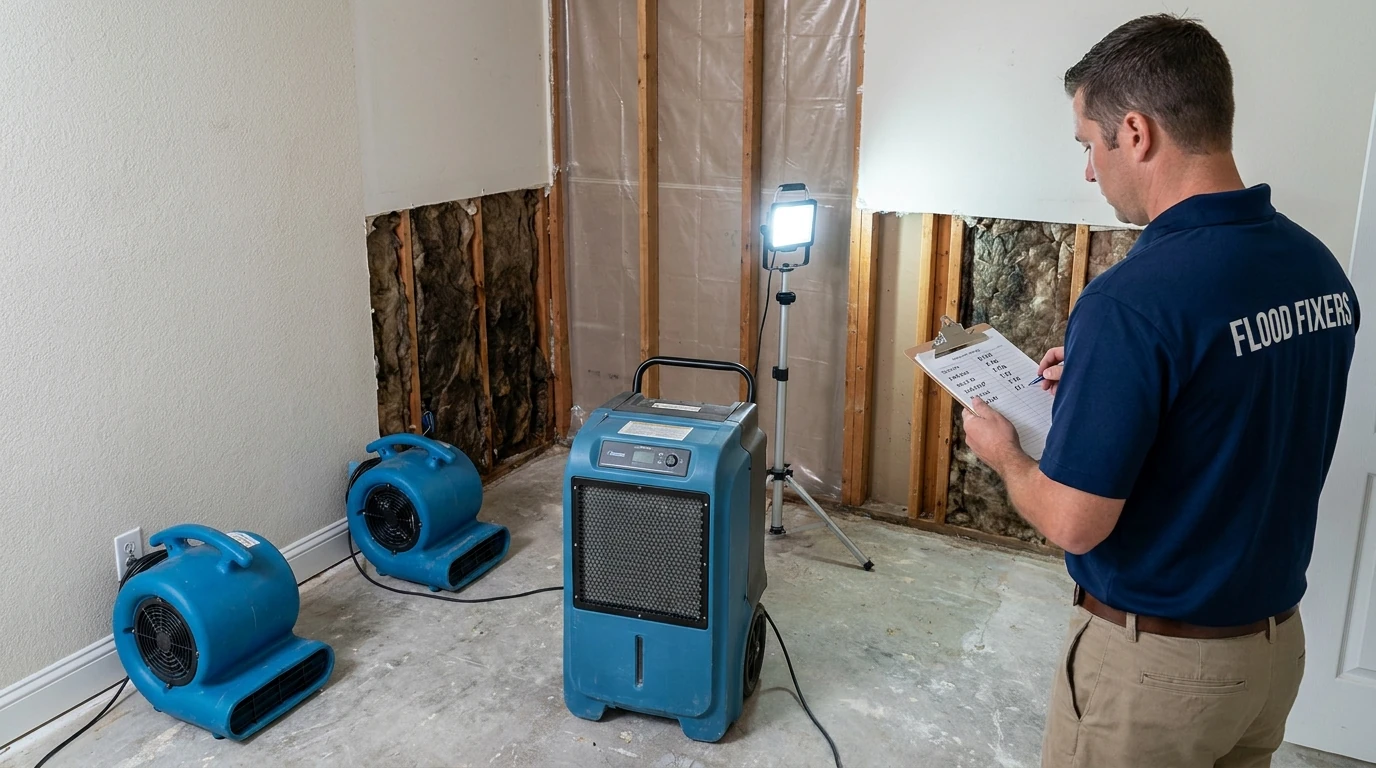
This is also the window where professional water damage restoration is most cost-effective. Extraction, drying, and documentation at this stage typically prevents mold remediation, structural repairs, and content replacement from being added to the scope.
What Happens Between 48 Hours and One Week?
Between 48 hours and 7 days, the damage shifts from wet materials to compromised materials. Drywall that has been saturated for more than 48 to 72 hours typically cannot be dried in place, it must be removed. The paper facing delaminates, the gypsum core softens, and the surface becomes a substrate for mold that will continue growing even after the room dries out.
Insulation tells a similar story. Fiberglass batt insulation loses its R-value when wet and does not recover it fully after drying. Cellulose insulation compacts and retains moisture for weeks. Both become mold reservoirs behind walls that look fine from the living side.
Hardwood and engineered wood flooring that has been wet for more than 48 to 72 hours will almost certainly require replacement rather than drying and refinishing. The cost difference is significant: professional structural drying of hardwood floors runs roughly $1.50 to $4.00 per square foot; replacement runs $8 to $20 per square foot installed, depending on species and finish.
For basement water events, this phase is especially damaging. Concrete block and poured concrete walls absorb water through their full thickness, and the moisture migrates into the slab and any wood framing sitting on it. If you’ve had water in your basement, the post 8 Ways To Prevent Basement Flooding This Season covers the structural vulnerabilities that make basements particularly susceptible to repeat events.
What Happens After One Week?
After 7 days of untreated water damage, you are likely dealing with structural compromise in addition to mold. Wood framing that stays wet for more than a week begins to lose compressive strength. Subfloor panels (typically OSB or plywood) swell, delaminate, and eventually rot. In pier-and-beam construction, floor joists can begin to show visible deflection.
Electrical systems are a separate concern. Water that has reached wall cavities containing wiring, outlet boxes, or panel components creates a shock and fire risk that persists even after the area dries. Wet insulation around wiring holds moisture against the jacket long after the surrounding air has dried. An electrician should inspect any circuit that was submerged or in a wet wall cavity, this is not a restoration-only decision.
Mold at this stage has typically moved beyond surface growth into the structural cavity. Visible mold on drywall or framing is a sign that spore counts in the air have already elevated. The EPA recommends that mold patches larger than 10 square feet be handled by trained professionals, and after a week of untreated water damage, that threshold is frequently exceeded.
How Does Delayed Mitigation Affect Your Insurance Claim?
Delayed mitigation is one of the most common reasons insurance claims are reduced or denied. Standard homeowners policies include a duty-to-mitigate clause: the policyholder is required to take reasonable steps to prevent further damage after a covered loss. If an adjuster determines that damage worsened because you waited, the insurer can attribute the additional damage to your inaction rather than the original event, and exclude it from the payout.
In practice, this means a burst pipe that causes $8,000 in damage on day one can become a $22,000 loss by day ten, and the insurer may only pay the $8,000 it would have cost to remediate immediately. The remaining $14,000 becomes your responsibility.
Documentation matters here. If you called a restoration company promptly and they couldn’t begin work for 48 hours due to scheduling, that’s different from a homeowner who waited two weeks. Timestamped photos, contractor estimates, and written communication all support your claim timeline. For a deeper look at how policies handle water events, the post Does Homeowners Insurance Cover Water Damage? breaks down what’s typically covered and what’s not.
What Should You Do Right Now?
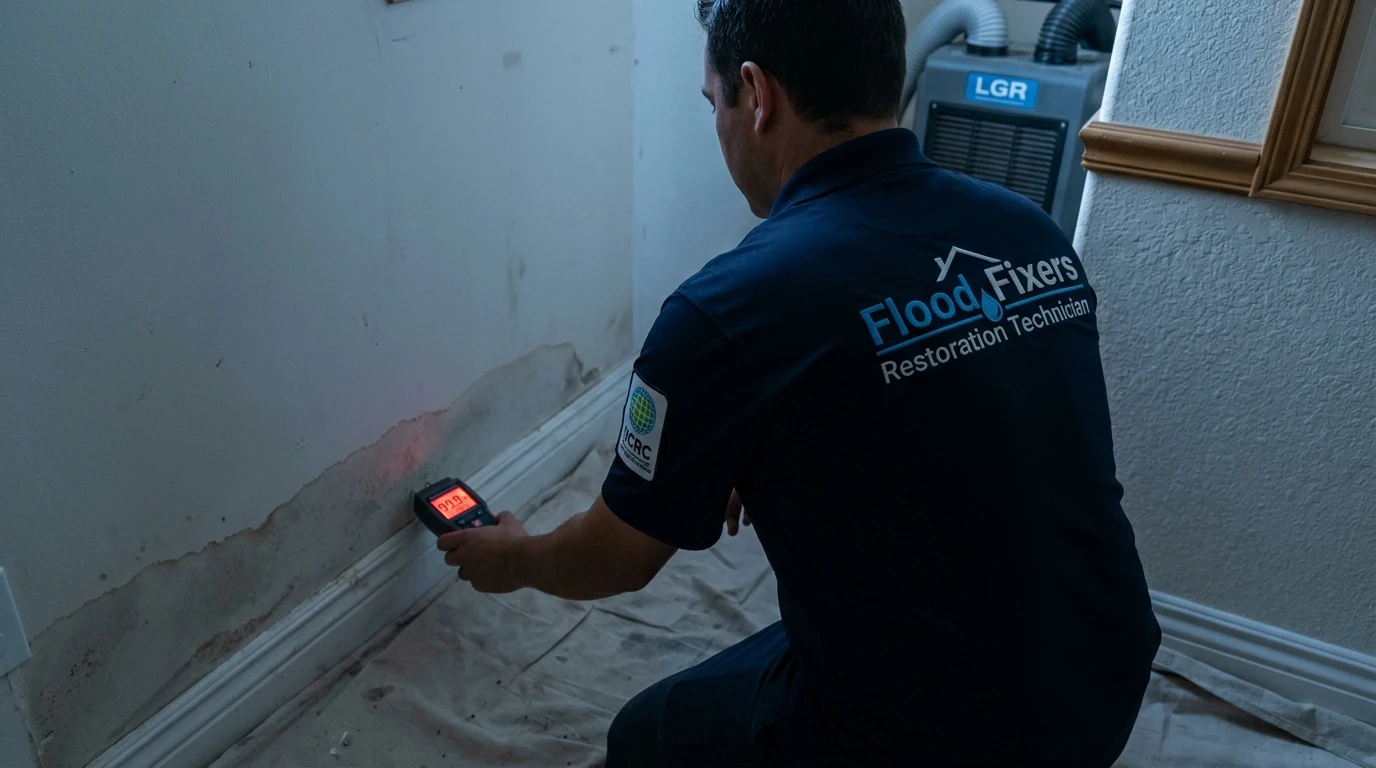
If the water event happened within the last 48 hours, extraction and structural drying can still prevent mold and most structural damage. The steps are: stop the water source, document everything with photos and video before touching anything, extract standing water, and get a moisture assessment from an IICRC-certified technician who can read what’s happening inside the walls, not just on the surface.
If it’s been longer than 48 hours, the scope has likely expanded. A professional assessment will tell you which materials are salvageable and which need to come out. That assessment also creates the documentation your insurance carrier needs to process the claim accurately.
Flood Fixers provides 24/7 emergency water damage response and is IICRC Certified and EPA Lead-Safe Certified. To schedule a moisture assessment or get a written scope for an active loss, call (855) 204-1124.
About Flood Fixers
Flood Fixers is an IICRC Certified and EPA Lead-Safe Certified water damage restoration company serving San Diego, CA and surrounding communities including Chula Vista, Oceanside, Escondido, Carlsbad, and El Cajon. Their licensed and insured crews handle water damage extraction, structural drying, basement flooding cleanup, and full reconstruction. Flood Fixers operates 24/7 emergency service for active water losses across the San Diego region.