Large Loss and Catastrophic Response in San Diego
24/7 large loss and catastrophic response in San Diego and surrounding areas. IICRC-certified, insurance billing accepted. Call (855) 204-1124.
A fire that takes out three floors of a mixed-use building, a burst main that floods an entire parking structure, a hotel with fifty rooms affected by a roof failure during a storm: these losses do not get handled by a two-person crew with a few air movers. Large loss and catastrophic response is a different scale of operation, built around rapid mobilization, multi-trade coordination, and documentation detailed enough to satisfy large loss adjusters reviewing a claim that could run into seven figures.
What large loss and catastrophic response actually involves
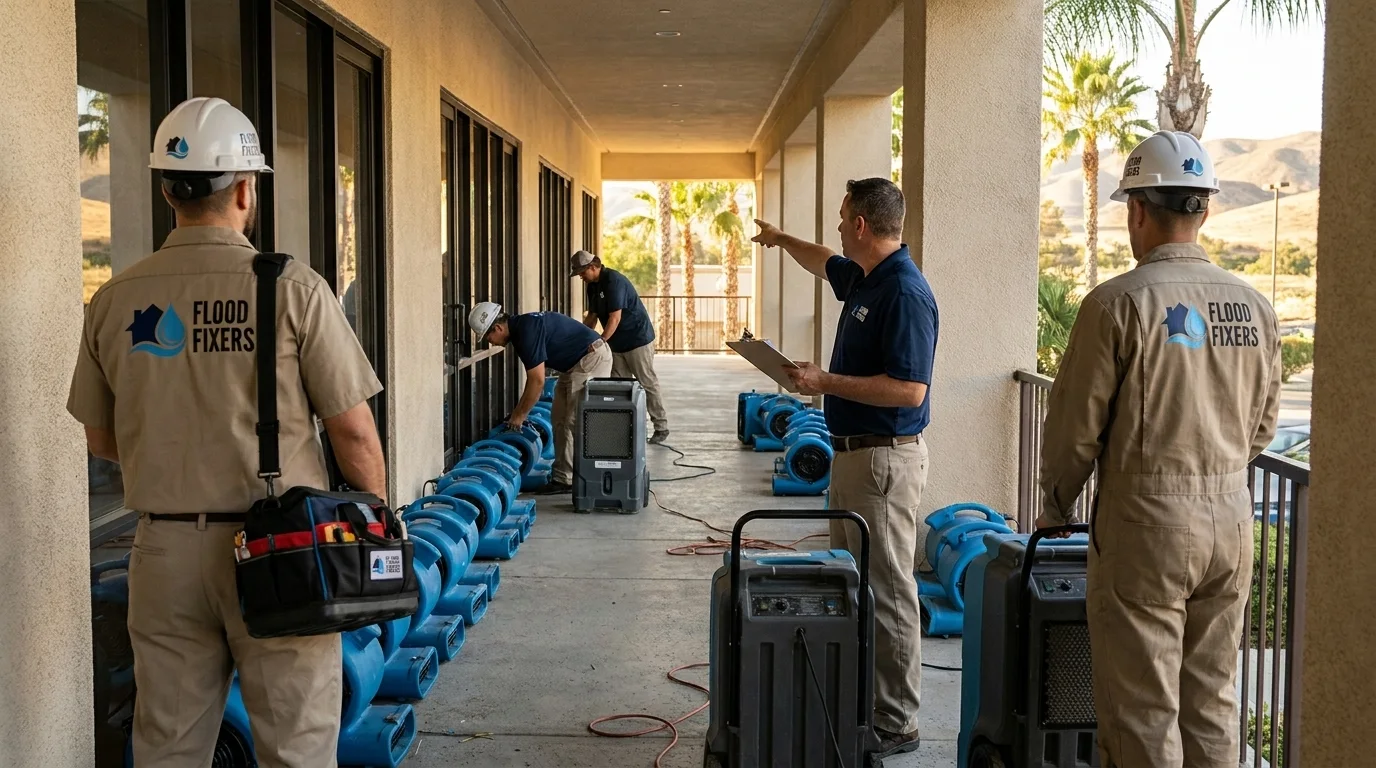
A large loss is generally defined by scale, not just severity: multiple units or floors affected, structural systems compromised, business operations interrupted, or a claim value that pushes well past a typical residential job. Think apartment complexes, hospitals, schools, hotels, retail centers, and industrial buildings. The work itself still includes extraction, drying, demolition, and reconstruction, but it happens across tens of thousands of square feet at once, with multiple crews running in parallel, generators and desiccant units staged by the truckload, and a project manager tracking moisture logs across dozens or hundreds of monitoring points instead of three or four rooms. Timelines stretch from days into weeks or months depending on the extent of structural drying and the reconstruction scope that follows.
Our process
- Rapid loss assessment and mobilization. Within hours of the call, a team walks the property to establish the scope, identify life-safety hazards, and determine how many crews and how much equipment the loss requires.
- Structural triage and multi-trade coordination. Electrical, plumbing, and structural trades get looped in early so water extraction and demolition don’t stall waiting on a disconnect or a shoring decision.
- Large-scale drying and monitoring. Hundreds of moisture points get logged with psychrometric readings tracked daily, because a building this size can have pockets of saturation that stay hidden for weeks without disciplined monitoring.
- Adjuster and stakeholder coordination. Daily or weekly reporting goes out to large loss adjusters, property managers, and sometimes legal counsel, with photo documentation and Xactimate-based estimates that hold up under scrutiny.
- Phased reconstruction and reoccupancy. Sections of the building get handed back as they clear drying and inspection, so tenants or operations can return in stages instead of waiting for the entire project to finish.
What separates a good large loss response from a bad one
The most common failure on a catastrophic loss is under-resourcing: a contractor who treats it like a big residential job and shows up with one crew and a trailer of equipment instead of the fleet a 50,000-square-foot loss actually needs. That shortfall shows up as secondary damage, mold colonization in sections that should have dried in week one, and a claim timeline that drags for months longer than it should. Large loss adjusters are looking for consistent, defensible documentation: moisture logs that don’t have gaps, photos tied to specific rooms and dates, and an estimate that matches what was actually done. They’re also watching for scope creep that isn’t backed by evidence, and for contractors who can’t produce a clear chain of custody on equipment placement and removal. A strong response treats documentation as part of the restoration work itself, not an afterthought, and keeps the client, the adjuster, and any property management team updated on the same schedule.
What does large loss and catastrophic response cost?
Costs on a catastrophic loss scale directly with square footage, number of affected units, and how much structural and contents work is involved, so there’s no single number that applies across property types. Every loss gets a written scope before work begins, built from the actual walk-through and documented conditions, not a rough estimate. Commercial property insurance typically covers large loss restoration when the damage results from a covered peril, though business interruption coverage and the specific policy limits vary enough that a careful review of the policy is part of the early work.
| Scenario | Typical range |
|---|---|
| Single-floor commercial water loss, ~10,000 sq ft | $50,000 - $150,000 |
| Multi-unit apartment building, fire with contents loss | $400,000 - $1,500,000 |
| Hotel flood affecting multiple floors | $250,000 - $750,000 |
| Mixed-use structure fire with partial structural loss | $150,000 - $600,000 |
| Catastrophic storm damage across several buildings | $300,000 - $1,000,000+ |
Seasonal & regional considerations
San Diego’s large loss events tend to cluster around two patterns: wildfire-driven losses during Santa Ana wind season in the fall, when embers and smoke can affect commercial properties well outside the direct fire line, and winter atmospheric river storms that overwhelm aging stormwater systems in older commercial corridors and push water into below-grade parking and mechanical rooms. A lot of the region’s larger commercial and multi-family stock dates to construction booms from the 1970s through the 1990s, which means plumbing and roofing systems are old enough that a single failure can cascade across multiple units before anyone notices.
Service area
Flood Fixers responds to large loss and catastrophic events throughout San Diego and the surrounding region, from downtown high-rises and coastal hotels to commercial and multi-family properties in the inland and North County communities. Scope and mobilization details are the same regardless of location: it’s a matter of how far the equipment and crews have to travel.
If a property is facing a loss large enough to involve multiple crews, a general contractor, and an insurance adjuster who needs real documentation, call Flood Fixers at (855) 204-1124 to start the loss assessment and get a mobilization plan in motion.
Frequently Asked Questions
Does commercial property insurance cover large loss and catastrophic restoration?
How is a large loss claim different from a standard residential claim?
How many crews does a catastrophic loss actually require?
What happens to tenants or operations while a large loss property is being restored?
How long does structural drying take on a large or multi-floor loss?
Looking for the best large loss and catastrophic response company in San Diego?
Flood Fixers provides large loss and catastrophic response in San Diego, CA and the surrounding area. Customers rate us 5.0 out of 5 stars across 9 Google reviews. We answer calls 24/7 — call (855) 204-1124 for immediate help.
Need Large Loss and Catastrophic Response now?
We respond 24/7 across San Diego and surrounding CA cities.