TL;DR: Commercial water damage restoration is the process of extracting water, drying structure and contents, and documenting the loss for a commercial insurance carrier, all while keeping as much of a multi-tenant building operating as possible. In San Diego, that usually means phased drying with containment barriers, after-hours coordination with tenants, and a rebuild scope handed off to the same crew that dried the space, since most commercial losses end in reconstruction, not just drying equipment.
If you manage a building in Kearny Mesa or Mission Valley and just got the call that a supply line let go in a second-floor suite overnight, your first problem isn’t the water itself. It’s that three other tenants share that roof, one of them opens at 7 a.m., and your insurance carrier is going to want a documented, defensible scope before they release a dime. A residential-focused crew will dry the room. A commercial-grade response accounts for the shutoff valve serving five units, the lease that says you owe the downstairs tenant a rent credit for lost square footage, and the adjuster who wasn’t there to see how deep the water actually got.
What Does Commercial Water Damage Restoration Actually Involve?
Commercial water damage restoration means extracting standing water, drying the structure to a verified dry standard, and documenting the loss in a format a commercial carrier will actually approve, then handing off to rebuild if materials were removed. It follows the same IICRC S500 standard as residential work, but at a different scale and with a different audience for the paperwork.
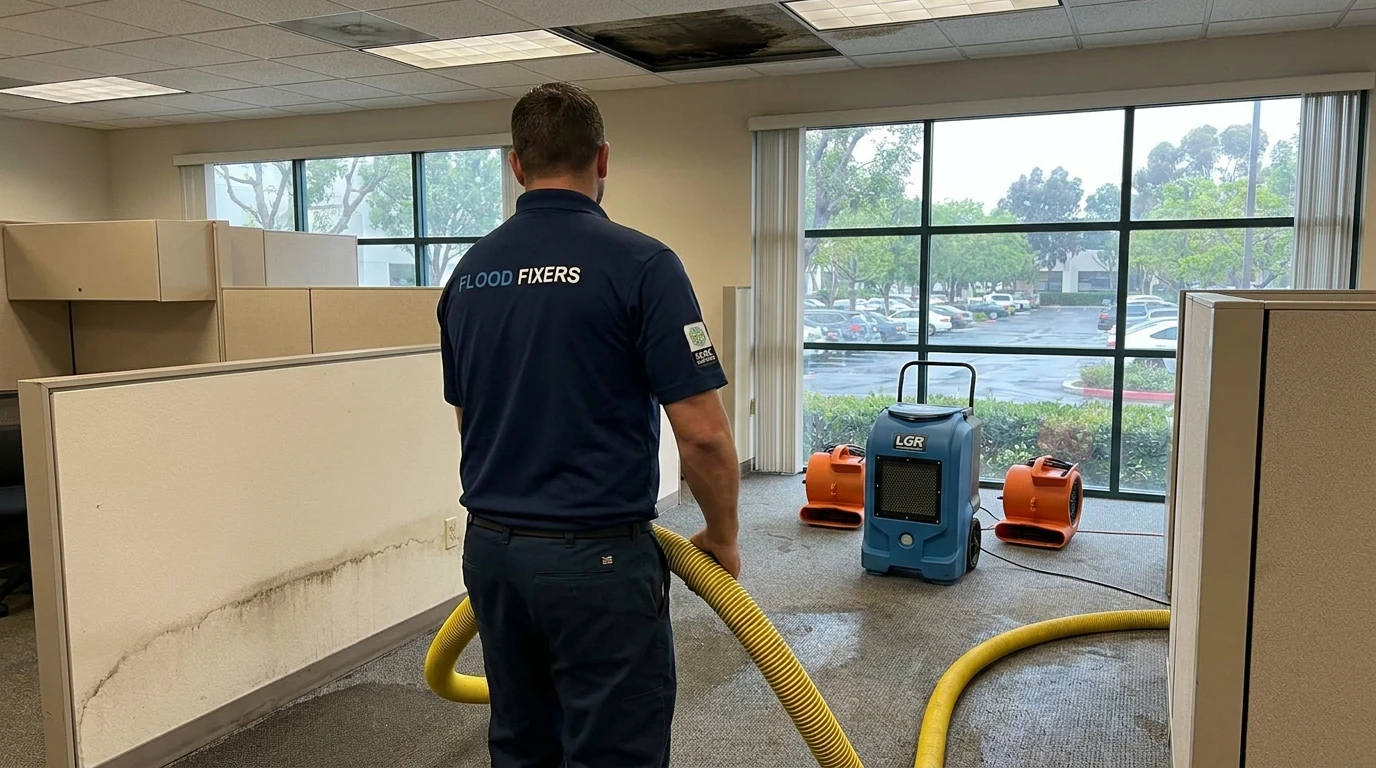
The scope typically breaks into three phases. First, emergency mitigation: shutting off the source, extracting water with truck-mounted or portable extractors, and setting containment so drying doesn’t shut down the whole floor. Second, structural drying with commercial-grade LGR dehumidifiers and air movers, monitored daily with moisture meters and logged for the claim file. Third, if drywall, flooring, or ceiling tile was removed, reconstruction to bring the space back to pre-loss condition, including code-required upgrades where the building department requires them.
A commercial job also has a stakeholder list a residential job doesn’t: the property owner, the property management company, one or more tenants, a commercial carrier, and sometimes a general contractor already under contract for other building work. The restoration company’s job is to keep all of those parties working off the same documentation.
How Is a Commercial Loss Different From a Residential Loss?
A commercial loss usually involves shared systems, after-hours coordination, and a much higher documentation bar than a single-family home claim. Shutting off water in a multi-tenant building often means isolating one branch line, not the whole property, which requires knowing the building’s plumbing layout, not just finding the nearest valve.
After-hours response matters more here too. A restaurant that floods at 11 p.m. needs mitigation started before the morning prep crew arrives, not after. Flood Fixers operates on 24/7 emergency service for exactly this reason: water damage in a commercial space compounds every hour it sits, and a delayed start can turn a one-day dry-out into a week of lost revenue for the tenant.
Documentation is the other big difference. Commercial carriers expect a formal scope of work, photo and moisture logs tied to specific dates and readings, and often a Xactimate-style estimate broken out by trade. A homeowner’s adjuster might accept a phone call and a few photos. A commercial adjuster wants a paper trail that holds up if the claim gets disputed or if a tenant’s business-interruption coverage is also in play.
How Does the Restoration Process Change by Property Type?
The drying and containment strategy shifts depending on what kind of commercial space you’re managing. Office buildings, restaurants, retail storefronts, warehouses, and multifamily properties each carry different risks and different priorities for staying open.
Office buildings. The biggest concern is usually raised flooring, server rooms, and carpet tile over concrete slab. Water under raised access flooring can sit for days if nobody checks, so early moisture mapping under the floor system is critical. Drying often happens overnight and on weekends to avoid disrupting tenants.
Restaurants. A leak near a walk-in cooler, dish pit, or grease trap line brings health-code exposure on top of the water problem. Restaurant floors and walls near food prep areas may need to meet a higher sanitation standard before the health department signs off on reopening, which is a separate step from structural drying.
Retail storefronts. Inventory loss is usually the bigger dollar figure than the structure itself. Fast triage of merchandise, pallets, and fixtures, plus a documented inventory of what’s salvageable versus a total loss, matters as much as drying the slab.
Warehouses and industrial space. Large open floor plans mean water travels farther before anyone notices. Racking systems, pallets, and stored goods need to be moved or assessed before drying equipment can be placed effectively, and commercial-capacity dehumidifiers are sized for cubic footage most residential equipment can’t handle.
Multifamily properties. A leak in one unit almost always affects the unit below it, which turns one water event into two or three tenant relationships to manage at once, plus separate lease and habitability questions for each affected unit.
If your property doesn’t fit neatly into one category, the underlying principle stays the same: isolate the source, contain the wet area, and keep the rest of the building’s operations running wherever that’s physically possible.
What Should Property Managers Document for the Insurance Carrier?
The documentation that protects a commercial claim starts before the restoration crew even arrives, with photos of the source and the affected area taken the moment it’s discovered. Time-stamped photos of standing water, the failed component (a burst supply line, a rooftop AC condensate overflow, a slab leak), and any affected tenant property give the adjuster a clear starting point.
From there, the restoration company should provide daily moisture logs showing readings in affected materials until they hit dry standard, a written scope of work broken out by area and trade, and photo documentation at each phase: pre-mitigation, during drying, and post-completion. If reconstruction is needed, that scope should be a separate line item so the carrier can review structural drying and rebuild costs independently.
Keep your own paper trail too: the lease terms for any affected tenants, notice you gave them about the outage, and any rent-credit or relocation costs you incur. Those numbers often matter for a business-interruption or loss-of-rents claim even when the physical structure damage is minor.
How Do You Keep Part of the Building Open During Drying?
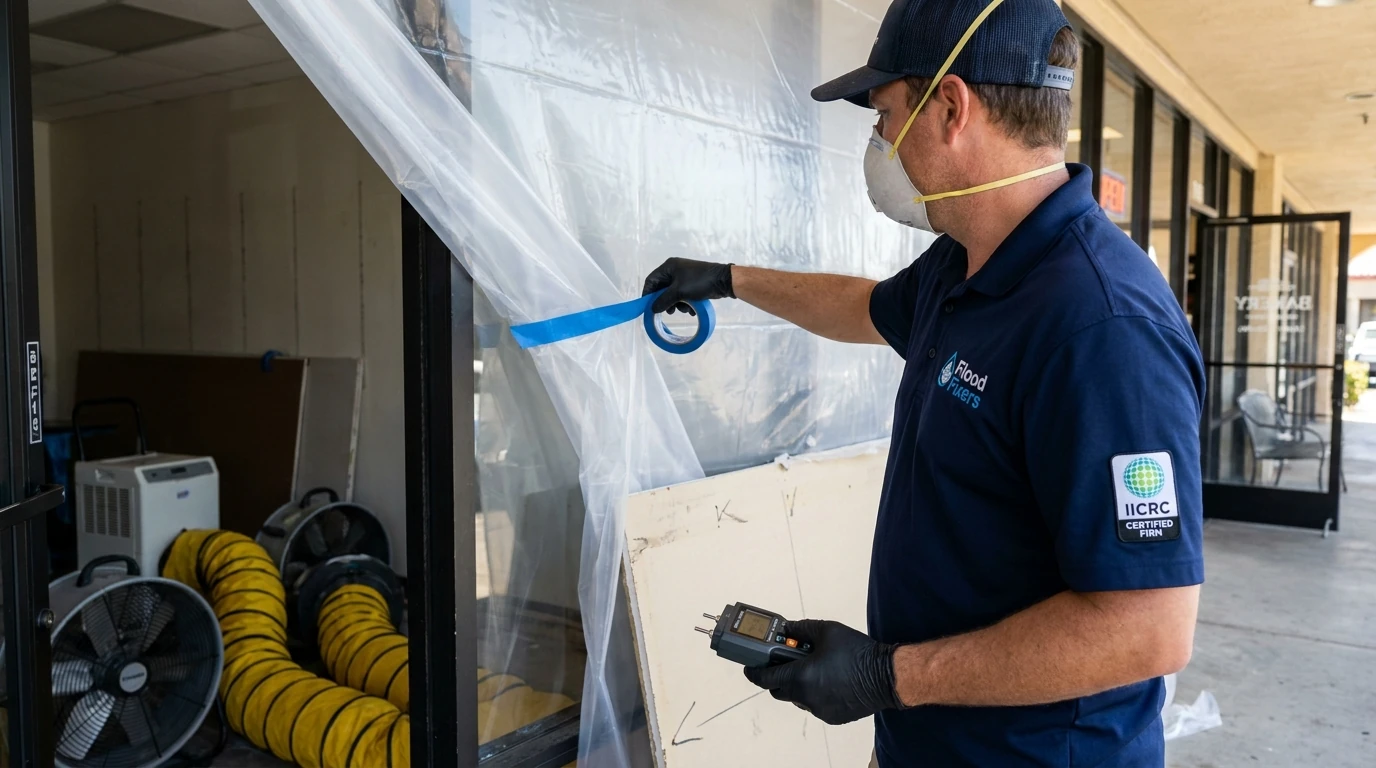
Phased drying with physical containment barriers is what lets the rest of a building keep operating while one section dries. Plastic sheeting, negative-air containment, and staged equipment placement isolate the wet area acoustically and physically so drying equipment noise and airflow don’t disrupt adjacent tenants.
In practice, this means air movers and dehumidifiers get placed and monitored within the affected suite or floor section only, with containment plastic sealing doorways and shared HVAC returns temporarily isolated if the ductwork runs between units. For a retail strip mall or office building, that can mean one storefront closes for four or five days while the ones on either side stay open the entire time.
Once materials removed for drying access (baseboard, drywall, flooring) are ready to go back, reconstruction can often start in the dried section while final moisture checks are still wrapping up elsewhere, which shortens the overall timeline back to full occupancy.
A burst supply line is the single most common source of commercial water loss in San Diego’s older office parks and strip centers, where original plumbing is decades past its intended service life. If that’s what triggered your call, our burst pipe repair team coordinates the shutoff and the drying response as one job, not two separate vendors.
Managing the tenant relationships during a commercial loss is its own skill, and it’s covered in more depth in our post on protecting business continuity after a commercial water loss, which walks through tenant communication and lease-notice timing in more detail.
If you’re staring at a wet ceiling tile in a shared hallway right now, the fastest path to a defensible claim and a building that stays as open as possible is getting a documented water damage restoration scope started today, not after you’ve called three vendors to compare quotes.
About Flood Fixers
Flood Fixers is an IICRC-certified, licensed and insured restoration company serving San Diego and surrounding communities including Chula Vista, Oceanside, Escondido, and Carlsbad. The company offers 24/7 emergency service and handles water damage restoration, flood damage restoration, burst pipe repair, basement flooding cleanup, reconstruction, and general contracting for both residential and commercial properties across San Diego County.