
TL;DR: Commercial property insurance usually covers water damage that’s sudden and accidental, like a burst pipe or failed water heater, but it excludes gradual leaks, deferred maintenance, and flood water unless you’ve added a flood endorsement. Business interruption coverage pays lost income while you’re closed, but it’s a separate line item you have to purchase. Check your policy’s water damage exclusions and deductible structure before you assume a loss is covered.
If a supply line let go overnight in your Mission Valley storefront and you’re standing in two inches of water this morning, wondering whether your commercial property policy actually pays for this, you’re not alone. Business owners from the Gaslamp Quarter to Kearny Mesa ask their broker the same question the moment they see the damage: is this covered, or am I footing the bill? The honest answer depends on your policy’s exact water damage language, but most commercial policies follow a predictable pattern. Here’s what that pattern looks like, what commonly gets denied, and what to document before an adjuster ever shows up.
Does Commercial Property Insurance Cover Water Damage?
Yes, most commercial property policies cover water damage that is sudden and accidental, meaning it happened quickly rather than developing over weeks or months. A burst pipe, a failed water heater, a supply line that blows, or a sprinkler head that discharges by accident are typically covered perils under a standard commercial property form.
Most businesses carry what insurers call a “Special Form” or “all-risk” policy, which covers direct physical loss from any cause not specifically excluded, as opposed to a “Basic Form” that only lists named perils. The Insurance Information Institute publishes general guidance on how these policy structures differ, which is worth a skim before you call your broker. Either way, the water has to come from inside the building’s own systems (plumbing, HVAC, a fire sprinkler) rather than rising from the ground outside.
What’s the Difference Between a Covered Loss and an Excluded One?
The line commercial insurers draw is sudden versus gradual, not the type of pipe or equipment involved. Most policies exclude damage caused by continuous or repeated seepage, a slow leak behind a wall, or anything tied to deferred maintenance, even when the underlying failure looks identical to a covered loss.
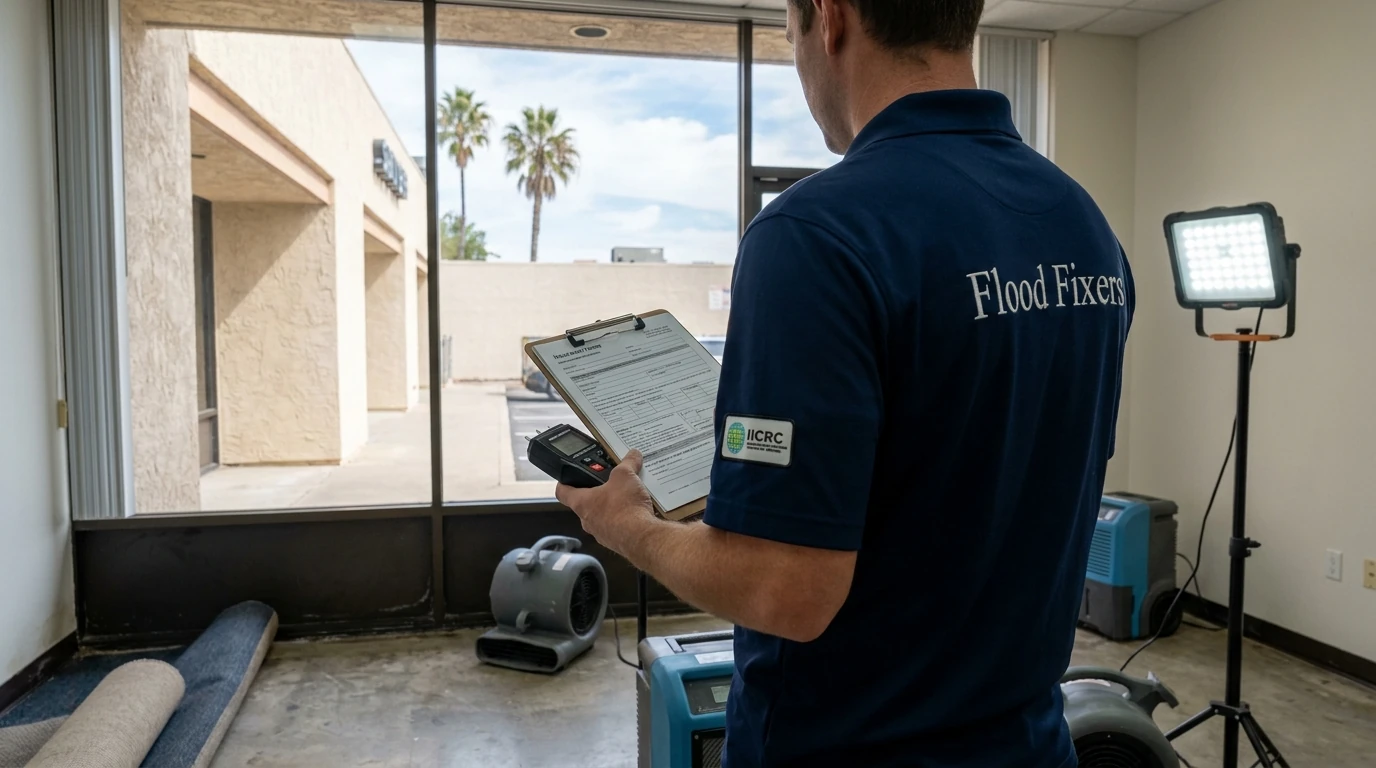
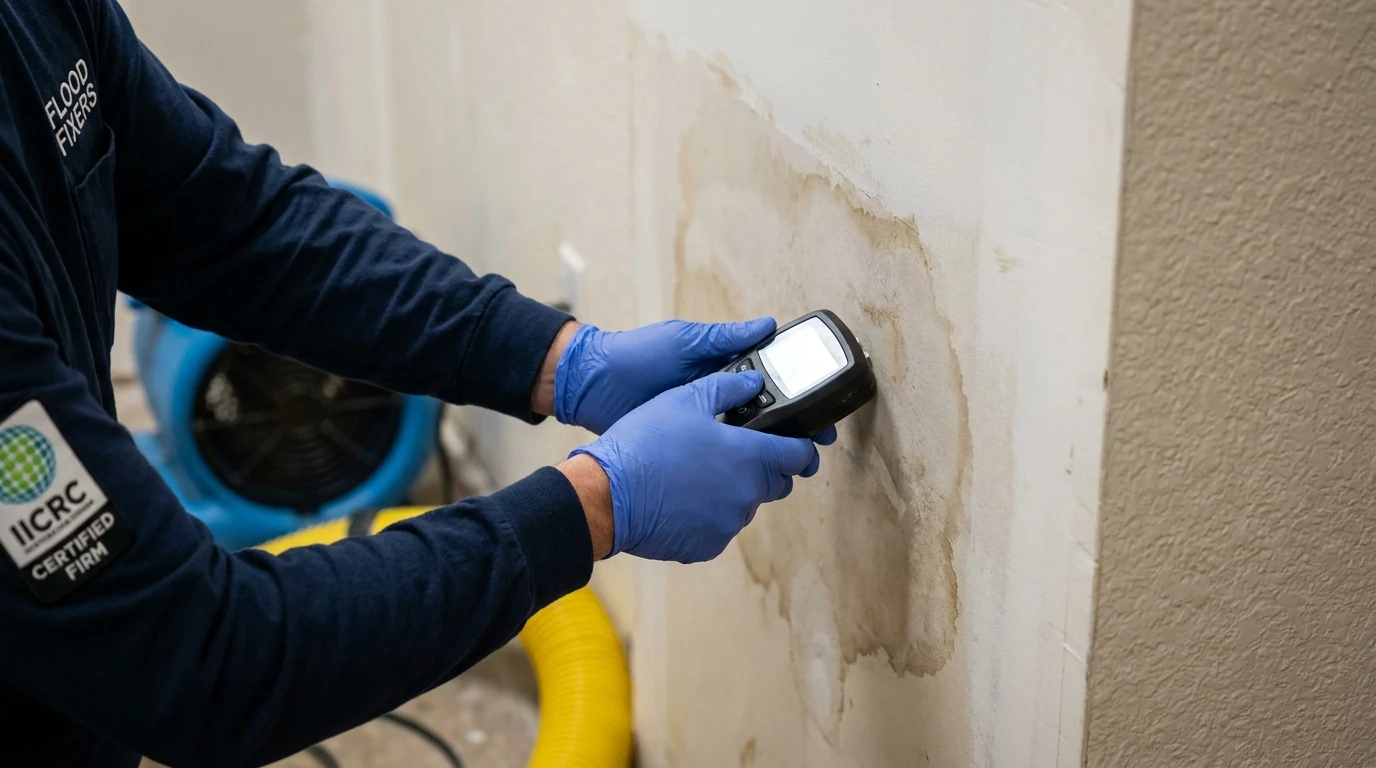
A pipe that bursts at 2 a.m. and floods your retail floor is a textbook covered claim. A supply line that’s been weeping behind a cabinet for three months, slowly rotting the subfloor, is the kind of claim adjusters scrutinize hardest, and often deny. The giveaway is usually the condition of the materials: clean, sudden water damage looks different from wood that’s been wet long enough to warp or grow mold. Restoration crews dry and document losses to the IICRC S500 standard, and that documentation, timestamped moisture readings, photos of the initial extent, is what separates a clean approval from a drawn-out dispute. If you’re unsure which bucket your situation falls into, our guide to homeowners water damage coverage walks through the same sudden-versus-gradual distinction in more detail, and most of the logic carries over to commercial policies.
Does My Policy Cover Lost Income While I’m Closed?
Only if you’ve purchased business interruption coverage, since it’s a separate line from property damage and is not automatic on every commercial policy. It typically pays lost net income plus continuing expenses, payroll, rent, loan payments, for the time it reasonably takes to repair the covered damage, usually after a waiting period of 24 to 72 hours.
This coverage goes by a few names on a declarations page: business income, business interruption, or business income and extra expense. If a restaurant in the Gaslamp Quarter has to close for two weeks after a pipe break floods the kitchen, business interruption is what replaces the revenue that didn’t come in, not the property section that pays for drywall and flooring. Extra expense coverage, often bundled in, can also reimburse the cost of operating from a temporary location. Insurers will ask for financial records, P&L statements, tax returns, point-of-sale reports, to calculate the loss, so pull those together early. Our post on protecting business continuity after a commercial water loss covers how to keep operating, or reopen faster, while that claim works through.
How Does the Deductible Work on a Commercial Water Damage Claim?
Commercial deductibles are usually a flat dollar amount per occurrence, commonly $1,000 to $25,000 depending on the policy, though some carriers write a separate, higher deductible specifically for water losses or named storms. Your declarations page, not your memory of what you signed at renewal, is the only reliable source for your actual number.
Multi-location businesses sometimes carry a deductible per location rather than per claim, which matters if a single storm affects more than one of your properties. It’s also common for a carrier to raise the water damage deductible, or add a sub-limit, after a prior claim, so don’t assume the number from three years ago still applies. Ask your broker for the current declarations page before you decide whether a loss is even worth filing.
Is Flood Damage From Rain or Overflow Covered in San Diego?
No, standard commercial property policies exclude flood damage, defined as water that rises from the ground, including street flooding, canyon runoff, or storm surge, even though those same policies cover water damage from a failed building system. San Diego businesses near coastal zones like Mission Beach and La Jolla Shores, or near canyon drainage paths like Tecolote Canyon and Mission Valley, carry real flood exposure that a standard commercial policy won’t touch.
Flood coverage for a business has to be purchased separately, either through the National Flood Insurance Program or a private flood carrier, and it should be bound before the rainy season starts, not after a storm is already forecast. If you’re not sure which category your last loss falls into, our breakdown of the difference between flood damage and water damage explains how insurers draw that distinction and why it changes which policy actually pays.
What Should You Document Before You File a Claim?
Start documenting before you touch anything, since the condition of the damage at first discovery is what your adjuster will compare every later estimate against. Photos and video of standing water, affected materials, and the source of the leak come first, then moisture readings once mitigation starts.
Keep a simple record: the time you discovered the damage, when you shut off the water source, and any maintenance or repair records for the failed component. Save receipts for emergency mitigation, tarps, extraction, temporary power, since most policies reimburse reasonable steps taken to prevent further loss. If a restoration company is on-site, ask for their moisture logs and scope of work; that paperwork becomes part of your claim file.
Flood Fixers handles water damage extraction and drying for commercial properties across San Diego County and provides the documentation, moisture logs, photos, drying progress reports, that insurers typically request during a commercial water damage claim. If you’re 24 to 48 hours into deciding who to call, a water damage restoration assessment or a burst pipe repair call can get mitigation started while your claim is still being reviewed.
About Flood Fixers
Flood Fixers is an IICRC-certified, licensed and insured restoration company offering 24/7 emergency service across San Diego County, from coastal communities like La Jolla and Encinitas to inland areas like El Cajon and Escondido. Their crews handle water damage restoration, flood damage restoration, burst pipe repair, basement flooding cleanup, reconstruction, and general contracting for both residential and commercial properties.