
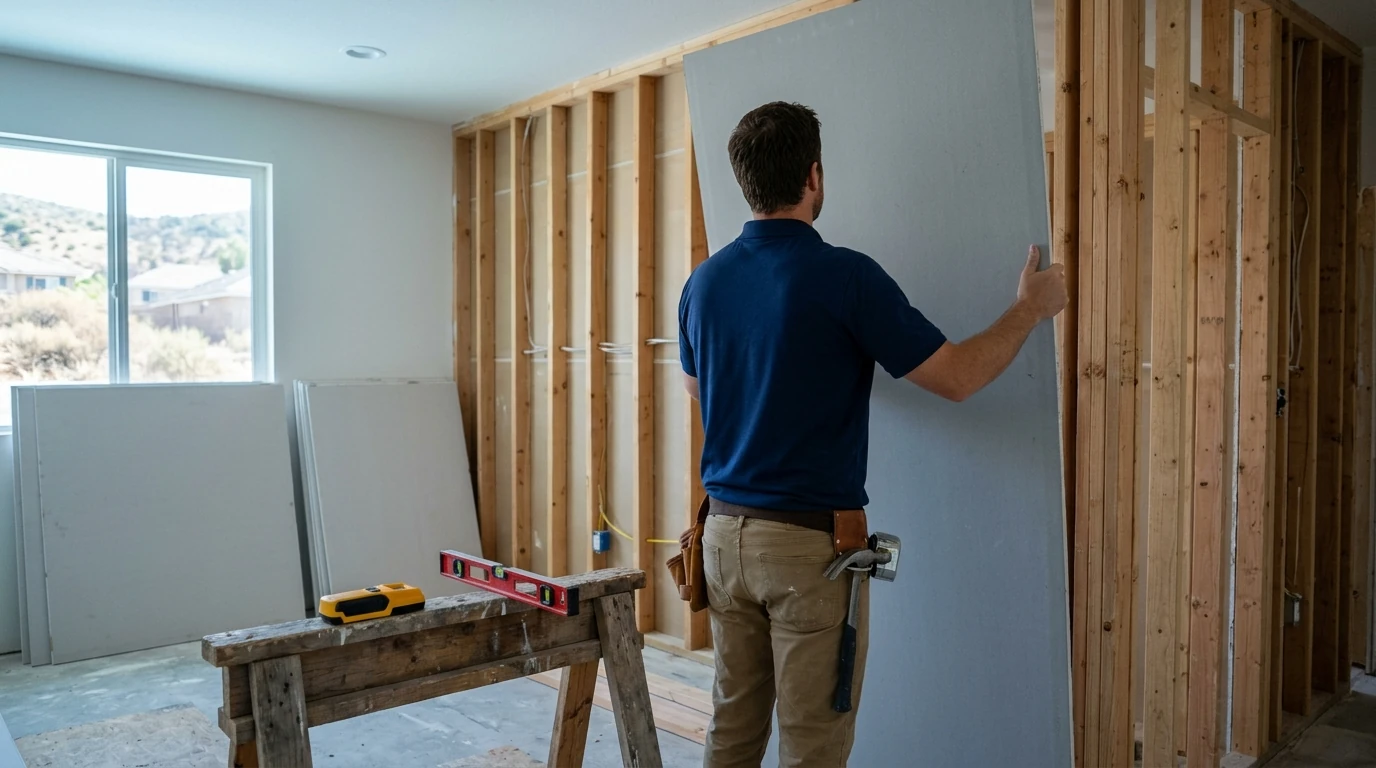
TL;DR: After water damage dries out, reconstruction covers the rebuild: drywall, insulation, flooring, cabinets, trim, and paint. Many homeowners end up hiring two separate companies, one for mitigation and a second general contractor for the rebuild, which adds delays and duplicate paperwork. Look for a company that holds a CSLB license and carries the job from dry-out through final paint, and always confirm the rebuild scope matches what the insurance adjuster approved before signing.
If the drying equipment just came out of your San Marcos house and you’re staring at exposed studs, torn-out drywall, and a patchy subfloor, you’re at the point most homeowners don’t expect: the mitigation company’s job is done, but your house isn’t close to livable. That’s reconstruction, and it’s a different skill set and often a different company than the one that pulled out your wet carpet. Here’s how to find the right one without starting the whole hiring process over.
Who handles reconstruction after water damage in San Marcos?
A licensed general contractor with restoration-specific experience handles reconstruction, ideally the same company that did your mitigation work so the scope carries over cleanly. Reconstruction after water damage means rebuilding what had to be torn out: drywall and insulation, baseboards and trim, cabinets, flooring, and paint, matched back to the home’s original condition or better.
Most water damage companies in North County only do the drying phase: extraction, dehumidification, antimicrobial treatment. Once the structure is dry, they hand you off to find your own contractor, and now you’re re-explaining the loss, re-negotiating a scope, and waiting on a second company’s schedule. A company like Flood Fixers that runs both the mitigation and the reconstruction crew under one roof skips that handoff entirely: the same scope of loss that was documented during drying becomes the rebuild estimate, with no gap for mold to start growing in open wall cavities while you shop for a contractor.
Mitigation company vs. general contractor: what’s the actual difference?
A mitigation company stops active damage and dries the structure; a general contractor rebuilds what was removed to get there. Mitigation is extraction, drying with air movers and dehumidifiers, and antimicrobial treatment, usually finished in 3-5 days per the ANSI/IICRC S500 standard. Reconstruction starts where mitigation ends.
The friction point is the gap between the two. If separate companies handle each phase, the mitigation company’s final moisture readings and the contractor’s rebuild bid often don’t line up, because the contractor is pricing from a walkthrough, not from the actual drying data. A single crew that performed the demo during mitigation already knows exactly what came out and why, which makes the rebuild estimate faster and harder to dispute later.
What does reconstruction after water damage actually include?
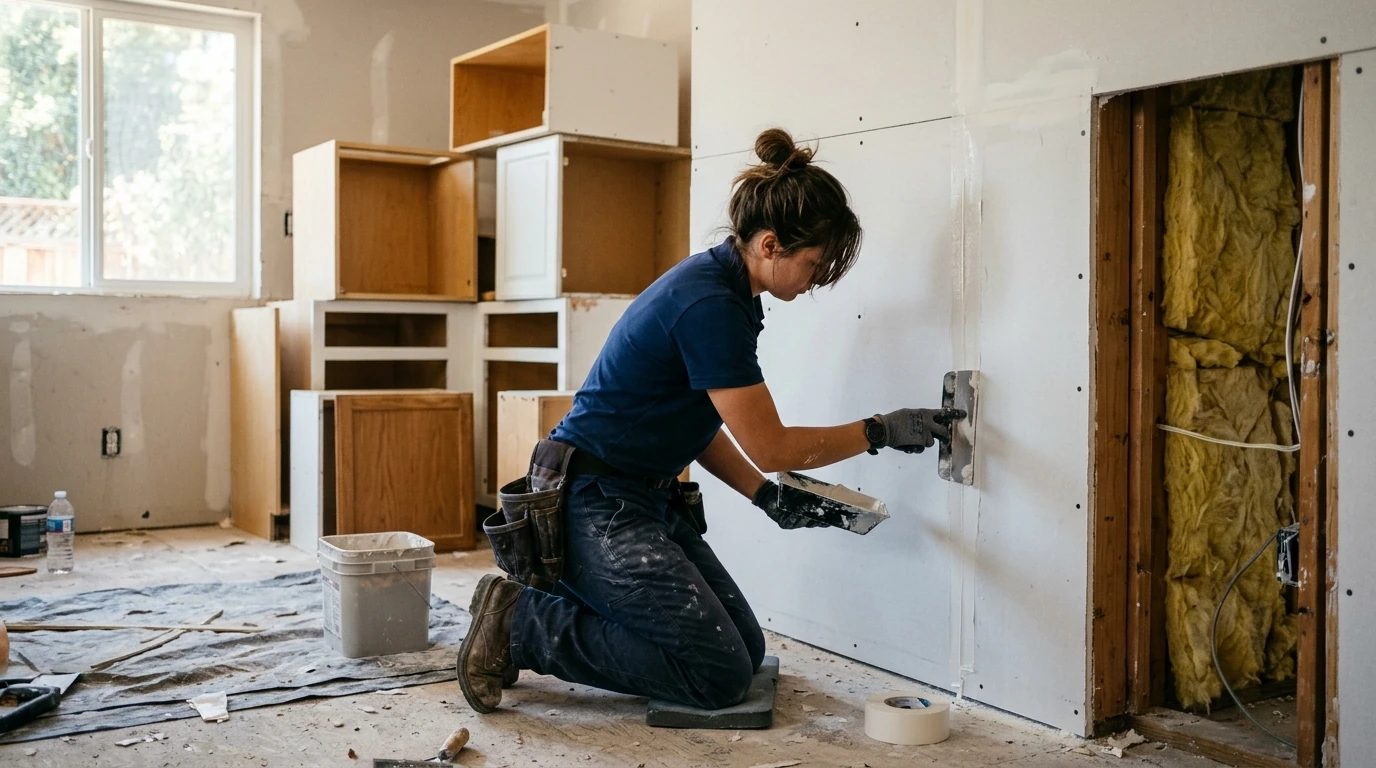
Reconstruction covers everything removed or damaged during the water loss, put back to match the home’s pre-loss condition. For a typical San Marcos living room or kitchen, that usually means:
- Drywall replacement, taped and textured to match the existing wall finish
- New insulation in any wall or ceiling cavity that was removed
- Subfloor repair and flooring replacement (hardwood, tile, LVP, or carpet)
- Cabinet replacement or refacing when lower cabinets took on water
- Baseboard, door casing, and trim
- Prime and paint to match existing wall color
On older Lake San Marcos and Creek District homes with original hardwood or plaster, matching existing materials takes more care than a straight drywall patch, and it’s worth asking any contractor up front how they handle a material match rather than a generic swap.
How do you check a California contractor’s license before hiring?
You verify an active CSLB license by searching the contractor’s name or license number on the California Contractors State License Board’s online lookup. The lookup shows license status, classification, bond information, and any disciplinary history.
Any contractor doing reconstruction work over $500 in California is legally required to hold an active CSLB license in the right classification (usually a B general building classification for this type of rebuild). Don’t take a license number at face value; search it yourself before signing a contract. It takes under a minute and it’s the single best filter against a contractor who disappears mid-job.
How does the rebuild scope work with your insurance adjuster?
The rebuild scope should be an itemized, line-by-line document that matches what your adjuster approved, not a lump-sum estimate. Insurers typically use estimating software like Xactimate to price a scope, and a contractor who writes their bid in the same line-item format makes it far easier for the adjuster to approve without back-and-forth.
Ask for a written scope before any demo or rebuild work starts, and keep every supplement request (anything found once the walls are open, like additional water travel or hidden mold) documented with photos. A contractor experienced with insurance jobs will submit supplements directly to the adjuster rather than asking you to negotiate line items yourself. If your policy covers the loss, this documentation is also what protects you if the adjuster’s first number comes in low; see our guide on what to do after a flood in your house for how that documentation trail should start from day one.
What questions should you ask before hiring a reconstruction contractor?
Ask these four before signing anything: Is your CSLB license active and in the right classification? Will you write the scope to match my insurance estimate? Who handles supplements if you find more damage once walls are open? And do you carry the job from demo through final paint, or will I need a second contractor partway through?
A contractor who hesitates on the licensing question or can’t describe how they handle insurance supplements is worth a second opinion. For more on vetting a restoration company generally, our post on choosing a restoration company covers the broader red flags to watch for.
One more thing worth checking before you sign: whether the same company can start reconstruction immediately after your mitigation wraps, or whether you’re about to spend another week finding someone else. For related reading, see our guide to who handles water damage in San Marcos generally and our roundup of water damage restoration companies in San Marcos.
If your San Marcos home is sitting at the dry-out stage with exposed framing and no rebuild plan yet, the next step is getting a written reconstruction scope before any drywall goes back up.
About Flood Fixers
Flood Fixers is an IICRC-certified, licensed and insured company serving San Diego, CA and surrounding North County communities including San Marcos. Their crews handle water damage restoration, flood damage restoration, burst pipe repair, basement flooding cleanup, flooring installation, reconstruction, and general contracting, carrying jobs from initial dry-out through final rebuild under one scope of work.
Need help now? Call Flood Fixers at (855) 204-1124.