
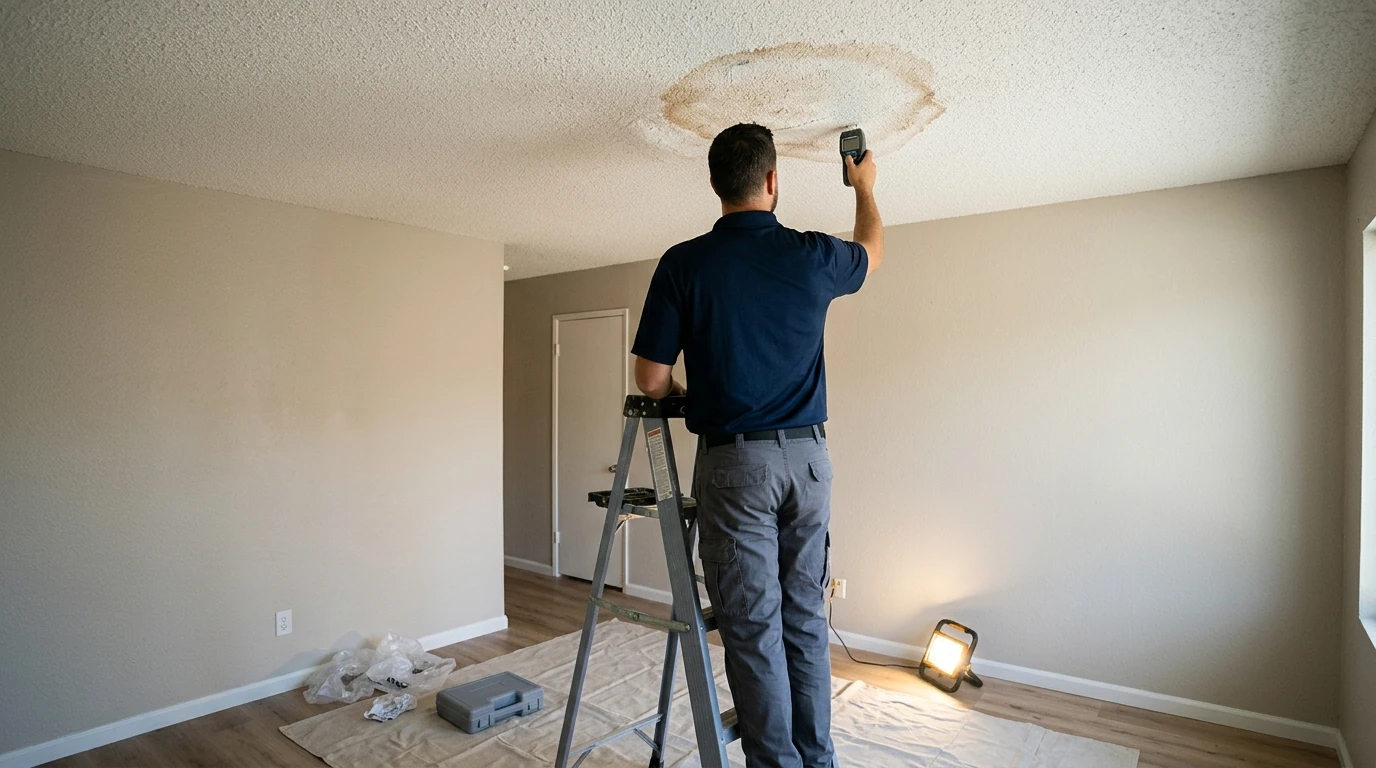
TL;DR: Most San Marcos homeowners pay $150 to $400 to seal and repaint a small water stain, $400 to $1,200 to cut out and patch a damaged section, and $1,500 to $4,500 or more for a full ceiling tear-out and rebuild. The ceiling material itself isn’t what drives the price. It’s whether the leak source is found and stopped, how long the framing stayed wet, and how hard the texture and paint are to match.
If you’ve got a brown ring spreading across the ceiling in a San Elijo Hills bathroom, or a soft, sagging patch over the kitchen in a Lake San Marcos condo after a slow upstairs leak, the first question is never “how much does drywall cost.” It’s whether the water is still coming, how far it traveled inside the ceiling cavity, and whether what you’re looking at is cosmetic or structural. That’s what actually sets the price.
How much does it cost to repair a water damaged ceiling in San Marcos?
Ceiling water damage repair in San Marcos typically falls into one of four price tiers, depending on how much of the ceiling is actually compromised versus just stained.
| Repair Tier | What’s Involved | Typical Cost Range |
|---|---|---|
| Stain seal and repaint | Stain-blocking primer over a dry, intact ceiling, texture touch-up, repaint | $150 - $400 |
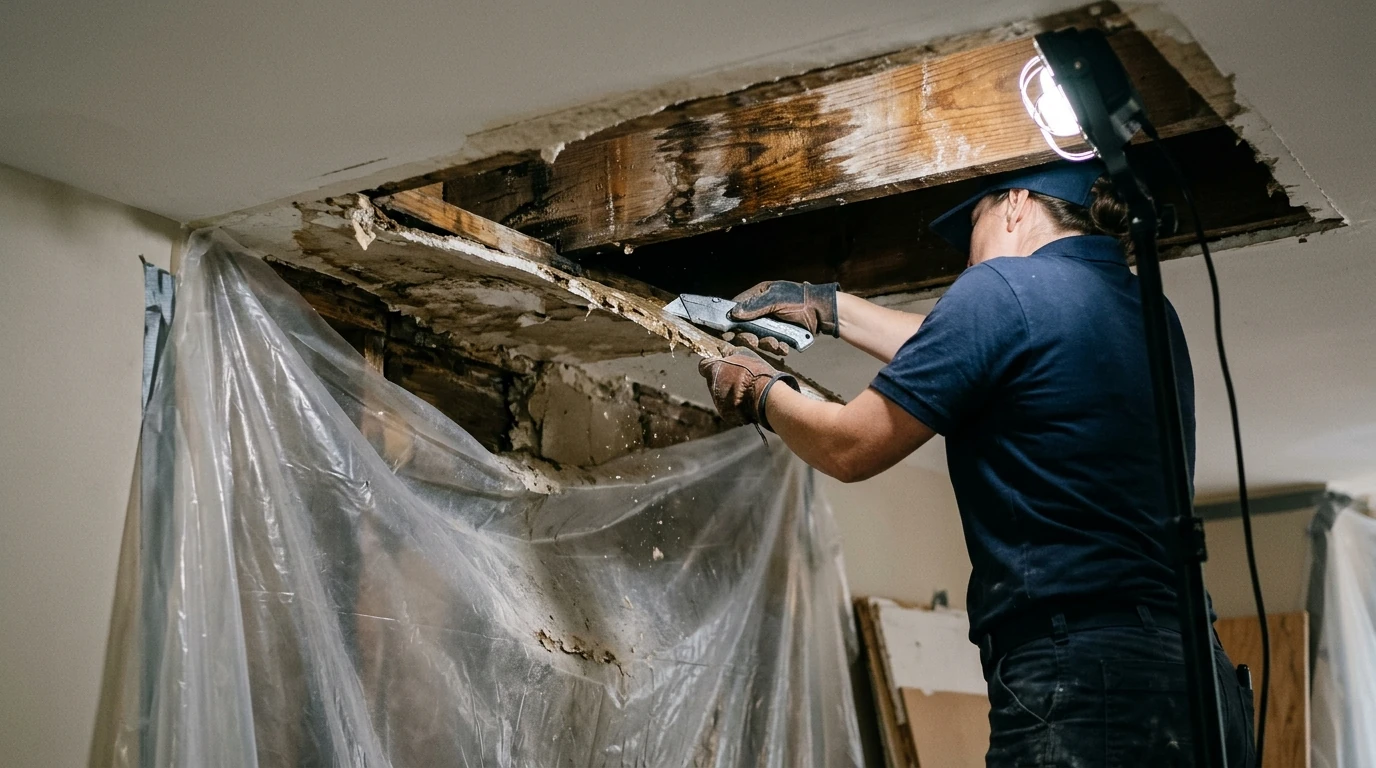
| Cut-out and patch | Remove one damaged drywall section, dry the framing, new drywall, texture match, paint | $400 - $1,200 |
| Partial replacement | Larger section torn out, wet insulation replaced, texture and paint blended across the full ceiling | $1,200 - $2,500 |
| Full ceiling replacement | Entire ceiling removed and rebuilt, joists dried and treated, full texture and repaint | $1,500 - $4,500+ |
These are typical industry ranges, not a quote. A written scope from an inspection is the only way to know which tier applies to your ceiling, and any reputable contractor should give you one before work starts.
What decides whether you need a stain seal, a patch, or a full tear-out?
Four things decide the tier: whether the leak source was actually found and fixed, how wet the framing got, how long the water sat, and how hard the texture is to blend.
A one-time leak, like a toilet supply line that was shut off within an hour, often leaves just a dry stain. If the drywall paper didn’t bubble or sag, a stain-blocking primer and repaint is enough, and sealing the stain is appropriate specifically because the moisture source has been confirmed gone.
A slow leak, like a shower pan or an upstairs water heater pan that’s been dripping for weeks, is a different problem. By the time it shows on the ceiling below, the drywall, insulation, and often the joists above have been wet far longer than the stain suggests. A contractor doing this right uses a moisture meter to map how far the water traveled inside the cavity, not just what’s visible from below, because drywall that looks fine at the edges can still be saturated a few feet past the stain.
Texture match drives cost more than people expect. A smooth ceiling patches cleanly. A knockdown or popcorn texture, common in a lot of San Marcos tract homes from the 1980s and 90s, is harder to blend invisibly, and that’s often the line item that pushes a “small patch” closer to a full-ceiling repaint so the seam doesn’t show under daylight.
Does insurance cover ceiling water damage repair?
Most homeowners policies cover ceiling repair when the water damage is sudden and accidental, like a burst supply line or a water heater that fails abruptly. They generally do not cover damage from a leak that was gradual, or from wear and tear that went unaddressed.
That distinction matters because the adjuster will look at how long the leak appears to have been running, which is part of why moisture mapping at the time of repair also documents the claim. A slow shower pan leak that’s been dripping for months is often treated as a maintenance issue rather than a covered loss, even though the ceiling damage looks identical to a sudden pipe failure from the outside. The Insurance Information Institute has a plain-language rundown of what a standard policy typically covers and excludes. Our guide to what homeowners insurance covers for water damage walks through the sudden-versus-gradual distinction in more detail, and our San Marcos reconstruction cost breakdown covers how ceiling work fits into a larger rebuild scope and claim.
Who should repair a water damaged ceiling in San Marcos?
A stain seal and repaint is a reasonable DIY job if you’re confident the leak is fully fixed and the drywall is still firm to the touch. A sagging ceiling, a soft spot, or any repair tied to an insurance claim is not: that work should go to a licensed contractor who dries the structure to the IICRC S500 standard before any drywall goes back up, so mold doesn’t start growing behind a freshly painted patch.
Flood Fixers handles both sides of that job for San Marcos homeowners: locating and documenting the moisture, drying the framing, then cutting, patching, texturing, and repainting the ceiling so it disappears back into the room. Keeping drying and rebuild under one crew also avoids the common gap where a drying company leaves open drywall behind and a separate contractor has to be found and scheduled for the actual repair. Our guide to who handles reconstruction after water damage in San Marcos goes into why that matters for timeline and cost.
A soft or sagging ceiling section should never be patched over to “see if it holds.” Wet drywall loses most of its strength and a saturated section can fail without much warning, especially over a shower, hallway, or anywhere someone stands directly underneath.
If you’re staring at a stain and not sure which tier applies, a moisture assessment settles it in one visit: either it’s dry and cosmetic, or it isn’t, and the scope follows from there. Request an estimate for reconstruction or review the full water damage restoration process for San Marcos homes.
About Flood Fixers
Flood Fixers is an IICRC-certified restoration and reconstruction company serving San Diego, San Marcos, and the surrounding North County, available 24/7 for emergency water damage calls. The company is licensed and insured, and its crews handle water damage restoration, flood cleanup, burst pipe repair, and full reconstruction, including ceiling, drywall, and texture-match work after a leak, across the region.
Need help now? Call Flood Fixers at (855) 204-1124.