
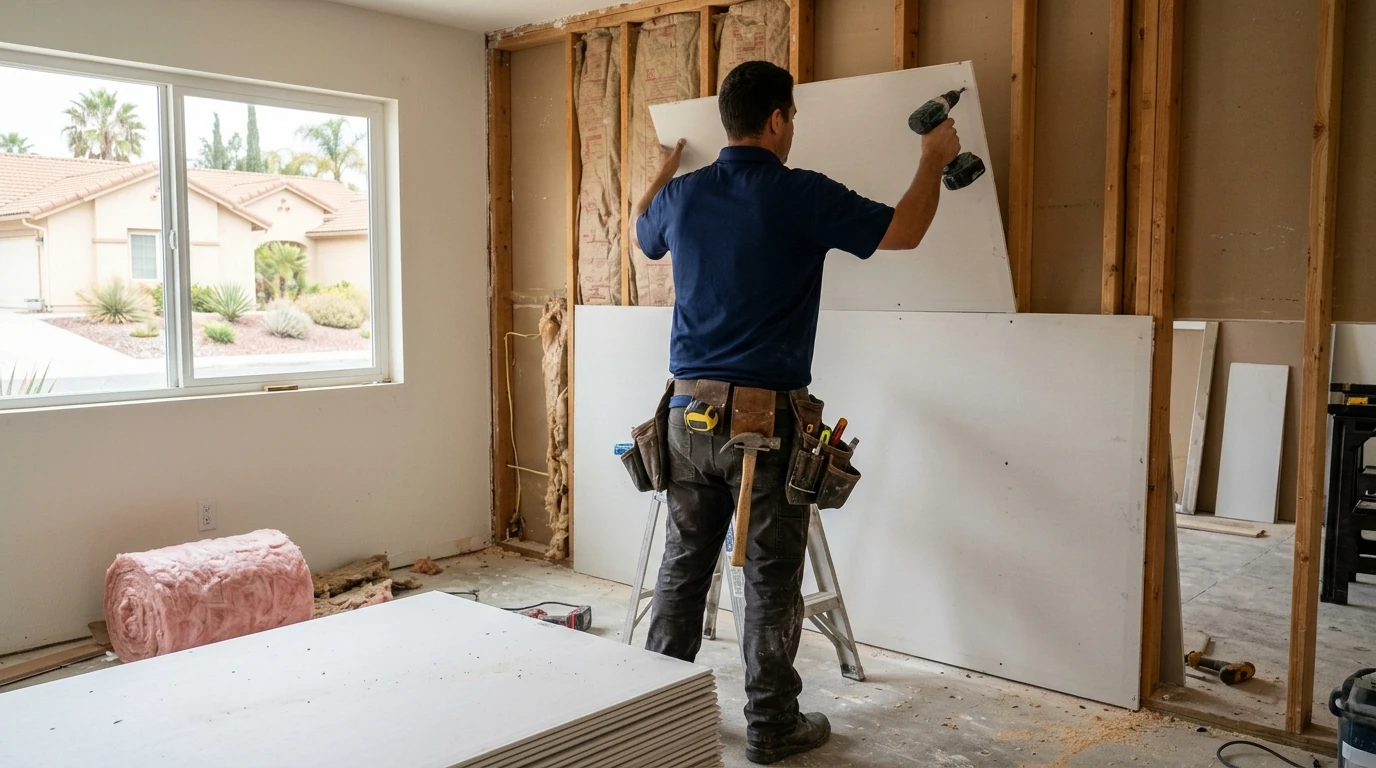
TL;DR: Water damage reconstruction in San Marcos, the rebuild phase after a damaged room has been dried out, typically runs $3,000 to $7,000 for a single room (drywall, flooring, paint) and can reach $20,000 to $60,000 or more for a whole-house rebuild after a major loss. The final number depends on how much drywall and insulation were cut out, what flooring you choose, and whether cabinets need replacing. Mitigation (the drying) and reconstruction (the rebuild) are two separate phases, usually billed and insured separately.
The drying equipment is gone, the air movers and dehumidifiers have been picked up, and now you’re standing in a room with exposed studs, a missing baseboard, and a two-foot gap where the drywall used to be. That’s the point where homeowners in San Marcos start asking what the rebuild actually costs, and whether it’s a separate bill from the water removal invoice they already paid or approved through insurance.
How Much Does Water Damage Reconstruction Cost in San Marcos?
Most reconstruction jobs in San Marcos fall into three tiers based on scope: single room, multi-room, and whole-house. A single room with a standard two-foot flood cut, new insulation, drywall, texture, paint, and flooring typically costs $3,000 to $7,000. A multi-room job, say a kitchen plus an adjoining hallway and living room, usually runs $8,000 to $18,000. A full rebuild after a major loss, like a slab leak that sat for days or a Category 3 event that required gutting multiple rooms, commonly lands between $20,000 and $60,000 or higher.
| Job Scope | Typical Cost Range |
|---|---|
| Single room (drywall, insulation, paint, flooring) | $3,000 - $7,000 |
| Kitchen rebuild with cabinet replacement | $8,000 - $20,000 |
| Multi-room (2-3 rooms affected) | $8,000 - $18,000 |
| Whole-house rebuild after major loss | $20,000 - $60,000+ |
These are typical ranges contractors in San Diego County report for reconstruction work, not a quote. Every loss is different, and a licensed reconstruction contractor should walk the space and write a scope before any number is final.
How Much Does Drywall Repair Cost After Water Damage?
Drywall repair after a flood cut typically costs $400 to $900 per affected wall, including the patch, texture match, primer, and paint. That price assumes a standard 2-foot flood cut, the height drying crews usually remove when wet drywall has wicked moisture above the baseboard.
The range moves with a few things: ceiling drywall costs more per square foot than wall drywall because of the overhead work, textured or popcorn ceilings add a texture-matching step, and full-height removal (common after a Category 2 or 3 loss, or when drywall was saturated top to bottom) pushes a single wall toward $1,200 to $1,800. Insulation behind the cut drywall almost always gets replaced too, since wet fiberglass batt loses its R-value and rarely dries clean; budget another $1 to $2 per square foot for that step.
What Do Flooring Replacement and Cabinet Replacement Typically Cost?
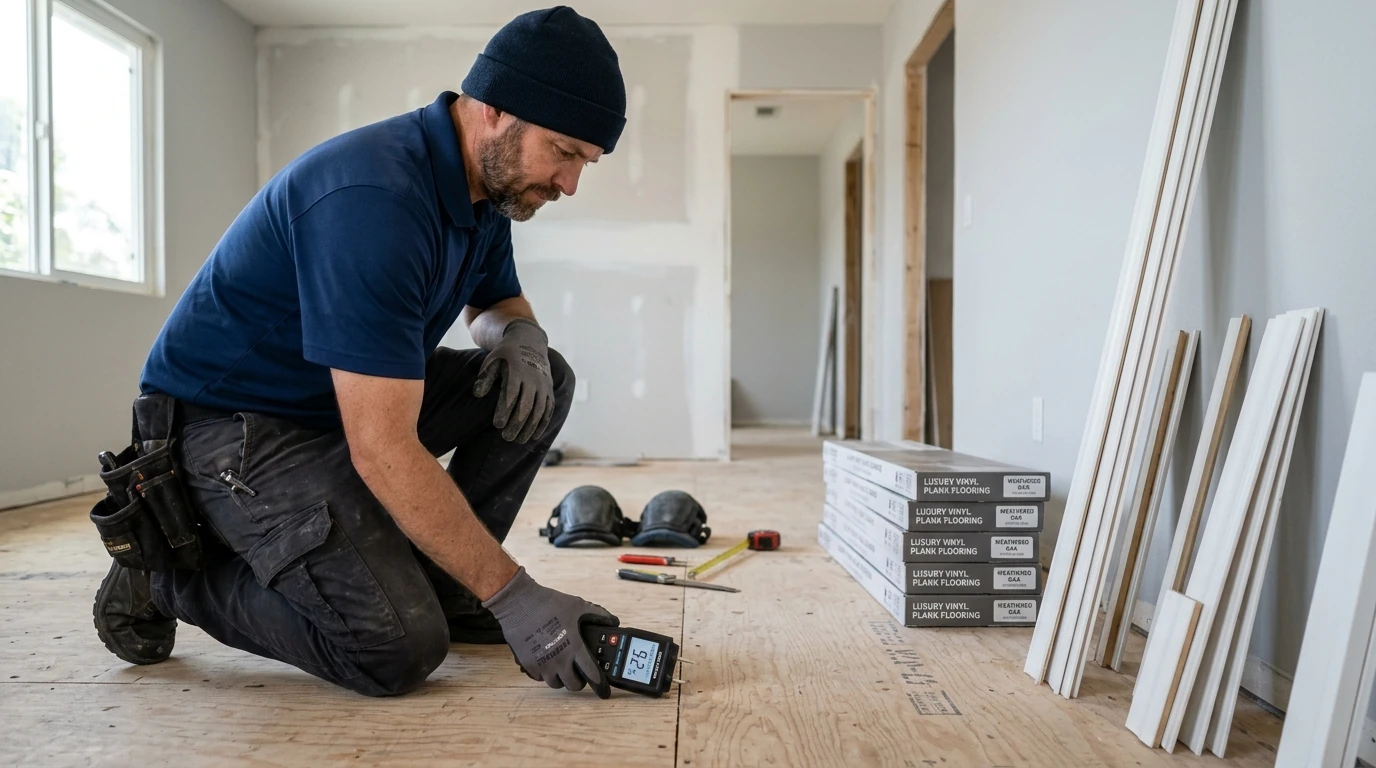
Flooring and cabinets are usually the two biggest line items in a reconstruction scope, and the material you choose swings the total more than almost anything else.
Flooring replacement costs vary by material: carpet and pad run $3 to $6 per square foot installed, laminate or luxury vinyl plank (LVP) runs $6 to $10 per square foot, and tile or engineered hardwood typically falls between $7 and $14 per square foot. San Marcos has a lot of newer-construction homes with LVP or tile in main living areas, which holds up better to a second water event but costs more to replace the first time.
Cabinet replacement after water damage is usually limited to the lower cabinet run, since base cabinets sit closest to the floor and swell first when a kitchen floods. Stock to semi-custom lower cabinets typically run $150 to $350 per linear foot installed, including removal of the swollen boxes. Upper cabinets are rarely affected unless the water source was a roof leak or a second-story event draining down.
What Does Insurance Actually Pay for Reconstruction?
A standard homeowners policy typically pays to rebuild back to the home’s pre-loss condition when the underlying cause was a sudden, accidental event, like a burst supply line, not a gradual leak or wear and tear. Reconstruction is billed as a separate line from mitigation (the extraction and drying), and insurers usually want a completed mitigation invoice before approving the rebuild scope.
Most policies pay reconstruction on a replacement cost value (RCV) basis, but release the depreciation held back (recoverable depreciation) only after the work is finished and documented with receipts. If your flooring or cabinets need to be brought up to current building code, that’s sometimes a separate coverage, often called ordinance or law coverage, and it isn’t automatic on every policy. For the baseline rules on what a standard policy does and doesn’t cover, the California Department of Insurance’s residential claims guide is a useful plain-language reference. For the difference between what the drying phase costs and what the rebuild costs, see our water damage restoration cost guide for San Marcos; for a narrower appliance-leak scenario, see the appliance leak cost breakdown.
How Long Does Reconstruction Take After the Dry-Out?
Reconstruction typically takes 1 to 2 weeks for a single room, 3 to 6 weeks for a multi-room job, and 2 to 4 months for a whole-house rebuild, measured from the day drying equipment is removed. Permitting adds time in California when the scope includes electrical, plumbing, or structural framing changes, which a local building department has to sign off on before drywall goes back up.
Material lead times also matter. Cabinets ordered to match an existing kitchen can take 4 to 8 weeks to arrive, which is often the longest single wait in a kitchen rebuild. For more on how the mitigation phase that precedes reconstruction typically runs, see how long water damage restoration actually takes.
Who Should Handle the Rebuild After Mitigation?
The contractor who handles your rebuild should carry an active California contractor’s license, and for a scope with electrical, plumbing, or structural work, a general contractor (B license) rather than a specialty-only license. The CSLB’s guide to hiring a licensed contractor outlines what to verify before signing a contract, including license status and bonding.
Many homeowners in San Marcos, including those near Lake San Marcos and the Cal State San Marcos area, use the same company for mitigation and reconstruction so the drying crew’s scope lines up with the rebuild crew’s scope instead of two companies pointing at each other over what was actually removed. Flood Fixers handles both phases under one roof and documents the handoff for the insurance adjuster. Whoever you choose, get the rebuild scope in writing before demo goes any further.
A reconstruction estimate should always be scoped in person, room by room, before you sign anything. Ranges are a starting point for budgeting a conversation with your adjuster, not a ceiling or a floor.
About Flood Fixers
Flood Fixers is an IICRC-certified, EPA Lead-Safe certified restoration and reconstruction company serving San Diego County, including San Marcos, Escondido, and Vista. Their crews handle water damage restoration, flood damage restoration, burst pipe repair, basement flooding cleanup, flooring installation, general contracting, and reconstruction, and they coordinate directly with insurance adjusters on documentation for both the mitigation and rebuild phases of a loss.
Need help now? Call Flood Fixers at (855) 204-1124.