
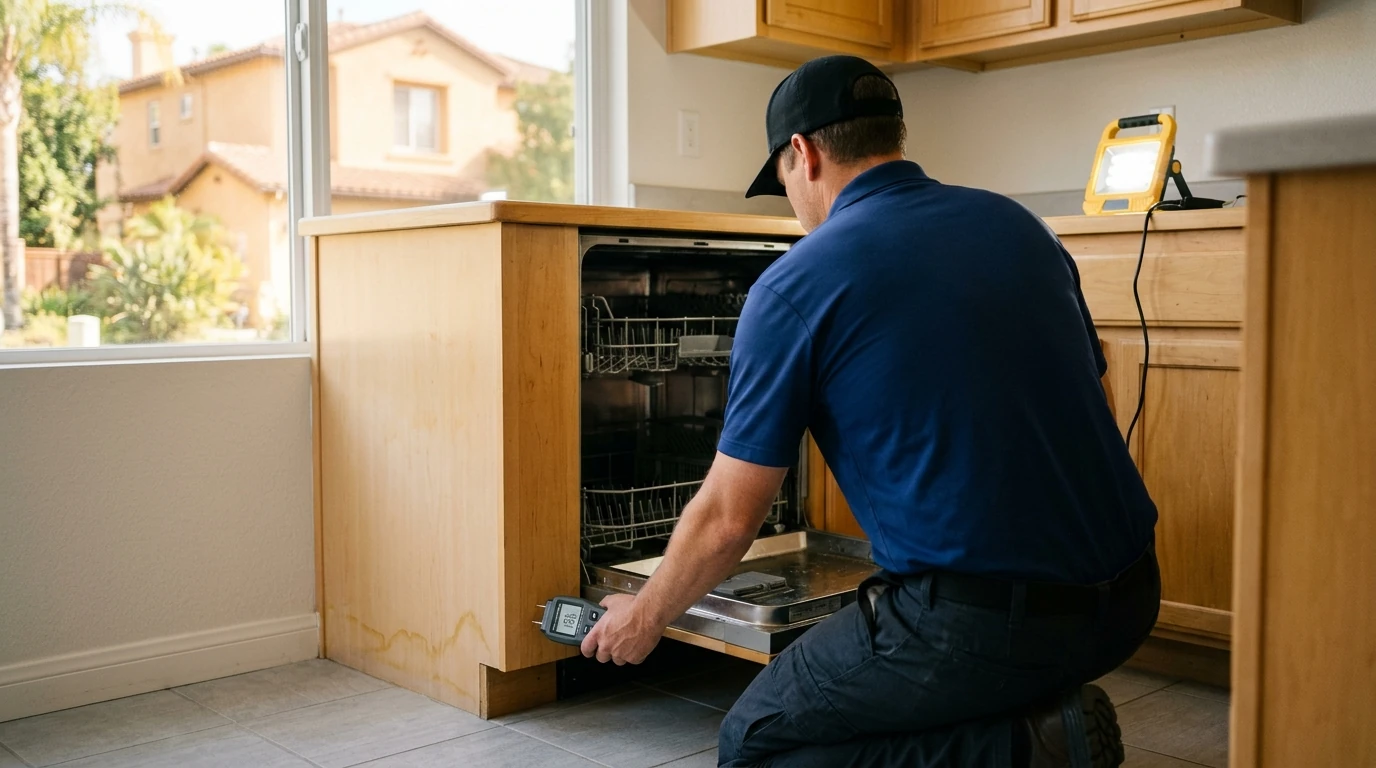
TL;DR: Appliance leak water damage cleanup in San Marcos typically runs $500 to $5,500, depending on which appliance failed and how far the water traveled before anyone noticed. A water heater leak contained to a garage sits near the low end. A dishwasher or washing machine leak that soaks kitchen cabinets, subfloor, or an adjacent room costs more because more materials need to be dried, cut out, or replaced.
If you just pulled the kickplate off a leaking dishwasher in a San Marcos kitchen and found the subfloor soft underneath, or you walked into a laundry room near Lake San Marcos this morning to find a burst washing machine hose had been running all night, the appliance itself is the cheap part. What drives the invoice is how much water escaped, how long it sat, and how many rooms it reached before someone shut off the supply valve.
How Much Does Appliance Leak Cleanup Cost in San Marcos?
Most appliance leak cleanups in San Marcos fall into one of four cost bands, based on the source and how contained the leak was. These are typical industry ranges for extraction, drying, and any necessary material removal, not a quote for a specific job.
| Appliance source | Typical scope | Typical cost range |
|---|---|---|
| Water heater leak (contained to garage or closet) | One small area, usually hard flooring, limited drywall contact | $500 - $1,500 |
| Refrigerator water line leak | Slow leak behind the unit, kitchen flooring and cabinet toe-kick | $800 - $3,000 |
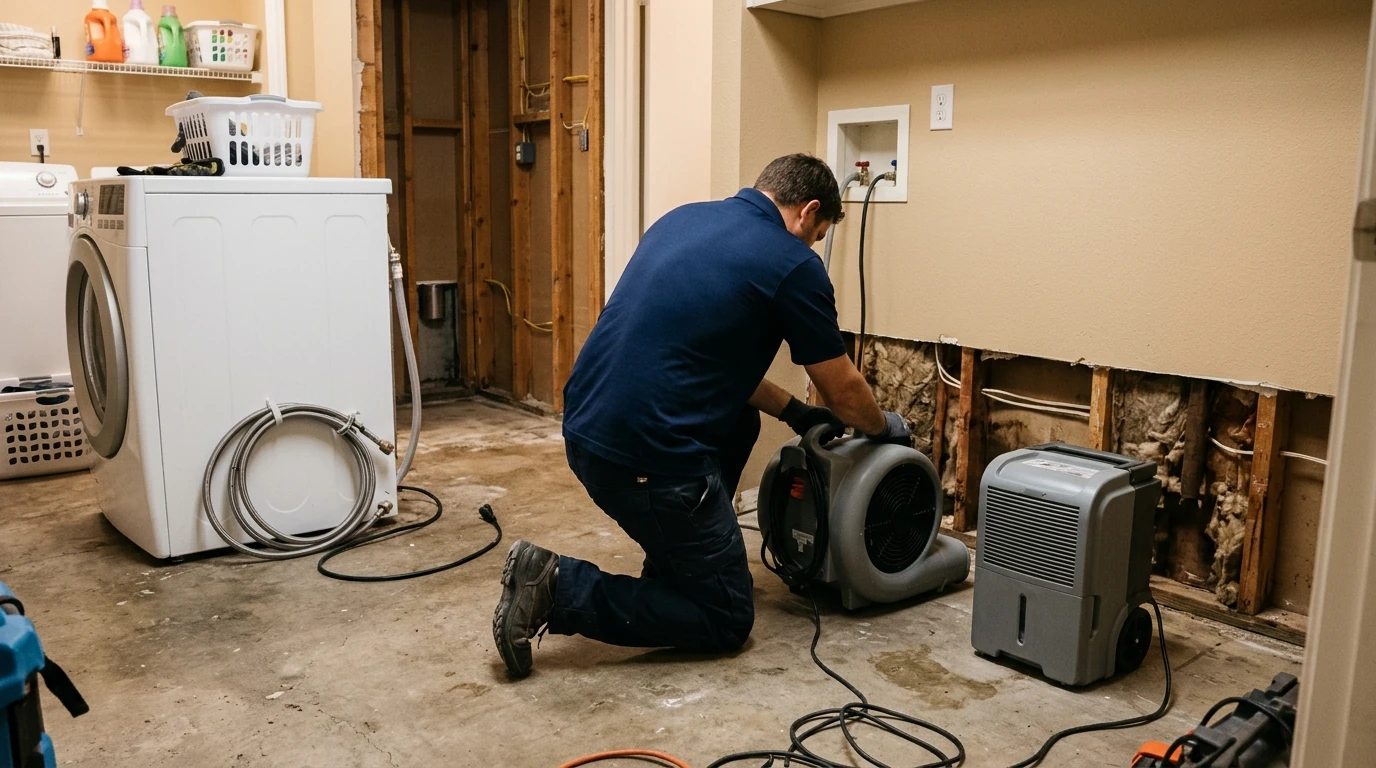
| Washing machine supply line or hose failure | Laundry room plus an adjacent hallway or room, often carpet and pad | $1,500 - $4,000 |
| Dishwasher leak | Kitchen cabinetry, subfloor beneath the unit, sometimes adjacent flooring | $2,000 - $5,500 |
The reason dishwasher and washing machine leaks tend to cost more isn’t the appliance, it’s the materials around them. A water heater usually sits on tile or concrete with little to wick into. A dishwasher sits against particleboard cabinet bases and a subfloor that swells fast once it’s wet.
What Actually Drives the Price: One Room vs. the Whole House?
The single biggest cost factor is how far the water traveled before it was stopped, not which appliance failed. A leak caught within an hour and contained to one room costs a fraction of the same leak left running overnight into a hallway and a second room.
A few specifics that move the number up or down:
- Flooring type. Tile and sealed concrete often just need thorough drying. Laminate and engineered hardwood usually need to come up once water gets under the planks. Carpet and pad near an appliance almost always get replaced rather than dried, since pad holds water and starts to smell within a day or two.
- Drywall flood cuts. When water wicks up a wall, technicians typically cut drywall a few inches above the visible waterline (not just at it) to make sure nothing stays wet behind the surface. A cut that reaches 24 inches up one wall costs less to patch than one that runs the length of a kitchen.
- Cabinetry and subfloor. Dishwasher leaks are notorious for this. By the time a stain shows on the cabinet toe-kick, the subfloor underneath has often been wet for days. Pulling and replacing swollen subfloor adds both drying time and rebuild cost.
- How long it went unnoticed. A refrigerator water line leak behind an appliance can run for weeks before anyone moves the fridge. The longer water sits, the more likely it’s crossed from a quick dry-out into material removal, and the higher the risk of growth starting within 24 to 48 hours on wet drywall or baseboards.
For the city-wide averages across all water damage causes, not just appliance leaks, see our breakdown in Water Damage Restoration Cost in San Marcos.
Does Homeowners Insurance Cover an Appliance Leak?
Most standard homeowners policies cover sudden, accidental water damage, like a washing machine hose that bursts or a dishwasher supply line that suddenly fails. What they typically exclude is damage from a slow leak, wear and tear, or a problem you should have caught sooner.
That distinction matters a lot for appliance leaks specifically, since a dishwasher or ice maker line can leak slowly for weeks before it’s noticed. Per the Insurance Information Institute, gradual seepage generally falls outside standard coverage, while a sudden hose failure usually doesn’t. Homeowners also have a duty to mitigate damage once a leak is found, meaning prompt drying and documentation (photos, the failed part, a moisture log) protects the claim rather than hurting it. Coverage details vary by carrier and policy, so confirm specifics with your insurer before assuming either way.
What Happens During the Cleanup, Step By Step?
A typical appliance leak cleanup follows the same sequence regardless of which appliance failed:
- Shut off the water source at the appliance valve or the main, and extract any standing water.
- Assess the category of water. A fresh appliance supply line failure is usually clean water, but water that’s been sitting for more than a day or has touched drain lines or flooring materials can shift categories, which is why timing matters.
- Map moisture behind walls, under flooring, and inside cabinet bases with a moisture meter, following the IICRC S500 standard for water damage restoration.
- Remove materials that won’t dry in place, such as saturated carpet pad, swollen subfloor sections, or drywall that’s been flood-cut.
- Set drying equipment, air movers and dehumidifiers, and monitor moisture readings daily until materials hit a dry standard.
- Rebuild, which might mean a cabinet toe-kick and a few feet of baseboard, or new flooring and drywall across more than one room.
For the rebuild phase specifically, cabinetry, flooring, drywall, and trim, see our reconstruction services.
If the water came from a leaking water heater rather than a laundry or kitchen appliance, the path is similar but the exposure is usually smaller since most water heaters sit in a garage or closet rather than against finished flooring.
If you’re in San Marcos and need someone to assess the damage before it’s clear whether you’re looking at a $600 dry-out or a $4,000 rebuild, Flood Fixers provides moisture assessments and written scopes so you know the real number before work starts, not after.
About Flood Fixers
Flood Fixers is an IICRC Certified restoration company serving San Diego, San Marcos, and surrounding North County communities, with 24/7 emergency service availability. Their crews handle water damage restoration, flood damage restoration, burst pipe repair, basement flooding cleanup, and reconstruction, documenting each loss with moisture readings and photos to support insurance claims. Every job starts with a written scope before work begins, since no two leaks cause the same damage.
Need help now? Call Flood Fixers at (855) 204-1124.