
24/7 Emergency Water Heater Flood Cleanup in San Diego
24/7 emergency water heater flood cleanup in San Diego and surrounding areas. IICRC-certified, insurance billing accepted. Call (855) 204-1124.
Water heater flooding your utility closet or garage? A failed tank doesn’t leak politely. It usually fails fast, with gallons of water spreading under flooring, behind drywall, and into whatever sits on the floor nearby before anyone notices. Call now for emergency service so the water gets extracted before it migrates into subfloor, baseboards, and adjoining rooms.
Whether the tank cracked at the seam, the pressure relief valve let go, or a slow leak finally gave out overnight, the damage pattern is different from a typical pipe burst. Water heaters sit low, often in closets, garages, or closets, so water tends to pool and wick into porous materials before it’s visually obvious anything happened.
What water heater flood cleanup actually involves
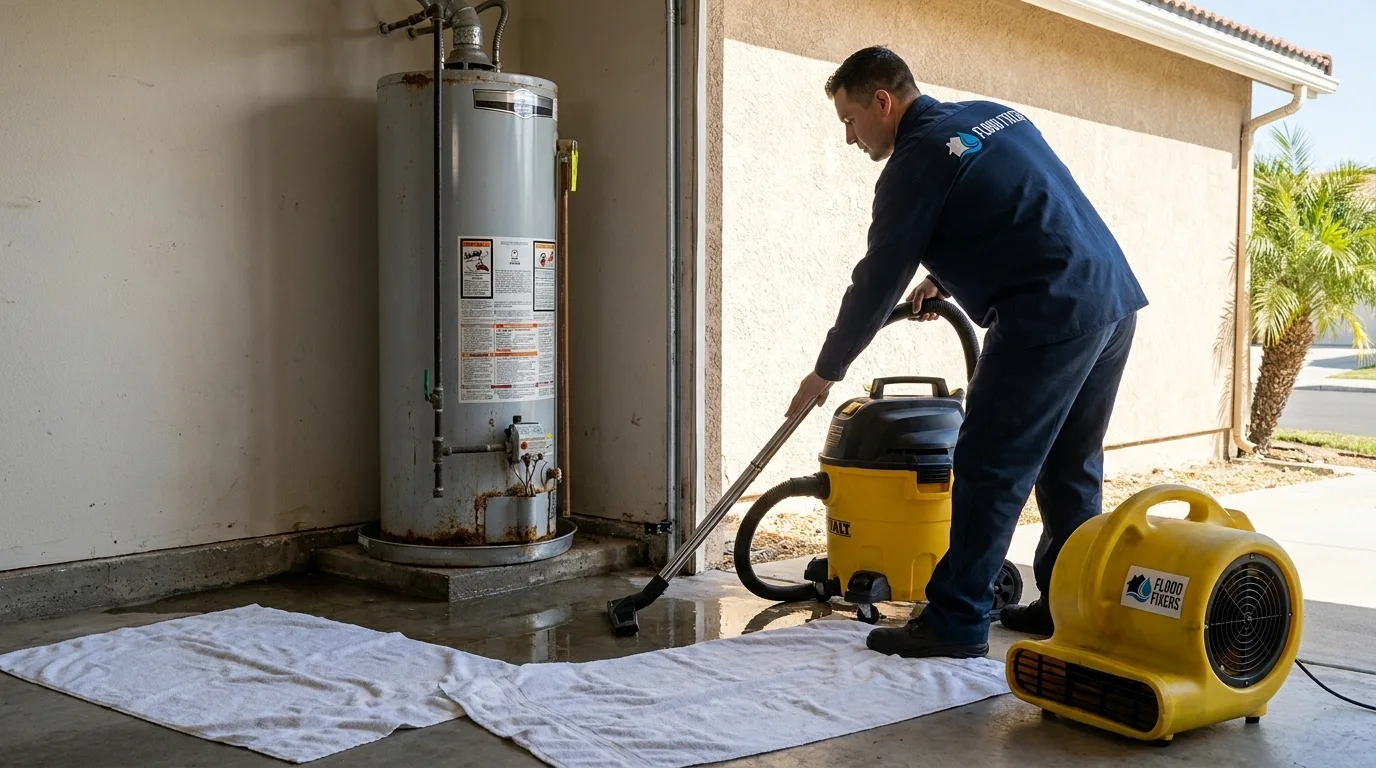
A burst or leaking water heater produces a specific damage footprint: water that’s been sitting against a hot tank, sometimes carrying sediment and mineral buildup from inside the unit, and sometimes mixed with rust. That’s different from clean supply-line water, and it changes how we treat the affected materials. Work typically includes pumping or wet-vacuuming standing water, pulling baseboards and sometimes drywall to check for wicking, running air movers and dehumidifiers, and checking subfloor and framing with a moisture meter before anything gets closed back up. Because these units are often installed in closets or garages adjacent to living space, the flood path frequently runs under a hallway or into a connecting room before anyone sees it.
Timelines vary with how long the unit was leaking before discovery. A sudden tank rupture caught within an hour or two is a different job than a slow weep that’s been running for days and has already reached subfloor insulation or a lower-level ceiling.
Our process
- Shut off the source. Before anything else, the water supply to the tank and, if needed, the gas or electric to the unit gets isolated so the loss stops growing.
- Extract standing water. Pumps and extraction units pull free water from flooring, closet pans, and any adjacent rooms the water reached.
- Check for hidden migration. Water heaters are often tucked against a wall, so we check behind baseboards, under vinyl or laminate, and into adjoining subfloor for water that traveled further than the visible puddle.
- Set drying equipment and monitor. Air movers and dehumidifiers go in based on the materials affected, and moisture readings get tracked over several days rather than assumed dry on day one.
- Document for your claim. Photos, moisture logs, and a written scope of the affected materials are put together so your insurer has what they need without back-and-forth delays.
What separates a good water heater flood response from a bad one
The most common mistake is treating a water heater leak like a simple mop-up job. A tank that’s been quietly leaking for days can saturate subfloor and wall cavities well beyond the visible wet area, and surface-drying the floor without checking underneath leaves moisture trapped where mold can start within 24 to 48 hours. Another frequent miss is ignoring the water heater pan and drain line, both of which can trap water that keeps wicking into the surrounding floor even after the main puddle is gone.
Insurance adjusters generally want to see documented moisture readings over time, not just a single reading at first visit, along with photos of any disassembly (baseboards pulled, flooring lifted) that shows why materials were removed rather than just dried in place. A rushed job that skips moisture mapping often results in a claim that gets questioned later, or worse, materials that look dry but are still holding water deep in the structure.
What does water heater flood cleanup cost?
Costs depend heavily on how long the leak ran before it was caught and how far the water traveled. A tank that failed and was caught within hours is a much smaller job than one that leaked into a finished basement or crawlspace over several days. Every loss is different, which is why we provide a written scope before work begins rather than a flat estimate over the phone. Homeowners insurance typically covers sudden water heater failures (a burst tank or valve failure) as a covered peril, though gradual leaks that went unnoticed for an extended period are sometimes scrutinized more closely by adjusters.
| Scenario | Typical range |
|---|---|
| Contained closet or garage leak, caught quickly | $600 - $1,800 |
| Water reached adjacent room flooring | $1,500 - $4,000 |
| Subfloor or wall cavity saturation | $3,000 - $7,500 |
| Slow leak discovered after several days | $4,000 - $10,000+ |
| Finished basement or crawlspace affected | $5,000 - $12,000+ |
Seasonal & regional considerations
Many San Diego homes, particularly older ones in neighborhoods like North Park, Normal Heights, and parts of Clairemont, still have original water heaters installed in interior closets rather than garages, which means a failure has a shorter path to hallway flooring and adjoining living space. Hard water throughout the region also accelerates sediment buildup inside tanks, which is a common contributor to premature tank failure and corrosion-related leaks.
Service area
We respond to water heater flooding throughout San Diego and the surrounding communities, from older housing stock near downtown to newer construction further inland.
If your water heater has failed or is actively leaking, call (855) 204-1124 to schedule extraction and drying before the water spreads further into your flooring and walls.
Frequently Asked Questions
Does homeowners insurance cover water heater flood damage?
My water heater leaked overnight, how do I know if the floor underneath is actually damaged?
Should I turn off my water heater if it's leaking?
Can a leaking water heater cause mold if it's not caught right away?
What's different about cleanup when the water heater leak included rust or sediment?
Looking for the best water heater flood cleanup company in San Diego?
Flood Fixers provides water heater flood cleanup in San Diego, CA and the surrounding area. Customers rate us 5.0 out of 5 stars across 9 Google reviews. We answer calls 24/7 — call (855) 204-1124 for immediate help.
Need Water Heater Flood Cleanup now?
We respond 24/7 across San Diego and surrounding CA cities.