

TL;DR: Storm and surface floodwater cleanup in San Marcos typically costs $1,500 to $3,000 for a single contaminated room, and $8,000 to $18,000 or more for a flooded first floor that needs extraction, a flood cut, and structural drying. Full reconstruction after the drying phase, new drywall, flooring, trim and paint, commonly adds $15,000 to $45,000+. The biggest cost driver isn’t square footage; it’s whether the water was clean or contaminated, because contaminated storm water forces removal of porous materials that clean water does not.
If storm runoff or street flooding pushed water into your San Marcos home this season, from a low spot near San Marcos Creek, a saturated yard in Twin Oaks Valley, or a window well that couldn’t keep up with the rain, you’re dealing with a different animal than a burst supply line. Storm and surface floodwater is almost always Category 3 water, also called black water, because it’s picked up soil, runoff contaminants and sometimes sewage on its way into the house. That classification drives nearly every cost decision that follows, from how much drywall comes out to whether your homeowners policy even applies.
How much does storm flood cleanup cost in San Marcos?
Most San Marcos homeowners pay somewhere between $1,500 for a single affected room and $18,000 or more for a flooded first floor, before any reconstruction. The spread comes down to three things: how much contaminated water came in, how far it traveled through the structure, and how many porous materials (drywall, carpet, pad, baseboards) have to be removed rather than just dried.
Here’s a typical range by scenario. These are industry-typical figures for Category 3 storm flooding, not a quote. Every loss is different, and a reputable contractor should give you a written scope before work begins.
| Scenario | Typical Cost Range |
|---|---|
| Single room, Category 3 extraction and antimicrobial treatment only | $1,500 - $3,000 |
| Whole first floor (1,000-1,500 sq ft): extraction, flood cut, structural drying | $8,000 - $18,000 |
| Drywall flood cut and removal | $12 - $25 per linear foot |
| Flooring removal and disposal (carpet, pad, laminate, engineered wood) | $2 - $5 per square foot |
| Containment and antimicrobial/antimicrobial fogging | $500 - $1,500 |
| Full reconstruction after mitigation (drywall, flooring, trim, paint) | $15,000 - $45,000+ |
What drives the price of storm floodwater cleanup?
The single biggest cost driver is contamination level, not the number of square feet underwater. Category 3 water requires removing and disposing of porous materials that touched it, where clean Category 1 water from a supply line can often be dried in place. That difference alone can double the bill.
A few other factors move the number up or down:
- How long the water sat. Storm flooding that stands for more than 24-48 hours lets contaminants and moisture work deeper into subfloor, baseboards and framing, increasing both removal and drying time.
- What the water touched. Carpet and pad almost always get discarded after Category 3 exposure. Hardwood and engineered flooring usually come up too, since standing contaminated water delaminates the subfloor bond.
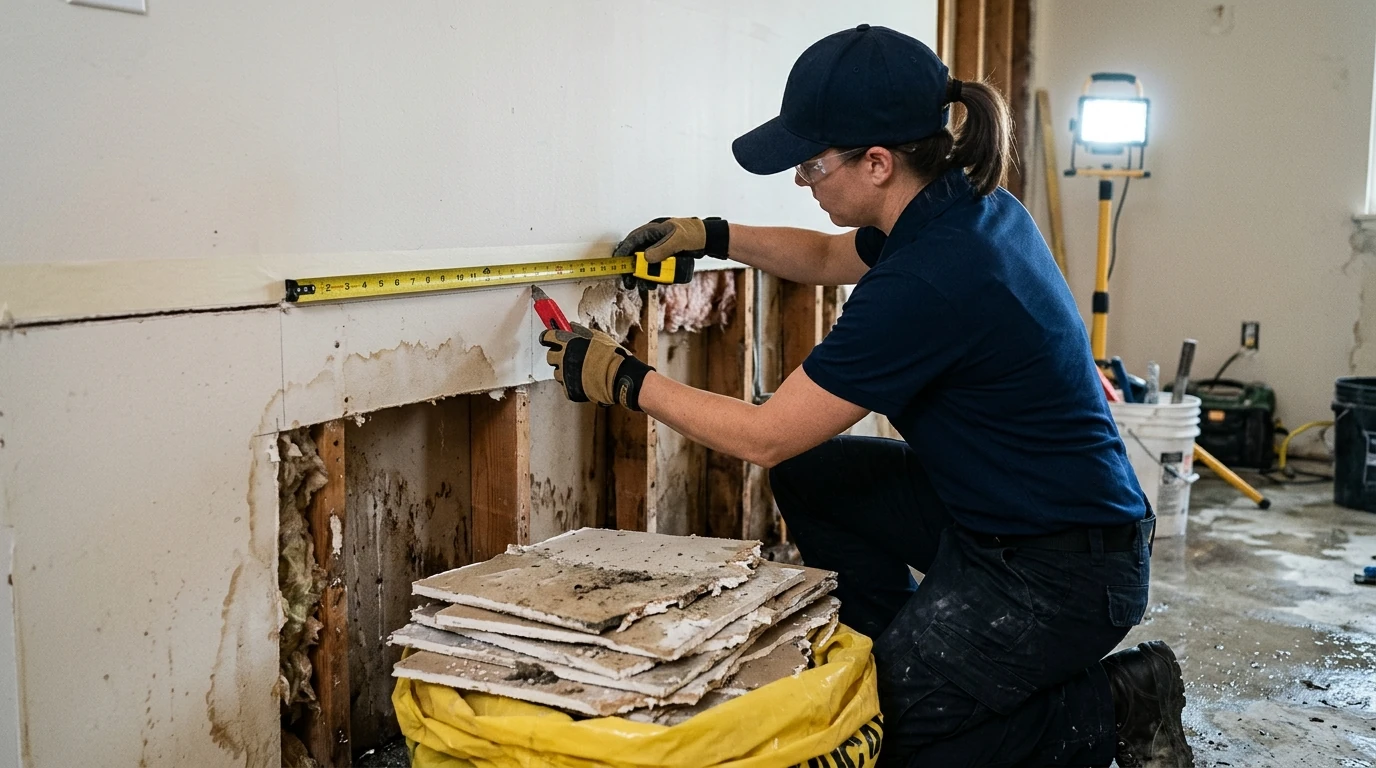
- How far it traveled vertically. Water wicking up drywall triggers a flood cut, typically 12-24 inches above the visible waterline, to remove material before mold gets a foothold.
- Square footage and number of affected rooms. More affected area means more air movers, more dehumidifiers, and more labor hours running equipment and monitoring drying progress.
- Drying days. Technicians monitor moisture content daily; most Category 3 jobs run 3-7 drying days before reconstruction can start, and each extra day adds equipment rental cost.
Does flood insurance cover storm flood cleanup?
Standard homeowners insurance usually does NOT cover storm or surface floodwater, because flood from outside the home (storm runoff, street flooding, a rising creek) is specifically excluded from most homeowners policies. Flood coverage requires a separate flood insurance policy, most often through the National Flood Insurance Program.
This is the single most important distinction in this whole guide, and it’s also the most commonly misunderstood. A burst pipe or failed water heater (water from INSIDE the home) is typically a homeowners claim. Storm water that enters from outside, through a door, window well, or saturated grading, is a flood claim, and without a standalone flood policy, that cleanup and rebuild cost usually comes out of pocket. Our guide to whether homeowners insurance covers flood damage walks through the distinction in more detail, and the National Flood Insurance Program is the place to check an existing policy or ask what a claim covers before you assume either way.
If you do carry an NFIP or private flood policy, document everything before cleanup starts: photos of the waterline, a list of affected contents, and dated notes on when the water entered. That documentation is what turns a disputed claim into an approved one.
What does the cleanup and rebuild process actually involve?
Storm flood cleanup happens in two distinct phases: mitigation (stopping the damage from getting worse) and reconstruction (putting the space back together). Here’s the order of operations:
- Extraction. Standing water gets pumped and vacuumed out with truck-mounted or portable extraction equipment, following the IICRC S500 standard for water damage mitigation.
- Contamination assessment. A technician identifies the water category and decides what has to come out versus what can be cleaned and dried in place.
- Demolition of affected materials. Soaked carpet, pad, and drywall up to the flood-cut line get removed and bagged for disposal.
- Antimicrobial treatment. Remaining framing, subfloor, and salvageable materials get treated to control bacterial growth before drying equipment goes in.
- Structural drying. Air movers and dehumidifiers run for several days while a technician tracks moisture content in the walls and subfloor until they hit a dry standard.
- Reconstruction. New drywall, insulation where needed, flooring, trim, and paint restore the space. This is the phase where cost tends to climb, since it’s full rebuild labor and materials rather than mitigation equipment time.
Who should handle storm flood cleanup in San Marcos?
A storm flood loss needs one crew that can do both the Category 3 mitigation and the reconstruction that follows, because splitting that work between two companies usually means paying for a second inspection and losing the moisture documentation that bridges the two phases. Flood Fixers handles both sides of that job for San Marcos homeowners, from extraction and antimicrobial treatment through drywall, flooring and trim rebuild, with the written scope and photo documentation that supports a flood insurance claim.
Get a documented inspection before any demolition starts. It’s the single thing that protects both your budget and your claim, whichever way the coverage question lands.
About Flood Fixers
Flood Fixers is an IICRC-certified restoration contractor serving San Marcos and the surrounding San Diego County region. The company handles water damage restoration, flood damage cleanup, and the reconstruction that follows, bringing EPA Lead-Safe certified crews and a written-scope approach to every storm and flood loss.
Need help now? Call Flood Fixers at (855) 204-1124.