
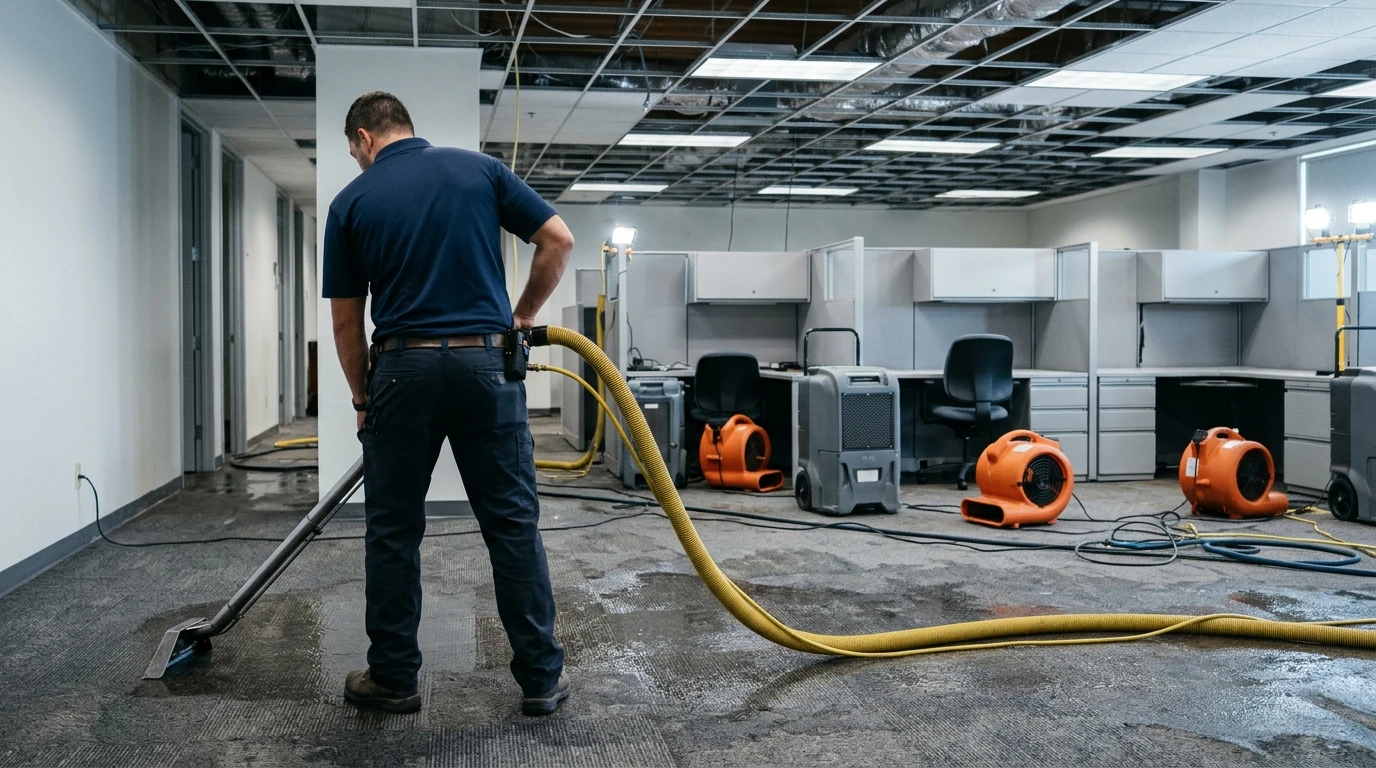
In San Marcos, CA, commercial water damage restoration typically costs between $3,500 and $200,000 or more. The range is wide because the job is really two different projects bundled together: mitigation (extraction, drying, decontamination) and, if materials are too damaged to save, rebuild. A small office suite with a clean supply-line break might land at $3,500 to $12,000 for mitigation alone. A flooded warehouse with contaminated water and extensive demolition can clear six figures once reconstruction is included.
If you manage a retail space, medical office, restaurant, or light-industrial building anywhere in the San Marcos business corridor, the number you actually pay depends on three variables more than any other: how many square feet got wet, what category of water caused the loss, and how much of the space has to be demolished versus just dried in place.
What Determines the Cost of Commercial Water Damage Restoration?
Square footage, water category, and material type drive most of the price, with access restrictions and timeline pressure adding to the total. A 1,500 square foot suite and a 15,000 square foot warehouse are not the same job even at the same water depth.
The biggest single factor is category of water under the ANSI/IICRC S500 standard. Category 1 (clean water, such as a supply line break) is the least expensive to remediate because materials can often be dried in place. Category 2 (gray water, such as washing machine or dishwasher discharge, or groundwater seeping through a foundation) usually means more porous material gets removed rather than dried. Category 3 (grossly contaminated, including any sewer or drain backup, feces-contaminated toilet overflow, or storm-driven flood water) requires removal of affected porous materials, antimicrobial treatment, and PPE, which adds labor cost regardless of square footage.
After category, the materials involved matter most: drywall below the waterline, insulation, carpet and carpet tile, drop ceiling grid and tile, and in some buildings the concrete slab itself. Commercial buildings also tend to have more electrical, HVAC ducting, and fire-suppression infrastructure in the affected zone than a typical home, and all of that has to be inspected before drying equipment goes in.
Typical Commercial Water Damage Restoration Costs in San Marcos
Here are industry-typical ranges by scenario. Every loss is different, and a written scope from a licensed contractor is the only reliable number for your specific building.
| Scenario | Typical Cost Range |
|---|---|
| Small office suite, Category 1 water, dry-out only (under 2,000 sq ft) | $3,500 - $12,000 |
| Mid-size retail or office space, Category 2 water, partial drywall and flooring replacement (2,000-10,000 sq ft) | $15,000 - $60,000 |
| Large warehouse or industrial space, Category 3 water, extensive demolition (10,000+ sq ft) | $50,000 - $200,000+ |
| Drop ceiling tile replacement (per 1,000 sq ft affected) | $1,500 - $4,000 |
| Carpet tile replacement (per 1,000 sq ft affected) | $2,000 - $5,000 |
| Concrete slab specialty (Class 4) drying, per zone | $1,500 - $4,500 |
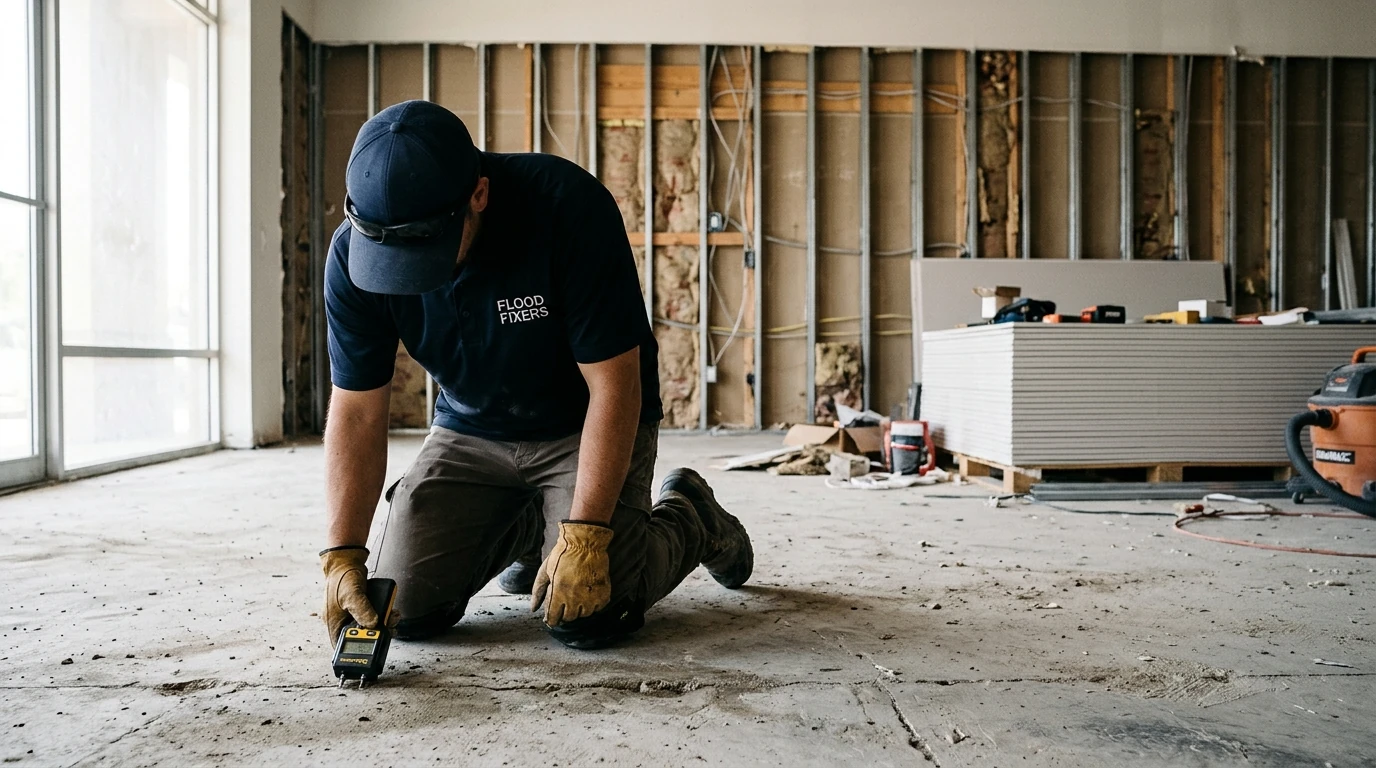
Mitigation Cost vs. Rebuild Cost: What’s the Difference?
Mitigation cost covers stopping further damage, water extraction, and structural drying; rebuild cost covers replacing what couldn’t be saved. These are billed differently and insurance often treats them differently too.
Mitigation is typically priced by equipment-days and labor: extractors, air movers, LGR dehumidifiers, and the technician hours to monitor drying with a moisture meter until materials read dry to the IICRC S500 standard. This phase usually runs a few days to two weeks depending on size and material type (concrete and masonry dry much slower than drywall and dimensional lumber).
Rebuild is a construction project: drywall, insulation, flooring, ceiling grid, paint, and sometimes code-required upgrades if the original materials predate current building code. This is where a reconstruction scope gets written separately from the mitigation invoice, which matters because many commercial policies and lenders want the two phases documented as distinct line items.
Does Commercial Property Insurance Cover the Cost?
Most commercial property policies cover sudden, accidental water damage, such as a burst supply line or a failed rooftop unit, but they typically exclude gradual leaks and require a separate endorsement for flood or sewer/sump backup. Business interruption coverage, when carried, can help offset lost income while the space is unusable, but it generally only triggers once the underlying property damage is a covered cause of loss.
Documentation protects the claim: photos before cleanup starts, a written scope separating mitigation from rebuild, and receipts for any emergency mitigation work done to meet the policyholder’s duty to mitigate further loss. Our companion post on commercial property insurance and water damage walks through what’s typically covered and what isn’t in more detail.
Can Part of the Business Stay Open During Restoration?
Often, yes, when the damage is contained to one zone and the crew can phase the work around it. Containment barriers, negative air setups, and off-hours scheduling let a restaurant kitchen, a retail floor, or a portion of an office keep operating while the affected area is isolated and dried.
Phasing adds coordination time but it’s usually worth it for the business: a retail tenant losing a stockroom to drying equipment can often keep the sales floor open, and a medical office can sometimes keep half its exam rooms running while the other half is under containment. This has to be planned at the scope stage, not improvised mid-job, since fire doors, HVAC zoning, and ADA access paths all affect where a barrier can legally go.
In San Marcos, Flood Fixers provides a written scope that separates mitigation from rebuild before work starts, which gives property managers, insurance adjusters, and lenders a document they can actually review and compare against the invoice. Request a commercial water damage estimate or call (855) 204-1124 to get a technician out to assess the space.
About Flood Fixers
Flood Fixers is an IICRC Certified company serving San Diego County, including San Marcos, with water damage, flood damage, and reconstruction services. The company operates on a 24/7 emergency service schedule and holds a 5.0 average Google rating from local reviews. This post was prepared with the Flood Fixers team.