
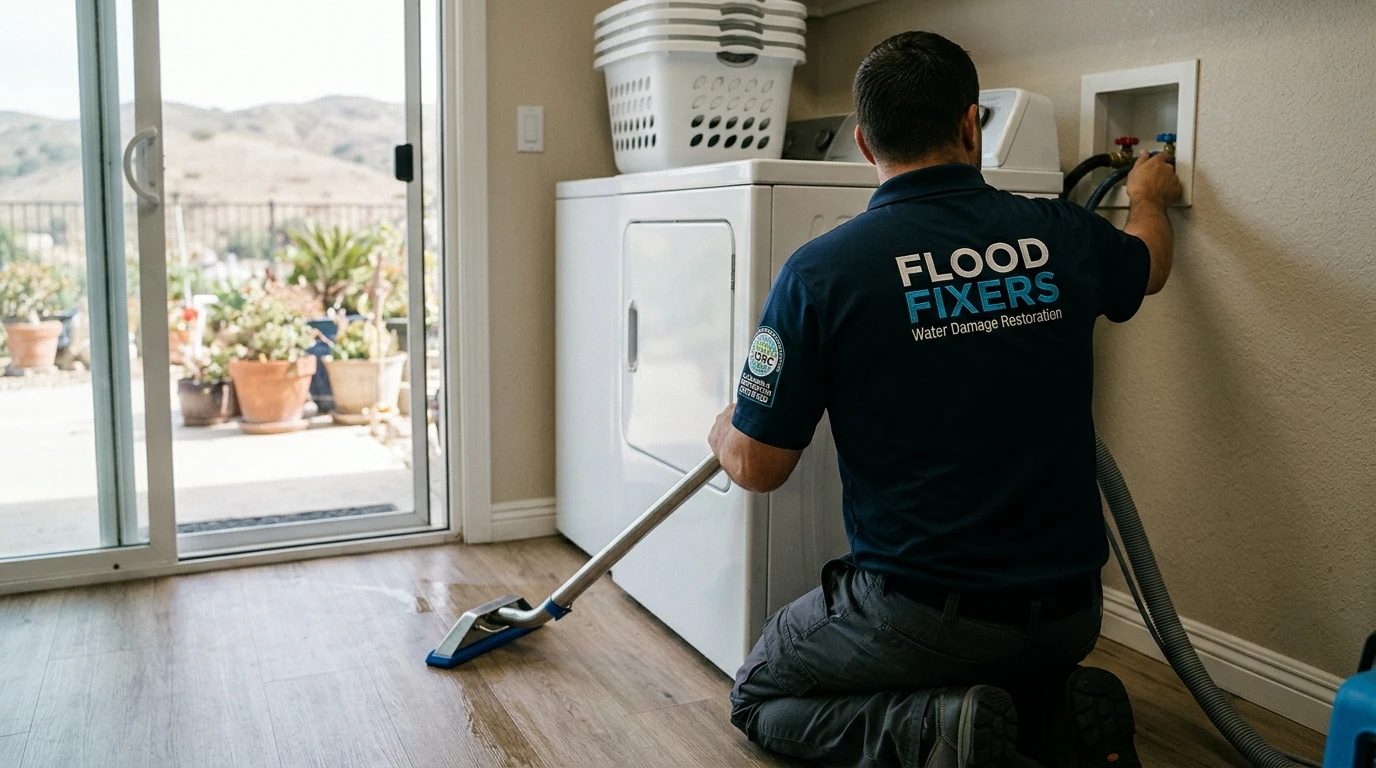
If your washing machine is flooding your laundry room right now, turn off the two water supply valves behind the machine first. They’re usually low on the wall, one marked hot and one cold, and shutting both stops the flow in seconds. Once the water is off, call Flood Fixers at (855) 204-1124. The company runs a 24/7 emergency line and its technicians are IICRC certified in water damage restoration, so extraction can start the same day a hose fails.
What Usually Causes a Washing Machine to Flood a House?
A burst rubber supply hose is the most common cause, not a broken machine. The hoses that connect the hot and cold valves to the back of the washer are often the original factory hoses, and rubber degrades with age and water pressure until it splits, sometimes while no one is home.
A few other failure points show up often in San Marcos homes. A drain hose can slip out of the standpipe during a spin cycle and send gray water across the floor instead of down the drain. A supply line fitting that was never fully tightened after an install, a move, or an appliance swap can work loose over months and leak slowly before it lets go all at once. If you’re due for a hose replacement, many plumbers recommend swapping rubber hoses for braided stainless steel lines, since they hold up far longer under constant pressure.
Do I Call a Plumber or a Water Damage Company First?
Call a plumber only if water is still actively running from a fitting or valve you can’t shut off yourself. For everything else, a water damage restoration company handles the extraction, the drying, and the documentation your insurance adjuster will ask for.
The water itself matters here. Supply line water that hasn’t touched the floor yet is Category 1, clean water, under the ANSI/IICRC S500 standard. But water that comes out during the wash or drain cycle, carrying detergent, lint, and fabric residue, is Category 2 gray water, and it usually means wet carpet pad, laminate underlayment, or baseboards get removed rather than just dried in place. Clean supply water that sits on a floor for more than a day or two can also degrade toward Category 2 as it picks up contaminants from the building materials around it.
Our post on who to call for water damage in San Marcos breaks down that decision tree in more detail if the source of the water isn’t the washer at all.
What If the Laundry Room Is Upstairs and Water Came Through the Ceiling?
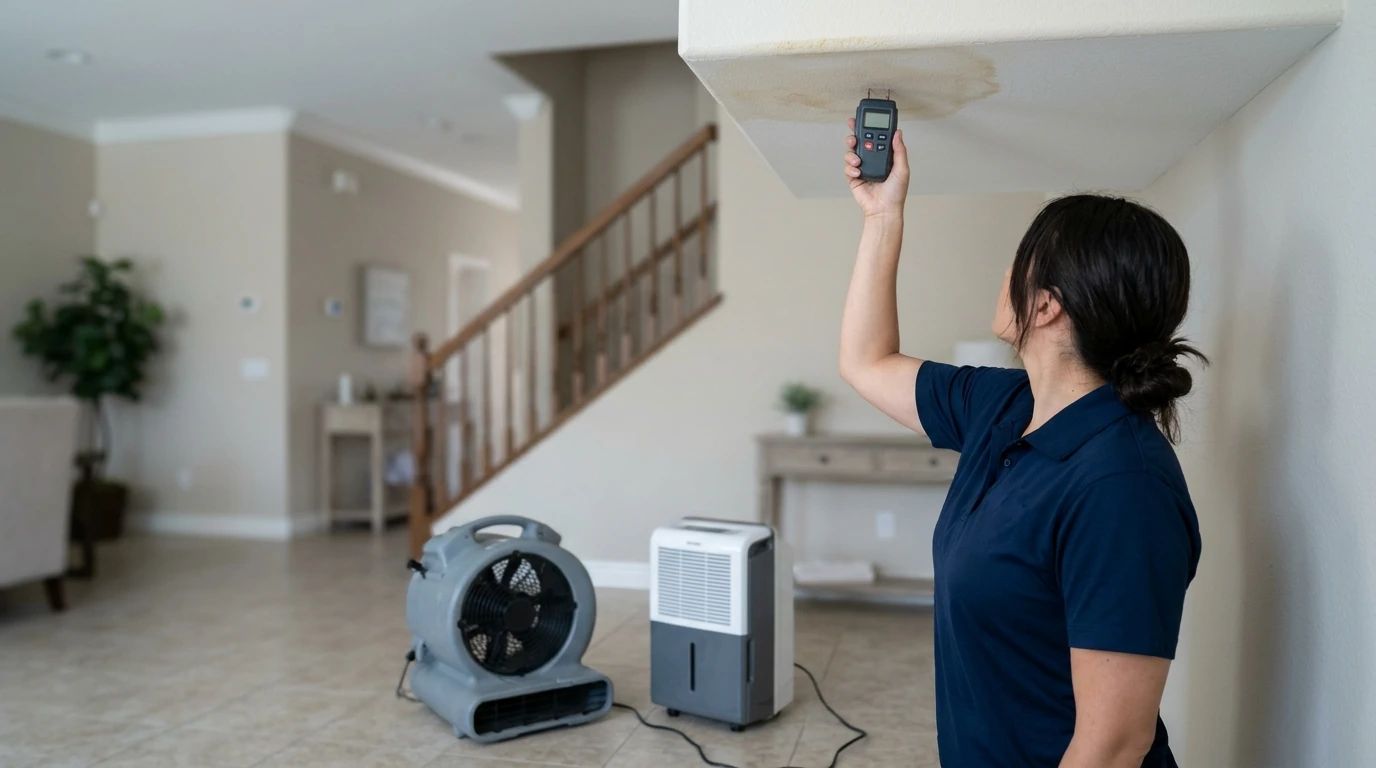
A stained or sagging ceiling below an upstairs laundry room means the subfloor and insulation above it are already saturated, even if the drywall still looks mostly dry on the surface. Two-story floor plans are common in San Marcos neighborhoods like San Elijo Hills and near Cal State San Marcos, and a laundry room on the second floor puts the washer directly over finished living space.
Don’t wait for a stain to spread before acting. Insulation soaked with gray water loses its R-value and can hold moisture against the drywall for days, which is exactly the setup mold needs. A ceiling water damage repair job in this situation usually means cutting an access section, pulling wet insulation, drying the joist bay with targeted air movement, and then patching and repainting once moisture readings come back to a dry baseline.
What Happens When You Call a Restoration Company for a Washing Machine Flood?
The call itself takes a few minutes and ends with a technician dispatched, often able to start work the same day depending on the time and your location in San Diego County. Have your insurance policy information handy, note which valve you shut off, and snap a few photos of the standing water and the washer connection before you move anything.
On arrival, a technician checks moisture levels in the flooring, baseboards, and any ceiling below with a moisture meter, then sets up emergency water removal equipment: extraction wands for standing water, air movers to push dry air across wet surfaces, and a dehumidifier sized to the room. If flooring or drywall is too saturated to dry in place, those materials come out before the drying equipment goes in. Everything gets documented, moisture readings, photos, equipment logs, because that paperwork is what your insurer will want to see.
A washing machine flood is rarely just about the puddle on the laundry floor. The real damage hides in the subfloor, the wall cavities, and the ceiling below if the laundry room sits on a second story. Call (855) 204-1124 for a water damage estimate before wet drywall turns into a mold problem; the EPA notes mold can start growing on a wet surface within 24 to 48 hours.
Video Transcript
If your washing machine is flooding the laundry room right now, don’t panic. Here’s exactly what you need to know. Most floods start with a burst rubber supply hose, not a broken machine. Rubber degrades with age until it splits. Find the two water valves behind the washer, one hot, one cold, low on the wall, and shut them both off. Once the water’s off, call a certified water damage team right away. Technicians can often start extraction the same day. Still have active water you can’t shut off? Call a plumber first. Otherwise, a restoration company handles extraction and drying. Clean supply water is one thing, but gray water from the drain cycle often means removing wet flooring, not just drying it. Laundry room upstairs? A stained ceiling means insulation above is already soaked, and mold can start within forty eight hours. A technician checks moisture levels in your floors and walls, then brings in extraction and drying equipment sized to the job. Every moisture reading, photo, and equipment log gets documented, giving you the paperwork your insurance adjuster will want to see. A flood is rarely just about the puddle on the floor. Call Flood Fixers at (855) 204-1124 to schedule an assessment.