
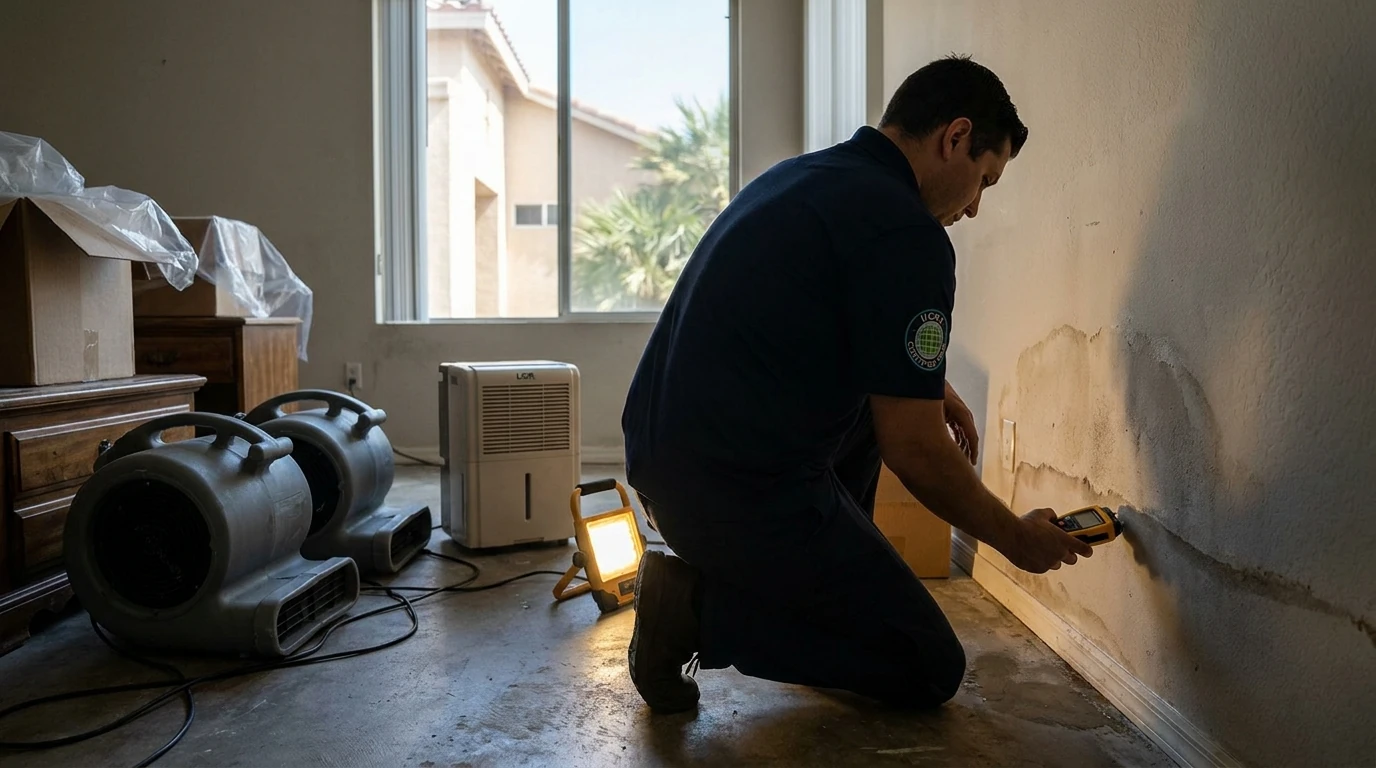
TL;DR: Water damage restoration in California typically costs $1,500 to $15,000 for most residential losses. A small, clean-water incident in one room runs $1,500 to $3,500. A multi-room loss involving contaminated water or structural materials can reach $8,000 to $15,000 or more. The biggest cost drivers are water category (clean vs. gray vs. black), how long the water sat, and what building materials got wet. Every loss is different, and a written scope from a certified restoration company is the only reliable way to know your actual number.
You just filed a claim, or you’re about to, and the adjuster is asking for a restoration estimate. Maybe you’re trying to figure out whether to file at all, or whether the number you got from a contractor sounds right. Either way, you need real cost data, not a vague range. This guide breaks down what California homeowners actually pay for water damage restoration in 2026, what moves the number up or down, and what your homeowners policy is likely to cover.
How Much Does Water Damage Restoration Cost in California?
In California, water damage restoration typically costs $1,500 to $15,000 for residential properties, with most homeowners paying between $3,000 and $8,000. That range reflects the wide variation in damage size, water type, and materials involved. A single-room clean-water loss is a very different job from a slab leak that soaked three rooms of hardwood flooring for 72 hours.
California labor rates run higher than the national average. The IICRC S500 Standard for Professional Water Damage Restoration sets the technical baseline for drying protocols, equipment placement, and documentation. Certified crews follow those protocols regardless of cost, but the labor and equipment costs in the San Diego metro and surrounding areas reflect local market rates.
Here is a breakdown of typical cost ranges by scenario:
| Scenario | Typical Cost Range |
|---|---|
| Single room, clean water (Cat 1), caught within 24 hours | $1,500 - $3,500 |
| Multi-room, clean water, standard drywall and carpet | $3,500 - $7,000 |
| Single room, gray water (Cat 2), partial material removal | $2,500 - $5,500 |
| Multi-room, gray water or slow leak, hardwood flooring | $5,000 - $10,000 |
| Sewage backup or black water (Cat 3), any size | $4,000 - $15,000+ |
| Slab leak with extended saturation, structural drying | $6,000 - $14,000 |
| Basement or crawl space flooding, standing water | $3,000 - $9,000 |
These are typical industry figures for the California market. Your actual cost depends on the specific conditions of your loss.
What Factors Drive the Cost Up or Down?
The water category is the single biggest cost variable. The IICRC classifies water losses into three categories: Category 1 (clean water from a supply line or appliance), Category 2 (gray water with some contamination, like a washing machine overflow or dishwasher leak), and Category 3 (black water, also called grossly contaminated water, including sewage backups and floodwater). Category 3 losses require full PPE, antimicrobial treatment, and often complete removal of porous materials that Category 1 losses would allow to be dried in place. That difference alone can double the cost of an otherwise similar job.
Beyond category, here are the factors that move the number:
- Square footage affected. Restoration pricing is often calculated per square foot for drying and per square foot or linear foot for material removal. More area means more equipment, more labor hours, and more disposal.
- Class of water intrusion. The IICRC also classifies losses by Class 1 through 4, based on how much of the building assembly got wet. A Class 1 loss (surface-level, low porosity) dries faster and cheaper than a Class 4 loss (deeply saturated concrete, hardwood, or plaster).
- Materials affected. Drywall and carpet are cheaper to remove and replace than hardwood flooring, tile backer, or plaster. Wet insulation almost always has to come out. Wet engineered wood subfloor is a judgment call that depends on moisture readings.
- Response time. Water that sat for 24 hours or less is a very different job from water that sat for 72 hours or more. After 24 to 48 hours, mold growth becomes a real risk (see EPA guidance on mold and moisture). Delayed response often converts a Category 1 loss into a Category 2 or 3 scenario as secondary damage sets in.
- Structural drying complexity. Slab foundations, double-wall assemblies, and cabinets that trap moisture require specialized drying equipment and more monitoring days. That adds equipment rental days and technician visits to the total.
- Code upgrade requirements. California building code may require upgrades when materials are removed, especially in older homes. If your 1970s bathroom has asbestos floor tile behind the vinyl, abatement adds cost before reconstruction can begin.
For a deeper look at the drying process itself, see What Does the Water Damage Restoration Process Involve?
Will Homeowners Insurance Cover Water Damage Restoration in California?
Most standard homeowners policies in California cover sudden, accidental water damage but exclude gradual leaks, flooding, and maintenance-related failures. That distinction matters a lot when you are trying to decide whether to file a claim.
Here is how coverage typically breaks down:
Usually covered: Burst pipe, failed appliance supply line (washing machine, dishwasher, refrigerator ice maker), accidental overflow, roof leak from a sudden storm event. The policy covers mitigation (drying, extraction, demolition to dry) and reconstruction to pre-loss condition.
Usually not covered: Slow leak behind a wall that went undetected for months, groundwater flooding (that requires a separate NFIP or private flood policy), sewer backup unless you have a specific endorsement, and damage caused by deferred maintenance.
The deductible reality: Most California homeowners carry a $1,000 to $2,500 deductible. For losses under $3,000, filing a claim may not be worth it given the premium impact. For losses above $5,000, filing almost always makes financial sense.
Documentation is what protects your claim. An IICRC-certified restoration company will produce moisture mapping, equipment logs, and a written scope of work. That documentation is what adjusters use to approve or dispute a claim. Gaps in documentation are the most common reason claims get partially denied.
For more on what policies typically cover, see Does Homeowners Insurance Cover Water Damage? A Plain-English Guide and The Difference Between Flood Damage and Water Damage (And Why It Matters).
What Does the Water Damage Restoration Process Actually Involve?
Knowing the phases helps you understand what you are paying for and why cutting corners on any phase creates bigger problems later.
- Emergency extraction. Truck-mounted or portable extractors remove standing water. This is the first priority because every hour of standing water increases saturation depth and secondary damage risk.
- Moisture mapping and documentation. Technicians use thermal imaging cameras and calibrated moisture meters to map the full extent of saturation, including inside walls and under flooring. This step defines the scope of work and generates the documentation your adjuster needs.
- Controlled demolition (if required). Wet drywall, insulation, and flooring that cannot be dried in place are removed. The goal is to expose wet building cavities to drying equipment, not to demolish more than necessary.
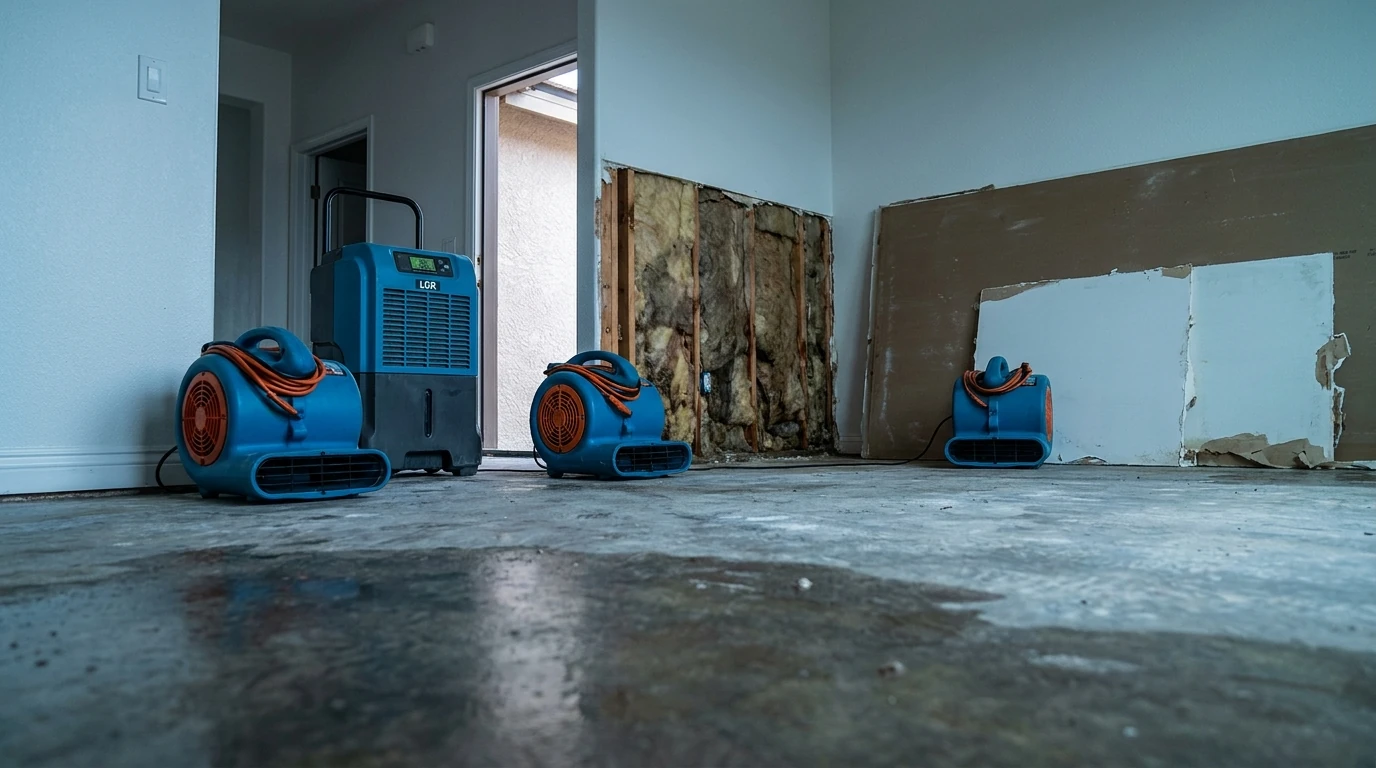
- Structural drying. Industrial air movers and low-grain refrigerant (LGR) dehumidifiers run continuously, typically for 3 to 5 days, until moisture readings return to dry standard. Technicians return daily to monitor readings and adjust equipment placement.
- Antimicrobial treatment. Applied to affected surfaces to inhibit mold growth, especially on Category 2 or 3 losses.
- Final moisture verification. Documented moisture readings at or below dry standard before equipment is removed. This is the sign-off that drying is complete.
- Reconstruction. Replacing drywall, flooring, trim, and finishes to pre-loss condition. For Flood Fixers clients, reconstruction and general contracting are handled in-house, which simplifies the handoff from mitigation to rebuild.
For a detailed look at how long each phase takes, see How Long Does Water Damage Restoration Actually Take?
What Should You Do Right Now?
If you have active water damage, the clock matters. Mold can begin developing within 24 to 48 hours of a water event. The longer wet materials stay wet, the more likely a manageable mitigation job becomes a full remediation and rebuild.
Stop the water source first if you can do so safely. If a pipe is still running, shut off the main. If you are not sure where the shutoff is or the source is unclear, call a plumber before calling a restoration company. Once the source is controlled, the next call is to a certified restoration company for extraction and moisture mapping.
For San Diego County homeowners, Flood Fixers is available 24/7 at (855) 204-1124. Every job starts with a written scope before work begins, so you know exactly what you are authorizing.
About Flood Fixers
Flood Fixers is an IICRC Certified, EPA Lead-Safe Certified, licensed and insured restoration company serving San Diego, Chula Vista, Oceanside, Escondido, Carlsbad, El Cajon, and surrounding communities throughout San Diego County. Their crews handle water damage restoration, flood damage restoration, burst pipe repair, basement flooding cleanup, and full reconstruction and general contracting services. Every loss gets a written scope of work before work begins.
Video Transcript
Water damage in your California home? Before you call your insurance company, you need to know what restoration actually costs in 2026. For most California homeowners, water damage restoration runs between fifteen hundred and fifteen thousand dollars. Most jobs land between three thousand and eight thousand. A small clean-water leak caught within twenty-four hours is your best-case scenario, typically fifteen hundred to thirty-five hundred dollars. Multi-room damage or contaminated water pushes that number to eight thousand, fifteen thousand, or higher. The biggest cost driver is water category. Clean water from a supply line is the cheapest to fix. Sewage backup is the most expensive, requiring full protective gear and complete material removal. How long the water sat matters enormously. After just forty-eight hours, mold risk rises fast and a simple job can become a much larger one. Materials make a big difference too. Drywall and carpet cost less to replace than hardwood floors, tile backer, or plaster. Most standard California homeowners policies cover sudden, accidental damage, like a burst pipe. Gradual leaks and flooding are usually excluded. Industrial drying equipment runs continuously for several days until moisture readings confirm everything is dry. That process protects your home from hidden mold. Every job is different. Get a written estimate from a certified restoration contractor. Call Flood Fixers at 855-204-1124 for a free estimate today.