
Smoke odor doesn’t just sit on top of your walls and furniture. It works into drywall, insulation, wood framing, carpet padding, and HVAC ductwork, which is why spraying air freshener or running a box fan rarely makes it go away for good. Professional smoke odor removal works because it targets the source, the microscopic soot particles and gas residues embedded in porous materials, rather than masking the smell on the surface. DIY methods almost always fail because they clean what you can see and ignore what you can’t, so the odor returns within days, especially when humidity rises or the heat kicks on.
Why Smoke Odor Lingers Long After the Fire Is Out
Smoke isn’t one substance. A kitchen fire produces different residue than a structure fire that involved synthetic furniture, and wildfire smoke drifting in from a Santa Ana wind event behaves differently still. Protein residue from a stovetop fire is nearly invisible but has an intensely sharp, acrid smell that clings to cabinetry and painted surfaces. Synthetic residue from burning plastics and foam leaves a sticky, smeared film. Wood smoke residue is drier and powdery, and it travels the farthest through a home’s air handling system.
In all of these cases, the smoke particles are small enough to penetrate grout lines, settle inside wall cavities, and get pulled into HVAC ductwork, where they keep recirculating every time the system runs. Odor molecules also bond chemically with materials like drywall paper and unsealed wood, which is why a room can look completely clean and still smell like smoke weeks later.
What You Can Do Right Away
- Ventilate the space. Open windows and run exhaust fans if it’s safe to do so, especially if the fire was recent and soot is still airborne.
- Change HVAC filters immediately and avoid running the system on recirculate until ductwork has been inspected, since this spreads residue to unaffected rooms.
- Remove soft, washable items (clothing, bedding, curtains) for separate laundering. Standard detergent won’t fully neutralize smoke odor, but it’s a reasonable first pass.
- Bag and isolate heavily smoke-affected textiles like upholstery cushions in sealed plastic rather than leaving them out, which slows the odor from spreading to unaffected rooms.
- Photograph everything before you move or clean anything, for insurance documentation.
These steps slow the spread of odor and residue. They do not remove it.
Why DIY Odor Removal Usually Fails
Most store-bought solutions attack the symptom, not the source:
- Air fresheners and odor-masking sprays add a second scent on top of the smoke smell rather than eliminating the odor-causing particles. Once the spray’s scent fades, the smoke odor is still there, sometimes stronger because it’s now mixed with a sweet or floral chemical layer.
- Consumer ozone generators can reduce some odor temporarily, but ozone at safe consumer concentrations doesn’t penetrate deep into porous materials the way professional-grade equipment and application methods do. Ozone also shouldn’t be run in occupied spaces, and off-the-shelf units often don’t ventilate or clear properly afterward.
- Baking soda and vinegar absorb light, surface-level odor in a small, enclosed space like a car or closet, but they have no effect on residue embedded in drywall, subfloor, or ductwork.
- Repainting over smoke-damaged walls without sealing first is one of the most common mistakes homeowners make. Smoke residue bleeds through standard paint within weeks because the odor compounds are still chemically active underneath.
- Scrubbing soot with an all-purpose cleaner can actually smear protein-based residue deeper into the surface, making it harder to remove later and sometimes staining permanently.
The common thread: surface treatments can’t reach what’s trapped inside the material itself, and many DIY attempts actually make the professional remediation that follows more difficult.
When to Call a Professional
Call a restoration company rather than continuing to troubleshoot it yourself if:
- The smell is still noticeable 48 to 72 hours after ventilating and cleaning surfaces.
- The fire involved synthetic materials (furniture, electronics, plastics), which produce more aggressive, deeper-penetrating residue.
- Smoke traveled through HVAC ductwork and multiple rooms now carry the odor, even ones not visibly damaged.
- You’re dealing with a homeowner’s insurance claim and need documented, professional assessment of smoke and soot damage for the adjuster.
- There’s any char, heat damage, or water used in firefighting efforts in addition to smoke, since that combination often needs structural drying alongside odor remediation.
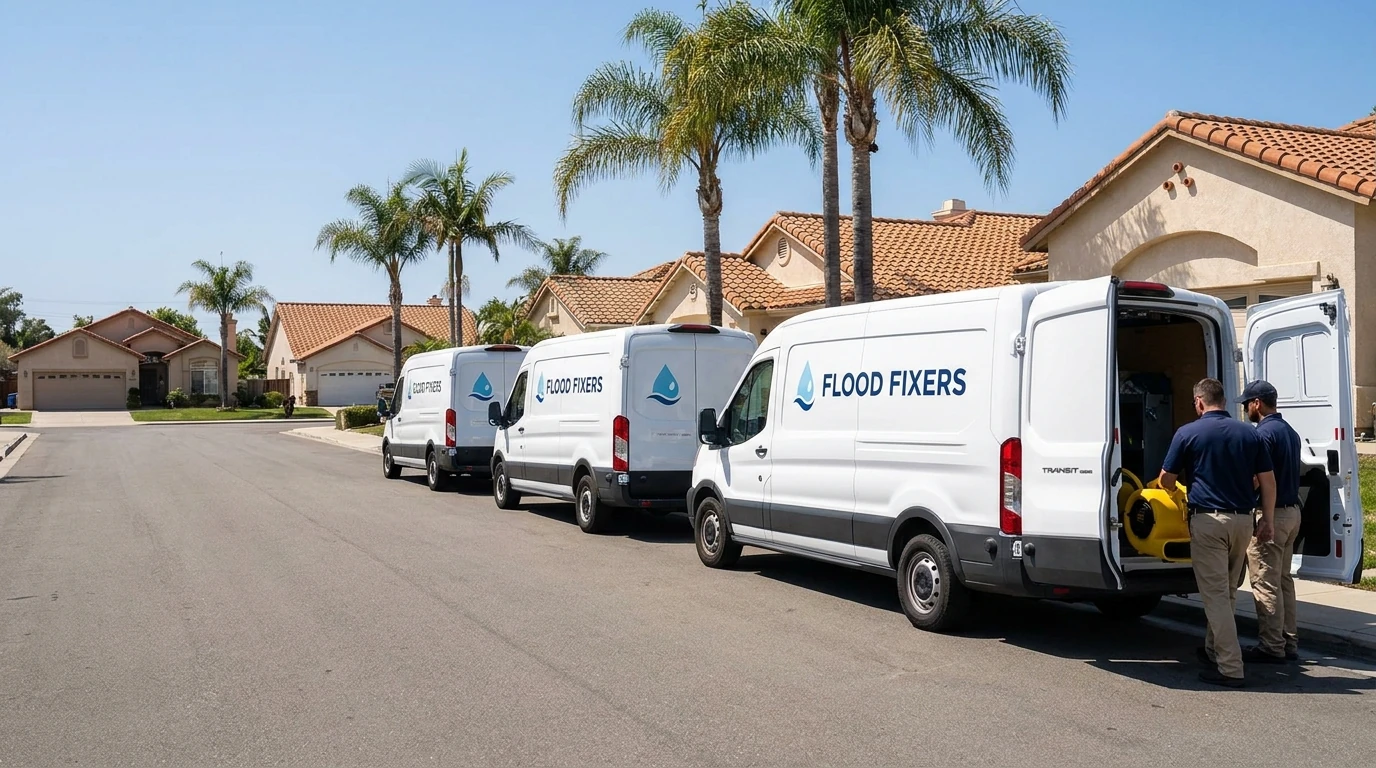
Flood Fixers handles smoke damage restoration and fire damage restoration for homes throughout San Diego, and the assessment typically starts with identifying what type of residue is present and how far it has traveled through the structure before any equipment goes in.
The Professional Recovery Process
Professional smoke odor removal generally follows a sequence, not a single treatment:
- Assessment and residue identification. Technicians identify whether residue is protein-based, synthetic, or wood smoke, since each requires a different cleaning agent and approach.
- HEPA vacuuming and dry cleaning of soot from hard surfaces before any wet cleaning begins, since water can set some types of soot into a permanent stain.
- Thermal fogging or ULV (ultra-low volume) misting, which uses heat or fine particle application to drive a deodorizing agent into the same pores and cracks the smoke penetrated, neutralizing odor at the molecular level rather than covering it.
- Hydroxyl generators or ozone treatment in a sealed, unoccupied space, run for a controlled period and followed by full ventilation, which is a very different process from a consumer unit left running in a bedroom.
- Sealing and encapsulating affected drywall, framing, or subfloor with an odor-blocking primer before any repainting or finish work happens, so residual odor compounds can’t bleed back through.
- Duct cleaning, when smoke has circulated through the HVAC system, so the odor doesn’t return every time the furnace or air conditioner cycles on.
Materials dried and cleaned according to IICRC S700 fire restoration guidelines go through documented moisture and residue checks at each stage, which also gives homeowners a paper trail for insurance purposes.
Smoke odor that lingers after a fire is rarely a cleaning problem, it’s a penetration problem. If surface cleaning and ventilation haven’t resolved the smell after a few days, the residue has worked into the materials themselves, and that calls for equipment and techniques beyond what’s available at a hardware store. Flood Fixers can assess the extent of smoke and soot damage in your home and outline what remediation will actually involve. Call (855) 204-1124 to schedule an assessment.