Fire damage restoration isn’t just cleaning up soot. It’s a sequence of assessment, mitigation, cleaning, deodorization, and rebuilding that typically runs anywhere from a few weeks to several months, depending on how much of the structure burned versus how much was damaged by smoke, heat, and the water used to put the fire out. If you’re standing in a house that just had a fire, the short version is this: get a professional assessment before you touch anything, because soot is acidic and starts etching metal, glass, and finishes within hours, and the water sitting in your walls and subfloor from firefighting efforts can grow mold within 24 to 48 hours.
What a Fire Actually Does to a Structure
People picture fire damage as charred wood and melted plastic in the room where the fire started. That’s only part of it. Smoke travels. It moves through HVAC ducts, gaps around outlets, and attic spaces, carrying soot particles into rooms the fire never reached. Those particles are acidic, and they bond to surfaces faster in humid conditions, which matters in coastal San Diego neighborhoods where marine layer moisture keeps indoor humidity elevated for parts of the year.
Heat damage isn’t limited to visible charring either. Drywall and studs near the fire’s source can be weakened structurally even where the surface looks intact. And then there’s water: fire hoses put thousands of gallons into a structure during suppression, which means a fire loss is almost always a water loss too. That combination, soot plus water plus heat-stressed materials, is why fire damage restoration is a different discipline than a simple cleanup.
Immediate Steps After the Fire Department Clears the Scene
Once the fire department gives you the all-clear to re-enter (never go back in before they do), there are a few things worth doing right away:
- Document everything with photos and video before anything is moved, cleaned, or discarded. Insurance adjusters rely heavily on this record.
- Contact your insurance carrier to open a claim and ask what documentation they require, including whether they want an independent assessment before any cleanup starts.
- Secure the property. If windows are broken or the roof has a hole from fire department ventilation, board-up and tarping prevents weather and theft from adding a second layer of damage on top of the fire.
- Shut off utilities if the fire department hasn’t already, particularly gas, since a damaged line can leak undetected.
- Note what’s salvageable from memory like important documents, medications, and anything irreplaceable, so you know what to prioritize retrieving carefully.
Avoid turning on the HVAC system until it’s been inspected. If soot made it into the ductwork, running the system just recirculates it through the house.
What Not to Do Before Professional Help Arrives
A lot of well-intentioned cleanup in the first 24 hours makes the restoration harder, not easier.
- Don’t wipe soot off walls or ceilings with a wet rag. Wet-wiping dry soot smears it and drives it deeper into porous surfaces like drywall and painted trim, turning a cleanable surface into one that needs replacement.
- Don’t run fans or open windows to “air it out” before smoke odor assessment happens. Moving air can push soot particles into unaffected rooms and into fabrics, carpet, and upholstery that were otherwise clean.
- Don’t throw away damaged items before they’re documented. Even items that look like a total loss can matter for the insurance claim.
- Don’t eat food that was in the kitchen during the fire, even if packaging looks intact. Heat and smoke can compromise packaging seals.
- Don’t assume a room with no visible flame damage is unaffected. Smoke odor and soot residue can be present in rooms far from the fire’s origin, and that’s exactly the kind of damage a smoke damage restoration assessment is built to catch.
When to Call a Professional Restoration Team
Small, contained incidents, like a pan fire that scorched a stovetop and set off some smoke alarms, might be manageable with careful DIY cleaning and some odor-neutralizing products. Anything beyond that threshold usually calls for a professional crew:
- Fire that spread beyond its point of origin or burned through a wall, ceiling, or floor assembly
- Smoke odor that’s noticeable in rooms away from the fire
- Any water used by the fire department that soaked flooring, drywall, or insulation
- Soot visible on surfaces beyond the immediate fire area
- A claim being filed with your insurance company, since documentation and drying standards matter for the payout
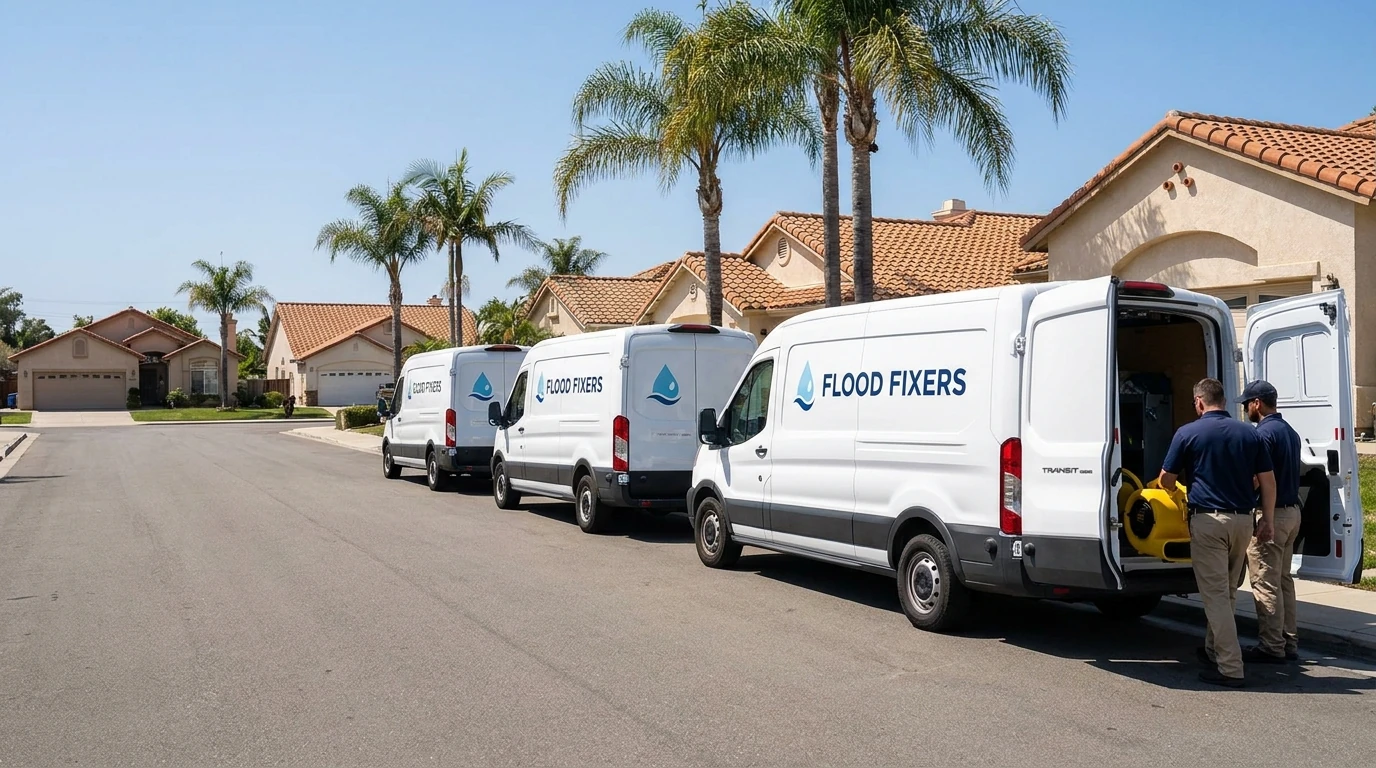
Professional fire damage restoration uses equipment most households don’t have access to: HEPA air scrubbers to pull soot particles out of the air, thermal fogging or ozone treatment for smoke odor that’s penetrated porous materials, and moisture meters to confirm that water from suppression efforts has actually been removed from wall cavities and subflooring, not just the visible surface. Flood Fixers can walk a property in San Diego and tell you within the first assessment whether you’re looking at a cleaning job or a reconstruction job, which matters for budgeting and for talking to your adjuster.
The Longer Recovery Process
Once the immediate mitigation is done, the actual restoration tends to follow a sequence:
Assessment and scoping. A technician walks the property, tests materials, and documents the extent of fire, smoke, and water damage room by room. This becomes the basis for the insurance estimate.
Water extraction and structural drying. If firefighting water is present, it gets extracted and the structure is dried, following the same drying principles used in standard water damage restoration, to get ahead of mold before it starts.
Soot and debris removal. Charred materials, damaged drywall, and unsalvageable contents are removed. Surfaces that can be cleaned rather than replaced are treated with specialized soot-removal techniques specific to the surface type, since wood, metal, and fabric all respond differently to soot.
Odor treatment. This is often the part homeowners underestimate. Surface cleaning can leave a structure looking fine while the smoke smell lingers in insulation, subflooring, or HVAC ductwork. Odor treatment typically requires sealing and treating porous materials, not just spraying an air freshener over the top.
Reconstruction. Drywall, flooring, cabinetry, and anything else removed during mitigation gets rebuilt. This stage can take the longest, particularly if permitting is required for structural repairs, which is common in older San Diego housing stock with original 1940s-60s electrical and framing that may need to be brought up to current code during the rebuild.
The timeline varies enormously based on scope. A single-room smoke and soot cleanup might wrap in one to two weeks. A fire that compromised framing or spread through multiple rooms can take months once reconstruction is factored in.
If you’re dealing with fire damage right now, the window to prevent secondary damage from soot and trapped moisture is measured in hours, not days. Flood Fixers can assess the property, document the damage for your insurance claim, and walk you through whether you’re looking at a cleaning job or a full reconstruction. Call (855) 204-1124 to get a professional opinion before you decide what to tackle yourself.