
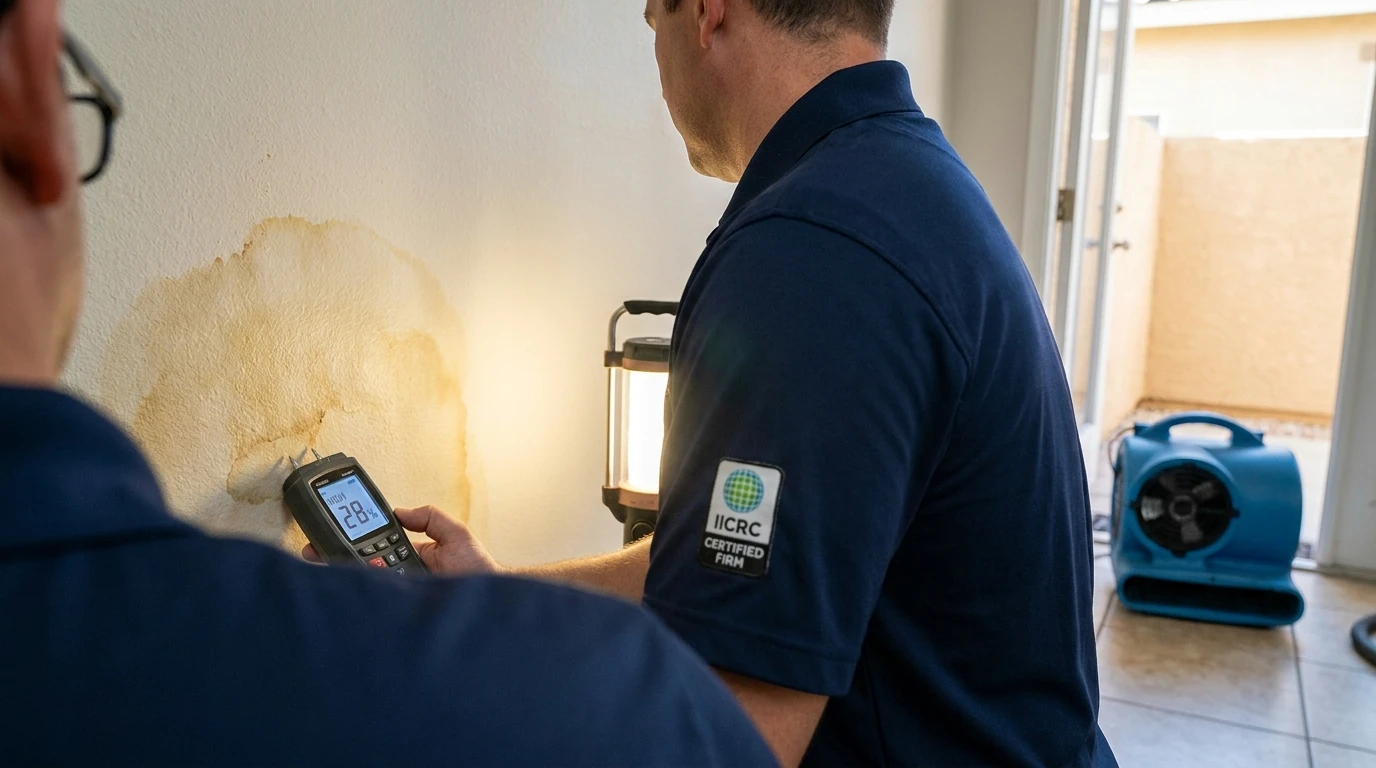
TL;DR: The most reliable signs of water damage behind walls are yellowish-brown staining, bubbling or peeling paint, soft or warped drywall, a persistent musty smell, visible mold growth at baseboards, unexplained spikes in your water bill, and elevated moisture readings when you press a moisture meter against the wall. Any one of these warrants investigation. Two or more together almost always means active or recent water intrusion that needs professional assessment.
You haven’t seen a leak. No pipe has burst in plain sight. But something feels off, a faint musty smell that won’t go away, a soft spot on the wall near the bathroom, paint that’s starting to bubble for no obvious reason. Hidden water damage is common precisely because most of your home’s plumbing runs inside walls, and drywall can hold a surprising amount of moisture before the surface gives it away. Here are seven things to look for, and what each one means.
What does water damage behind walls actually look like?
The most visible sign is discoloration: yellowish-brown or rust-colored staining that bleeds through paint or drywall paper. These stains form when water carrying minerals, rust, or organic material from the pipe or framing dries and leaves residue behind. A single stain that appeared after a known event (a heavy rain, a plumbing repair) may be old and dry. A stain that keeps spreading or darkening means water is still moving.
Beyond staining, watch for:
- Bubbling, peeling, or blistering paint. Paint loses adhesion when the drywall beneath it gets wet. If you see bubbles that weren’t there last week, moisture is likely trapped between the paint film and the wall surface.
- Warped or soft drywall. Press gently on the wall with your palm. Drywall that flexes, feels spongy, or has visible bowing has absorbed enough water to compromise its gypsum core. At that stage, the drywall almost certainly needs replacement.
- Buckled baseboards or trim. Wood trim absorbs moisture from the bottom up. Baseboards that are pulling away from the wall or have a wave in them often signal water pooling at the floor level inside the wall cavity.
What does a musty smell from water damage mean?
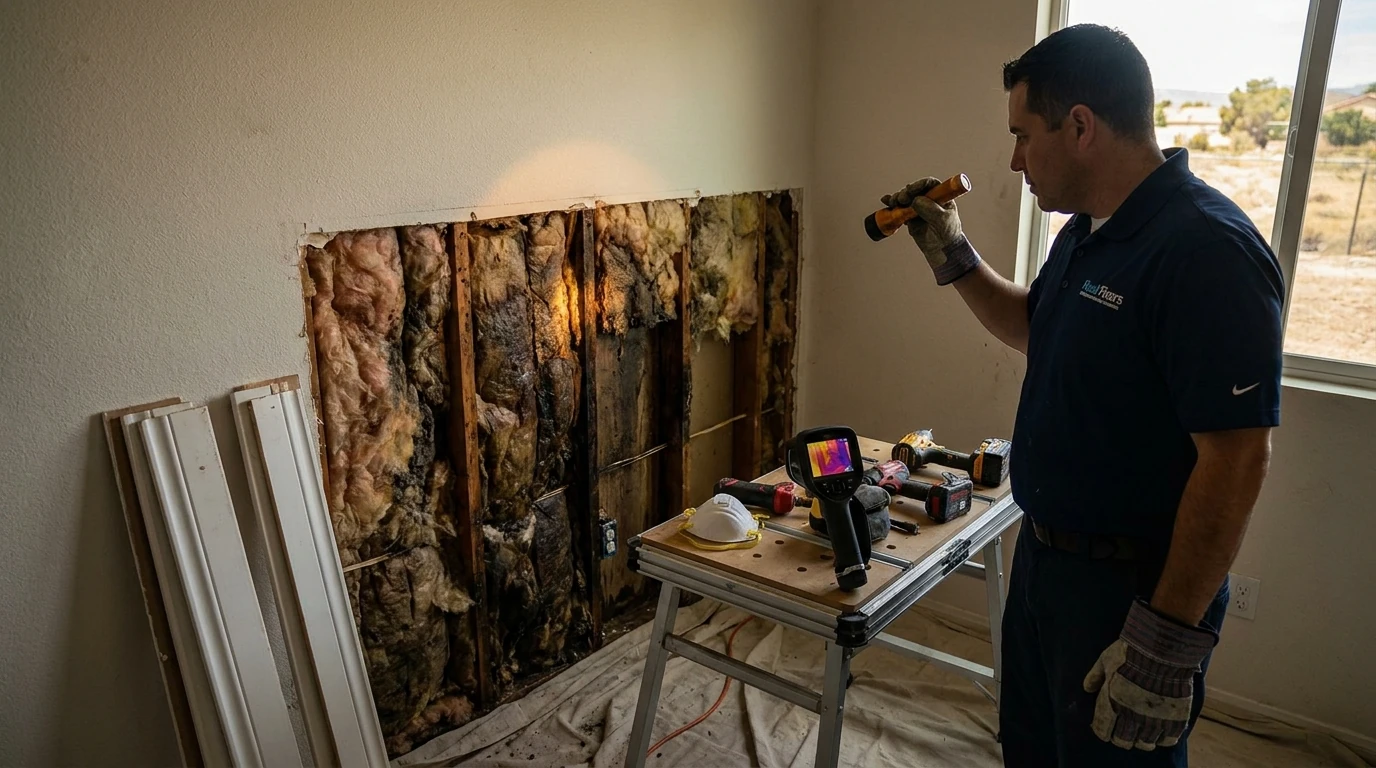
A persistent musty or earthy odor, especially in a room that isn’t naturally damp, is one of the earliest indicators of mold growth inside a wall cavity. Mold can begin colonizing wet drywall and wood framing within 24 to 48 hours of water exposure, according to the EPA’s guidance on mold cleanup. The smell often appears before any visible surface signs because the mold is growing on the back face of the drywall or on the wood studs, where you can’t see it.
If the smell is strongest near an exterior wall, a bathroom wall, or under a window, those are your most likely source zones. Don’t mask it with air freshener, that delays the diagnosis and gives mold more time to spread.
How do you detect hidden water damage you can’t see?
A non-invasive moisture meter is the most practical tool for confirming what your eyes can’t. Pin-type meters measure electrical resistance through drywall; pinless meters use radio frequency to scan deeper. Readings above 17% moisture content in drywall are generally considered elevated; readings above 25% indicate active saturation that will support mold growth. You can buy a basic pin-type meter for $20-$40 at any hardware store, or a restoration contractor will bring a professional-grade unit as part of any assessment.
Other detection methods:
- Check your water meter. Turn off every fixture and appliance in the house, then watch the meter for 15 minutes. If it moves, water is flowing somewhere, likely a slow leak inside a wall. This is a quick, free test that homeowners can do themselves.
- Infrared thermal imaging. Professionals use thermal cameras to spot temperature differences that indicate evaporative cooling from wet areas. This is non-destructive and can map the full extent of moisture behind walls and ceilings without opening anything up.
- Tap the wall. A dry wall sounds solid when you knock on it. A wet wall sounds dull or hollow in a different way, the gypsum core has softened. This is imprecise but can help you narrow down a zone before using a meter.
For a full breakdown of what happens once water damage is confirmed, see What Does the Water Damage Restoration Process Involve?
When does hidden water damage point to a burst or leaking pipe?
A burst pipe typically produces fast, dramatic signs: a sudden wet spot, water running down the wall, or a drop in water pressure throughout the house. But a slow pinhole leak or a failing supply line connection can drip for weeks or months before the surface shows it.
Signs that point specifically to a plumbing source rather than a roof or condensation issue:
- The damage is on an interior wall (not under a roof line or exterior wall)
- The staining or soft spot is near a bathroom, kitchen, laundry room, or utility closet
- Your water bill has increased without a change in usage
- You hear a faint dripping or running sound inside the wall when all fixtures are off
- The damage worsens regardless of rain or weather
If you’re seeing any of these alongside the surface signs above, the source is almost certainly a plumbing failure. Our burst pipe repair team can locate the source, stop the leak, and coordinate the drywall repair in one scope of work, which matters for insurance documentation.
For what to do immediately if you suspect an active pipe failure, the Burst Pipe Emergency Checklist walks through the first steps.
When should you call a professional instead of investigating yourself?
Call a professional when any of the following are true: the affected area is larger than about 10 square feet, you can smell mold but can’t find the source, the wall is adjacent to electrical panels or outlets, the moisture has been present for more than 48-72 hours, or you’ve found the source but the drywall is soft and discolored. At that point, DIY investigation risks spreading contamination, missing the full extent of damage, and creating documentation gaps that complicate an insurance claim.
A certified restoration contractor will bring moisture mapping equipment, document the damage with photos and readings before touching anything, and provide a written scope of work, all of which your insurance adjuster will want to see. If you’re unsure whether your policy covers the loss, the post Does Homeowners Insurance Cover Water Damage? covers what most standard homeowners policies pay out and what they exclude.
For suspected mold inside walls, the EPA recommends professional remediation for any affected area over 10 square feet, and given that mold behind drywall is almost always larger than what’s visible on the surface, that threshold is crossed more often than homeowners expect.
What should you do right now if you suspect hidden water damage?
Start with the free tests: check your water meter for movement, press on the soft spot, and smell the room carefully. If anything confirms your suspicion, take photos before you do anything else, date-stamped photos establish the timeline for an insurance claim. Then call for a moisture assessment. The longer wet drywall and framing sit, the more mold growth you’re risking, and the more expensive the remediation becomes.
Flood Fixers offers water damage restoration and burst pipe repair with 24/7 emergency response. If you’ve found signs of hidden water damage and want a professional moisture assessment, call (855) 204-1124.
About Flood Fixers
Flood Fixers is an IICRC Certified and EPA Lead-Safe Certified restoration company serving San Diego, CA and surrounding communities including Chula Vista, Oceanside, Escondido, Carlsbad, and El Cajon. Licensed and insured, their crews handle water damage restoration, burst pipe repair, flood cleanup, and reconstruction. They operate 24/7 emergency service for active water intrusion events and provide written moisture documentation for insurance claims.