
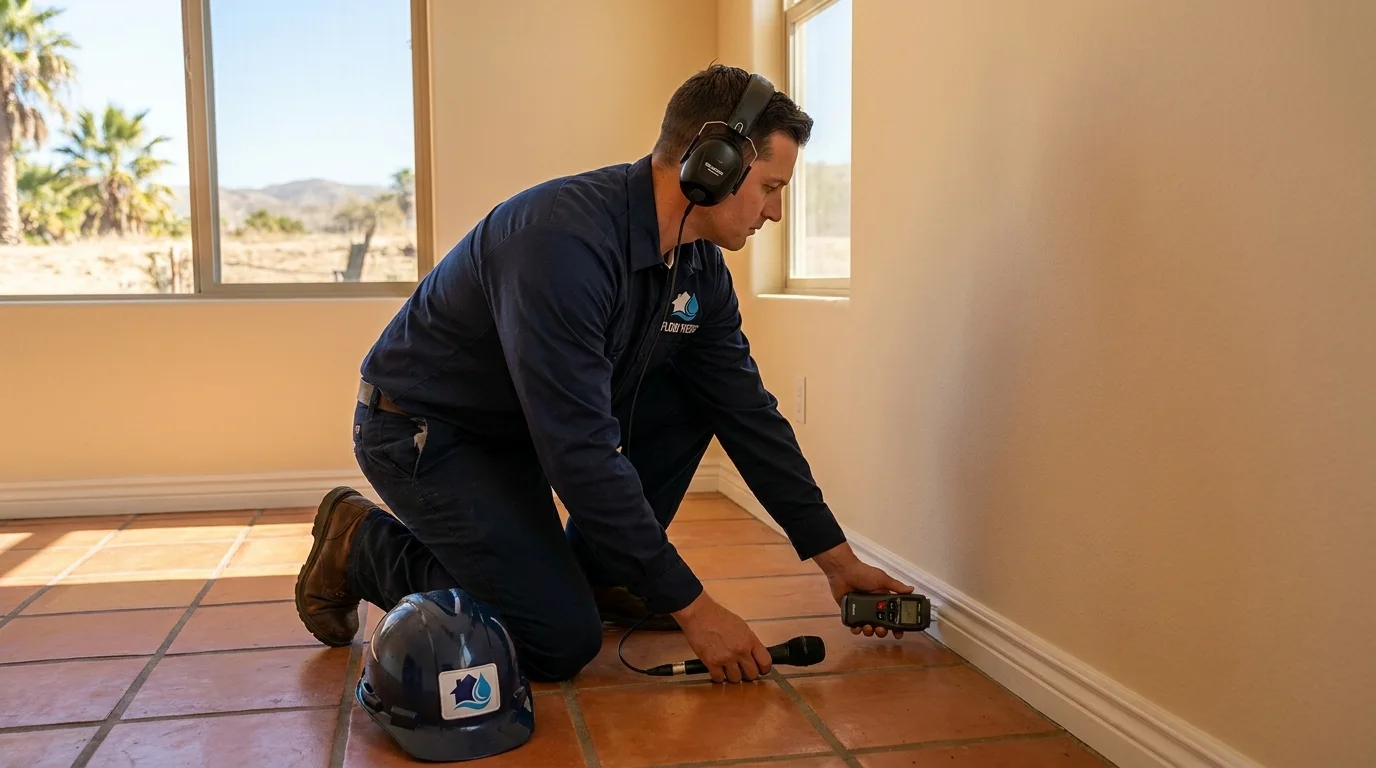
Water Leak Detection in San Diego
24/7 water leak detection in San Diego and surrounding areas. IICRC-certified, insurance billing accepted. Call (855) 204-1124.
What water leak detection actually involves
A leak detection call usually starts with one of three symptoms: a water bill that jumped without explanation, a damp or warm spot on a slab floor, or a faint musty smell with no visible source. None of these tell you where the water actually is. Pipes run inside walls, under slabs, and through crawlspaces, so finding the leak without tearing out drywall or jackhammering concrete requires equipment built for exactly that: acoustic listening devices that pick up the sound of pressurized water escaping a pipe, thermal imaging cameras that read temperature differentials in flooring and walls, and moisture meters that confirm where water has actually traveled versus where it just looks suspicious. On a slab leak, a line pressure test and sometimes a tracer gas test narrow the location to within a foot or two before anyone touches a drill.
Most non-invasive leak detection visits run one to two hours depending on the size of the structure and how many fixtures and lines need to be isolated. The goal is always the same: confirm there is a leak, confirm roughly where it is, and give the homeowner a clear next step, whether that’s a plumber repair, a slab penetration, or in cases where water has already reached framing or flooring, a referral into drying and restoration.
Our process
- Intake and symptom review. We ask what prompted the call, including water bill history, visible staining, sounds of running water, or specific rooms that feel humid or smell off.
- Visual and moisture-meter sweep. We check baseboards, flooring transitions, and wall cavities near plumbing runs with a moisture meter to establish a baseline and rule out obvious sources like a leaking appliance or supply line.
- Acoustic and thermal scanning. For suspected slab leaks or in-wall leaks, we use acoustic listening equipment to isolate the sound signature of escaping water, cross-checked with thermal imaging to spot temperature anomalies consistent with a hot or cold water line leak.
- Pressure isolation testing. We isolate sections of the plumbing system and monitor pressure drop to confirm whether the leak is on the hot side, cold side, or a specific branch line, which narrows the eventual repair location.
- Documented findings and next steps. You get a written summary of what we found, where we believe the leak originates, and photos or readings that support it, which is the same documentation most insurance carriers and plumbers ask for before repair work starts.
What separates a good leak detection response from a bad one
The most common mistake is guessing. A crew that opens drywall or breaks slab based on “it’s probably near the water heater” without acoustic or thermal confirmation can miss the actual leak by several feet, which means more demo, more drying time, and a bigger repair bill than necessary. A hidden water leak in a wall can also masquerade as something else entirely: a slow drain line leak reads very differently on a moisture meter than a pressurized supply line leak, and conflating the two leads to the wrong repair plan.
Adjusters reviewing a claim tied to a hidden leak want to see a timeline: when symptoms started, when detection confirmed the source, and whether the homeowner acted promptly once the leak was identified, since delayed action can affect coverage. They also look for evidence the water intrusion was isolated correctly, not just patched over. A slab leak detection report that includes pressure readings, acoustic findings, and photos gives both the homeowner and the carrier something concrete to work from, instead of a verbal “we think it’s under the kitchen.”
What does water leak detection cost?
Costs vary with how accessible the plumbing is, whether the leak is under a slab versus inside a wall cavity, and how much of the home needs to be scanned. Every property is different, which is why we provide a written scope before any invasive testing or repair referral begins. Homeowners insurance typically covers the cost of locating a leak when it’s tied to a covered water damage claim, though policies vary on whether detection alone is covered absent resulting damage.
| Scenario | Typical range |
|---|---|
| Single-fixture leak check (toilet, sink, appliance line) | $150 - $350 |
| Whole-home moisture and acoustic sweep | $300 - $600 |
| Slab leak detection (acoustic + pressure isolation) | $400 - $900 |
| Thermal imaging scan, larger home or multi-story | $500 - $1,200 |
| Leak detection combined with wall or flooring inspection | $600 - $1,500 |
Seasonal & regional considerations
San Diego’s older housing stock, especially homes built before the 1980s in neighborhoods with copper or galvanized supply lines, is more prone to pinhole leaks as pipe walls thin out over decades. Slab-on-grade construction is common across the county, which means a slab leak often shows up first as a warm spot on tile or a spike in the water bill rather than visible water, since there’s no crawlspace to catch it early. Areas with expansive or shifting soil can also stress buried supply lines over time, which is worth mentioning if you’ve had foundation work done or notice cracking near plumbing runs.
Service area
Flood Fixers provides water leak detection throughout San Diego and the surrounding communities. Whether you’re dealing with a suspected slab leak in an older coastal neighborhood or a wall leak in a newer build further inland, the detection approach is the same: confirm it, locate it, document it.
If your water bill doesn’t add up or you’ve found a damp spot you can’t explain, don’t wait for it to get worse. Call (855) 204-1124 to schedule a water leak detection visit and get a clear answer on what’s happening behind your walls or under your slab.
Frequently Asked Questions
Does homeowners insurance cover water leak detection?
How do you find a leak without cutting into walls or slab?
What's the difference between a slab leak and a leak in a wall?
How long does a leak detection visit take?
What happens after you find the leak?
Can a leak be present even if I don't see any water?
Looking for the best water leak detection company in San Diego?
Flood Fixers provides water leak detection in San Diego, CA and the surrounding area. Customers rate us 5.0 out of 5 stars across 9 Google reviews. We answer calls 24/7 — call (855) 204-1124 for immediate help.
Need Water Leak Detection now?
We respond 24/7 across San Diego and surrounding CA cities.