24/7 Emergency Sewage Cleanup and Sanitization in San Diego
24/7 emergency sewage cleanup and sanitization in San Diego and surrounding areas. IICRC-certified, insurance billing accepted. Call (855) 204-1124.
Raw sewage backing up through a drain, toilet, or floor in San Diego? Call now for emergency service. Sewage contact is a health hazard the moment it touches flooring, drywall, or belongings, and the longer it sits, the more material has to be removed rather than cleaned.
A sewage backup is never just a bigger version of a water leak. Whether it’s coming from a sewer line backup, a failed septic overflow, or a toilet that backed up during a storm, what’s on your floor is classified as Category 3 water, the IICRC’s term for water carrying bacteria, viruses, and waste that can’t be sanitized back to a safe condition if it has soaked into porous material. That distinction drives every decision that follows, from what gets cleaned versus removed to how the space gets cleared for reentry.
What sewage cleanup and sanitization actually involves
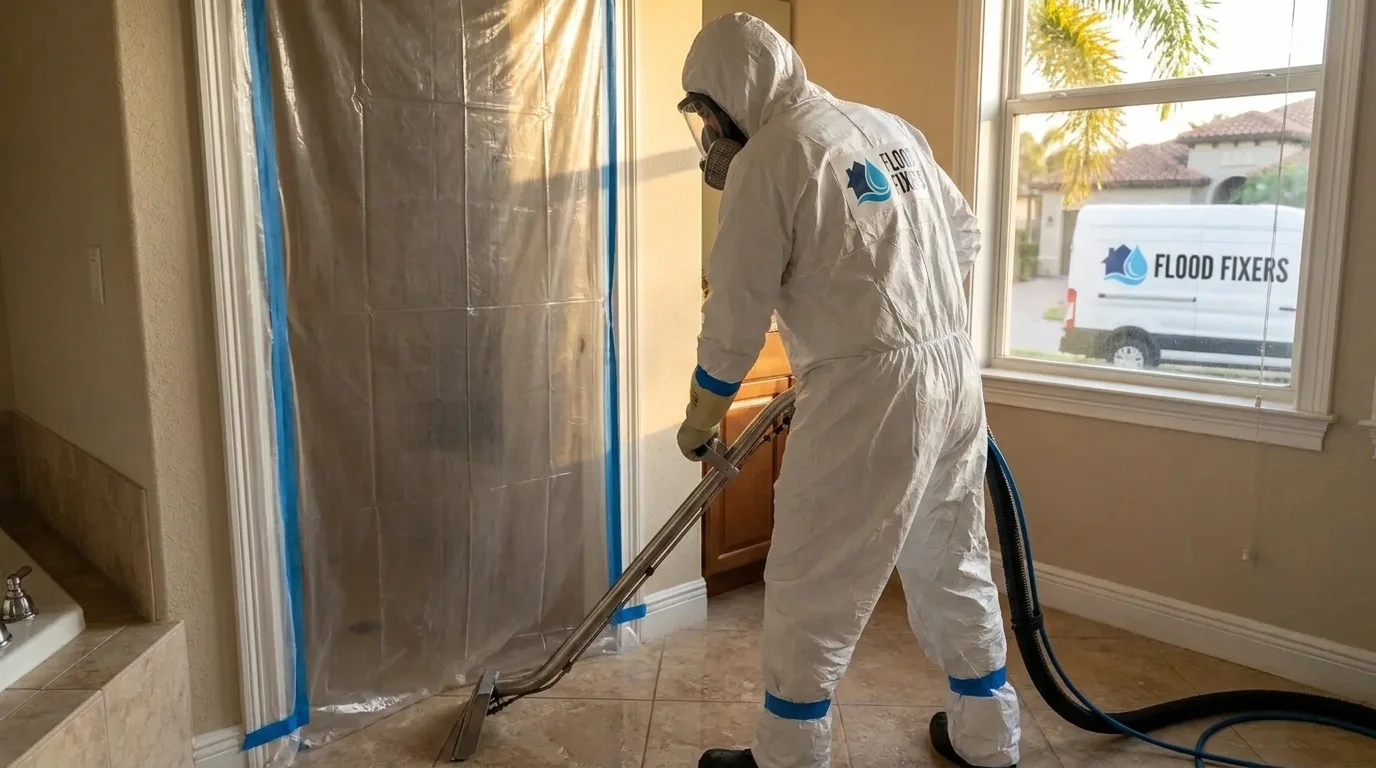
Sewage cleanup starts with identifying the source and shutting off whatever is feeding it, whether that’s a main sewer line, a septic tank, or a plumbing fixture. Crews suit up in PPE before entering the affected area since raw sewage carries pathogens that regular cleaning gear doesn’t protect against. From there, standing waste and contaminated water get extracted, porous materials that absorbed sewage (carpet, pad, baseboards, sometimes drywall and subfloor) get removed, and the remaining structure is cleaned with hospital-grade antimicrobials and enzymatic treatments rated for Category 3 contamination. Drying equipment runs until moisture readings in the remaining structure confirm it’s safe, which typically takes several days depending on how much the sewage penetrated the building materials.
Our process
- Containment and PPE staging. The affected area gets isolated to stop contamination from spreading to clean parts of the home, and crews gear up before any extraction begins.
- Raw sewage removal and extraction. Waste water and solids are pumped and extracted using equipment dedicated to black water work, never cross-used with clean-water jobs.
- Removal of contaminated porous materials. Carpet, pad, insulation, and any drywall or subfloor that absorbed sewage gets cut out and bagged for disposal since these materials can’t be sanitized once saturated.
- Antimicrobial and enzymatic treatment. Remaining surfaces are treated to break down organic contamination and knock down bacterial load, following IICRC S500 guidance for Category 3 losses.
- Drying, air monitoring, and clearance. Dehumidifiers and air scrubbers run until moisture content and air quality readings confirm the space is dry and safe to rebuild.
What separates a good sewage response from a bad one
The most common mistake is under-removal: cleaning carpet or baseboards that should have been discarded because they absorbed black water and can’t be fully sanitized, no matter how much antimicrobial gets sprayed on them. A thorough operator documents contamination with photos and moisture readings before demo, which matters later if an adjuster questions why material was removed instead of cleaned. Cross-contamination is another failure point, dragging contaminated equipment or foot traffic into unaffected rooms instead of maintaining containment. And disposal matters: sewage-contaminated debris has to be bagged and hauled out per local waste handling rules, not just tossed in a regular dumpster. Adjusters reviewing sewage claims generally want to see the category classification noted, a materials-removed list, and moisture logs showing the structure dried to an accepted standard before reconstruction starts.
What does sewage cleanup and sanitization cost?
Costs depend heavily on the source of the backup, how far the water traveled, and how much porous material has to be removed versus cleaned. Every loss is different, so Flood Fixers provides a written scope of work before any cleanup begins. Most homeowners insurance policies cover sudden sewage backups (a pipe that failed or a sewer line that backed up unexpectedly), though coverage often excludes backups caused by neglected maintenance or doesn’t apply without a separate sewer backup rider, so it’s worth checking your policy.
| Scenario | Typical range |
|---|---|
| Toilet overflow, single bathroom, limited to flooring | $500 - $1,500 |
| Sewer line backup, one room, carpet and baseboard removal | $1,500 - $4,000 |
| Multi-room sewage backup with drywall and subfloor removal | $4,000 - $10,000 |
| Septic overflow affecting crawlspace or basement | $5,000 - $12,000 |
| Whole-house backup with extensive demo and reconstruction | $10,000 - $25,000+ |
Seasonal & regional considerations
San Diego’s winter storm season puts real strain on municipal sewer systems, and heavy rain events can cause backups in neighborhoods served by older combined or undersized lines. Many homes in neighborhoods like North Park, Kensington, and South Park were built with clay sewer laterals decades ago, and root intrusion into those aging pipes is a common cause of slow backups that eventually fail all at once. Homes on septic systems in the county’s more rural pockets face a different risk: overflow during saturated soil conditions after heavy rain, when the leach field can’t absorb water as fast as the tank needs to drain.
Service area
Flood Fixers handles sewage cleanup and sanitization throughout San Diego and surrounding communities including Chula Vista, El Cajon, La Mesa, National City, and the broader San Diego County area.
If sewage is backing up into your home right now, stop using water fixtures in the affected area and call Flood Fixers to begin sewage cleanup and sanitization before contamination spreads further into the structure.
Frequently Asked Questions
Does homeowners insurance cover sewage cleanup?
Why does sewage cleanup involve removing more material than a regular water leak?
What should I do while waiting for a sewage cleanup crew?
How is a septic overflow handled differently than a sewer line backup?
How long does the sanitization and drying process take after a sewage backup?
Looking for the best sewage cleanup and sanitization company in San Diego?
Flood Fixers provides sewage cleanup and sanitization in San Diego, CA and the surrounding area. Customers rate us 5.0 out of 5 stars across 9 Google reviews. We answer calls 24/7 — call (855) 204-1124 for immediate help.
Need Sewage Cleanup and Sanitization now?
We respond 24/7 across San Diego and surrounding CA cities.