
Mold Remediation in San Diego
24/7 mold remediation in San Diego and surrounding areas. IICRC-certified, insurance billing accepted. Call (855) 204-1124.
A musty smell that lingers after a slow roof leak, discoloration spreading across a bathroom ceiling, or a crawlspace that never quite dried out after last winter’s rain: these are the signals that mold has moved past a surface nuisance and into something that needs to be contained and removed correctly. In San Diego’s coastal microclimates, where marine layer humidity sits on stucco and dual-pane windows trap moisture indoors, mold colonies can establish in 24 to 48 hours once a material stays wet. Mold remediation in san diego means isolating the affected area, removing what can’t be salvaged, and verifying the air and surfaces are clear before anyone calls the job finished.
What mold remediation actually involves
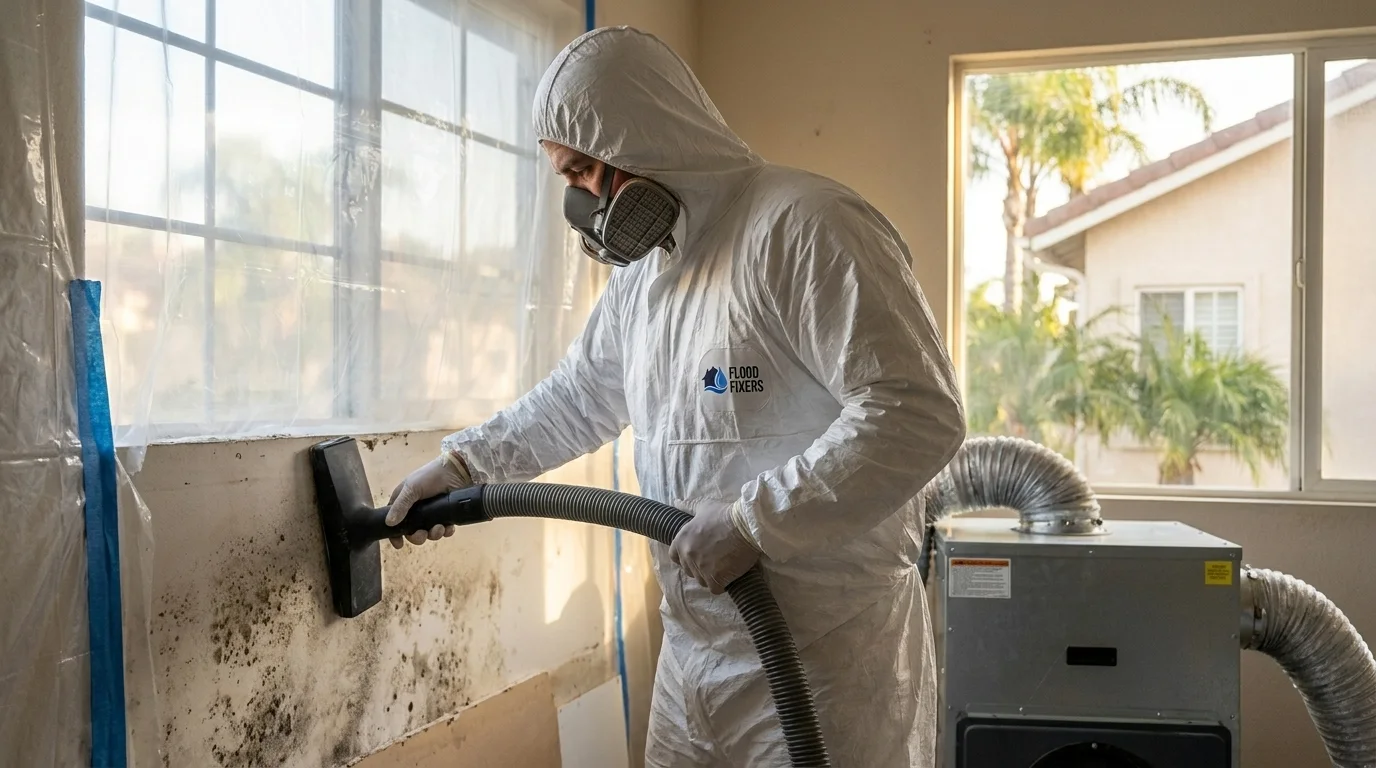
Mold removal is not the same job as a general cleanup. It starts with identifying the moisture source, because treating mold without fixing the water intrusion behind it just buys the colony a few more weeks before it returns. From there, the work involves physical containment of the affected zone, HEPA air filtration to keep spores from migrating into unaffected rooms, removal of porous materials that have absorbed mold (drywall, insulation, some flooring), and treatment of salvageable framing and surfaces. Depending on the square footage and whether the mold has reached wall cavities or HVAC ducting, a typical job runs anywhere from two days to a week and a half. Anything beyond a small, isolated patch under 10 square feet generally calls for sealed poly containment and negative air pressure, consistent with IICRC S520 guidance for mold remediation.
Our process
- Inspection and moisture mapping. We identify the source of intrusion (plumbing leak, roof failure, condensation, grading issue) and use moisture meters to map how far it has traveled behind walls and under flooring.
- Containment setup. Affected areas are sealed with polyethylene sheeting and negative air machines so spores don’t spread to the rest of the home while work is underway.
- Air sampling. Before demolition begins, we document baseline air quality, which gives both us and your insurance carrier a clear before-and-after record.
- Removal and HEPA filtration. Porous, mold-damaged materials are bagged and removed under negative pressure; remaining surfaces are HEPA vacuumed and treated with EPA-registered antimicrobials.
- Clearance testing. Once visible mold and odor are addressed, a third-party industrial hygienist or follow-up air sample can confirm spore counts have returned to a normal range before containment comes down.
What separates a good mold remediation response from a bad one
The most common shortcut in this industry is spraying bleach or a store-bought antimicrobial over visible mold and calling it remediated, without ever opening the wall cavity or confirming the moisture source was fixed. That approach almost always fails because surface treatment doesn’t reach the organic material (drywall paper, wood studs) the mold is actually feeding on. A second common mistake is skipping containment entirely on jobs that are larger than a small bathroom patch, which cross-contaminates HVAC systems and adjacent rooms that were previously clean.
Insurance adjusters reviewing a mold claim typically look for documented moisture readings, photos of the affected area before demolition, and some form of air quality or clearance data. Jobs that skip that documentation tend to get disputed or underpaid, because there’s no record proving the scope of the damage or that the work was completed to a verifiable standard. A written scope of work before demolition starts protects both the homeowner and the claim.
What does mold remediation cost?
Costs vary significantly based on square footage, whether mold has reached wall cavities or HVAC systems, and whether containment and air scrubbing equipment are required for the duration of the job. These are typical industry ranges, not a quote: every property and every mold situation is different, and Flood Fixers provides a written scope of work with pricing before any removal begins. Homeowners insurance typically covers mold remediation when it results from a sudden, covered event like a burst pipe, but usually excludes mold caused by long-term neglect or unaddressed humidity.
| Scenario | Typical range |
|---|---|
| Small bathroom or closet patch, under 10 sq ft | $500 - $1,500 |
| Single room with wall cavity involvement | $1,500 - $4,000 |
| Crawlspace or attic mold remediation | $2,000 - $6,000 |
| Whole-house HVAC contamination | $4,000 - $10,000+ |
| Black mold abatement with containment | $3,000 - $7,500 |
Seasonal & regional considerations
San Diego’s dry season can mask mold problems because low ambient humidity slows visible growth, but the marine layer that rolls in most mornings, especially along coastal neighborhoods and canyon-adjacent homes, keeps relative humidity elevated indoors even when it isn’t raining. Older homes with crawlspace foundations, common in neighborhoods built before the 1980s, are particularly prone to trapped moisture after the rainy season between December and March. A slow leak that goes unnoticed through a dry summer often isn’t discovered until the first winter storm pushes humidity high enough for a colony to become visible.
Service area
Flood Fixers provides mold inspection and remediation throughout San Diego and surrounding communities, from coastal neighborhoods dealing with marine layer humidity to inland areas with older crawlspace construction. Local teams are familiar with the housing stock and climate patterns specific to each part of the county.
If you’re seeing discoloration, smelling a persistent musty odor, or you’ve had a leak that sat too long, request an air quality test and inspection before the problem spreads further into your home’s structure. Call (855) 204-1124 to get a mold remediation scope started.
Frequently Asked Questions
Does homeowners insurance cover mold remediation?
What level of mold remediation requires IICRC S520-compliant containment?
How do you know if mold has spread into the wall cavity or just the surface?
What happens during air sampling, and why does it matter for the claim?
Can I stay in my house during mold remediation?
How long does it take to get mold remediation results back after clearance testing?
Looking for the best mold remediation company in San Diego?
Flood Fixers provides mold remediation in San Diego, CA and the surrounding area. Customers rate us 5.0 out of 5 stars across 9 Google reviews. We answer calls 24/7 — call (855) 204-1124 for immediate help.
Need Mold Remediation now?
We respond 24/7 across San Diego and surrounding CA cities.