
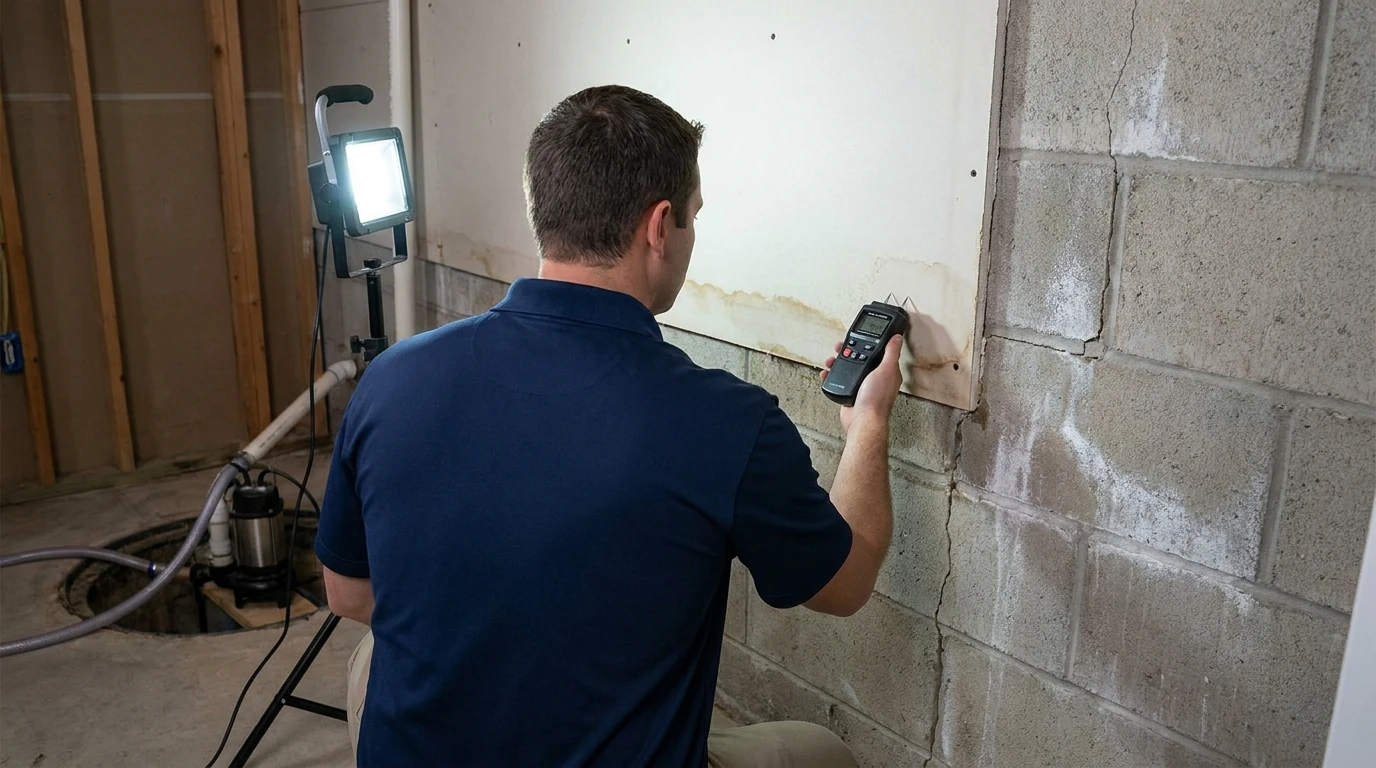
TL;DR: A flooding basement usually traces back to one of eight causes: a failed sump pump, a cracked foundation wall, poor yard grading, a clogged or crushed French drain, a burst or leaking water line, a sewer backup, a failed window well, or a broken irrigation line. Sewer backups and burst pipes are emergencies that call for an immediate shutoff and a restoration call. Grading, sump pump, and window well issues are urgent but rarely dangerous.
If you just walked downstairs to find water creeping across the slab, you want two things fast: what caused it, and whether you have minutes or days to act. San Marcos and most of San Diego County don’t get the seasonal groundwater flooding that drives basement problems in the Midwest and Northeast. Full basements are also less common in local construction here than daylight basements, basement garages, and below-grade utility rooms built into hillside lots. When they do take on water, it’s almost always something mechanical: a pipe, a pump, a sprinkler line, or a sewer lateral, not the water table rising under the house.
What causes a basement to flood?
Most basement flooding comes from one of eight sources, and the fix (and the urgency) is different for each one.
1. A sump pump that failed or lost power. Sump pumps fail from a tripped breaker, a stuck float switch, or a motor that just wore out. If the pump stops during a storm or after an upstream leak, water that it was supposed to carry away backs up into the pit and across the floor instead.
2. A crack in the foundation wall or slab. Hydrostatic pressure, water pushing against the outside of the foundation after rain or irrigation saturates the soil, finds the weakest point in the concrete. Hairline cracks seep slowly; a crack that’s widening or pushing debris into the room is a structural issue, not just a water issue.
3. Grading that slopes toward the house instead of away from it. If the soil around the foundation settles over time, or downspouts dump water right next to the slab instead of carrying it several feet away, rainfall and runoff pool against the wall and work their way in.
4. A clogged, crushed, or missing French drain. The perimeter drain that’s supposed to carry groundwater away from the footing can clog with silt, get crushed by settling soil, or simply never have been installed correctly in an older remodel. Water backs up against the foundation instead of draining off.
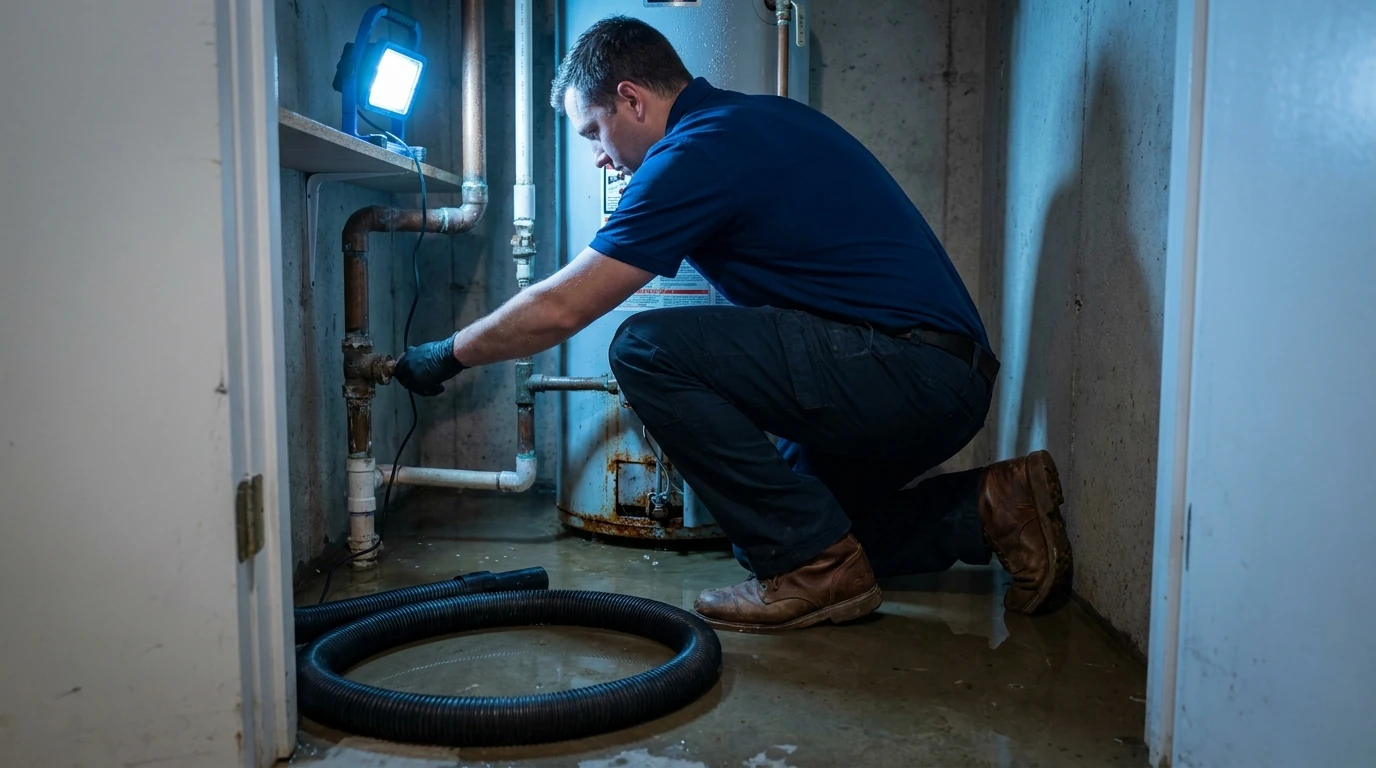
5. A burst or slowly leaking supply line. A supply line to a water heater, washing machine, or bathroom fixture that fails inside or near a basement space can dump hundreds of gallons in under an hour, or leak slowly for weeks before anyone notices the stain.
6. A sewer line backup. When a main sewer line clogs or a municipal line surcharges during heavy rain, wastewater can push back up through basement floor drains. This is Category 3 water, also called black water, under the IICRC S500 standard, and it carries real health risk.
7. A failed window well or egress window seal. Window wells that fill with debris, lose their drain, or have a cracked seal let rainwater pool right against the glass and work its way through the frame.
8. A broken irrigation line or sprinkler head aimed at the foundation. This is the one that surprises people in Southern California. A cracked irrigation line, a sprinkler head that drifted to point at the house, or a drip system left running overnight can soak the soil against a foundation just as thoroughly as a storm, and it happens year-round, not just in the rainy months.
Which of these are true emergencies?
A sewer backup or a burst supply line are emergencies that need a shutoff and a call right now, because they involve contaminated water or an active, worsening leak. The other causes are urgent but usually manageable within hours, not minutes.
If you smell sewage, see dark or gray water, or hear water actively running somewhere you can’t see, shut off the main water supply (or the fixture’s isolation valve if you can find it) and stop using drains in the house. Sewage backups fall under the EPA’s guidance on flooded-home cleanup; don’t wade through it without protective gear, and don’t run a shop vac rated for clean water through it.
A sump pump that’s failed during an active storm, a visibly widening foundation crack, or water rising faster than you can bail it also count as act-now situations, even though the water itself may be clean. In those cases, get the electrical panel checked before anyone stands in standing water, and call a restoration crew or a plumber depending on the source.
Grading problems, a clogged French drain, a slow window well leak, or an irrigation line that’s been quietly saturating the soil are real problems, but they typically give you a day or two to schedule a proper fix rather than forcing an emergency response.
Why is basement flooding different in San Diego County?
Local basement flooding is driven by plumbing and irrigation far more often than by rainfall or groundwater. Most of San Diego County sits on clay-heavy or decomposed granite soils that drain differently than the saturated glacial soils that cause classic Midwest basement seepage, and the region’s below-grade spaces tend to be daylight basements or hillside utility rooms rather than full basements surrounded by water table pressure.
That means a flooded below-grade space in San Marcos, Lake San Marcos, or anywhere else in the service area is more likely to be a broken irrigation line, a water heater failure, or a sewer lateral problem than a seasonal rise in groundwater. It’s worth checking the irrigation controller and the water heater pan before assuming the rain did it, especially if the flooding showed up on a dry week.
If you’re not sure whether what you’re dealing with counts as water damage or flood damage for insurance purposes, the difference between flood damage and water damage explains how that distinction affects your coverage.
What should you do in the first hour?
Shut off the water source if you can identify it, protect anything electrical, and start documenting before you start cleaning. Photos of the water line, the source, and any damaged belongings matter for an insurance claim later, even if you’re confident the cause is covered.
Move anything you can lift off the floor, open a path for airflow if it’s safe to do so, and avoid running a standard shop vac through contaminated water. Standing water left for more than 24 to 48 hours significantly raises the risk of mold growth on drywall and framing, a timeline the EPA’s mold guidance lays out in more detail. If you’re past that window already, basement flooded: who to call first walks through the order to make calls in.
Once the source is controlled, a basement flooding cleanup crew can extract standing water, pull moisture readings from the wall cavities, and set up drying equipment before the damage spreads past what’s visible. That’s the point where calling in a professional crew, rather than running a wet-dry vac and a box fan, usually saves money instead of costing it.
Flood Fixers answers calls 24/7 and sends a crew to assess the source, extract standing water, and document the loss for your insurance carrier before drying equipment goes in. If your basement, garage, or below-grade utility room is actively taking on water, call Flood Fixers at (855) 204-1124 rather than waiting to see if it stops on its own.
About Flood Fixers
Flood Fixers is an IICRC-certified, licensed and insured water damage and restoration company serving San Diego, San Marcos, and the surrounding San Diego County communities. The company’s crews handle water damage restoration, flood damage restoration, burst pipe repair, basement flooding cleanup, and reconstruction, and respond around the clock through a 24/7 emergency line.