
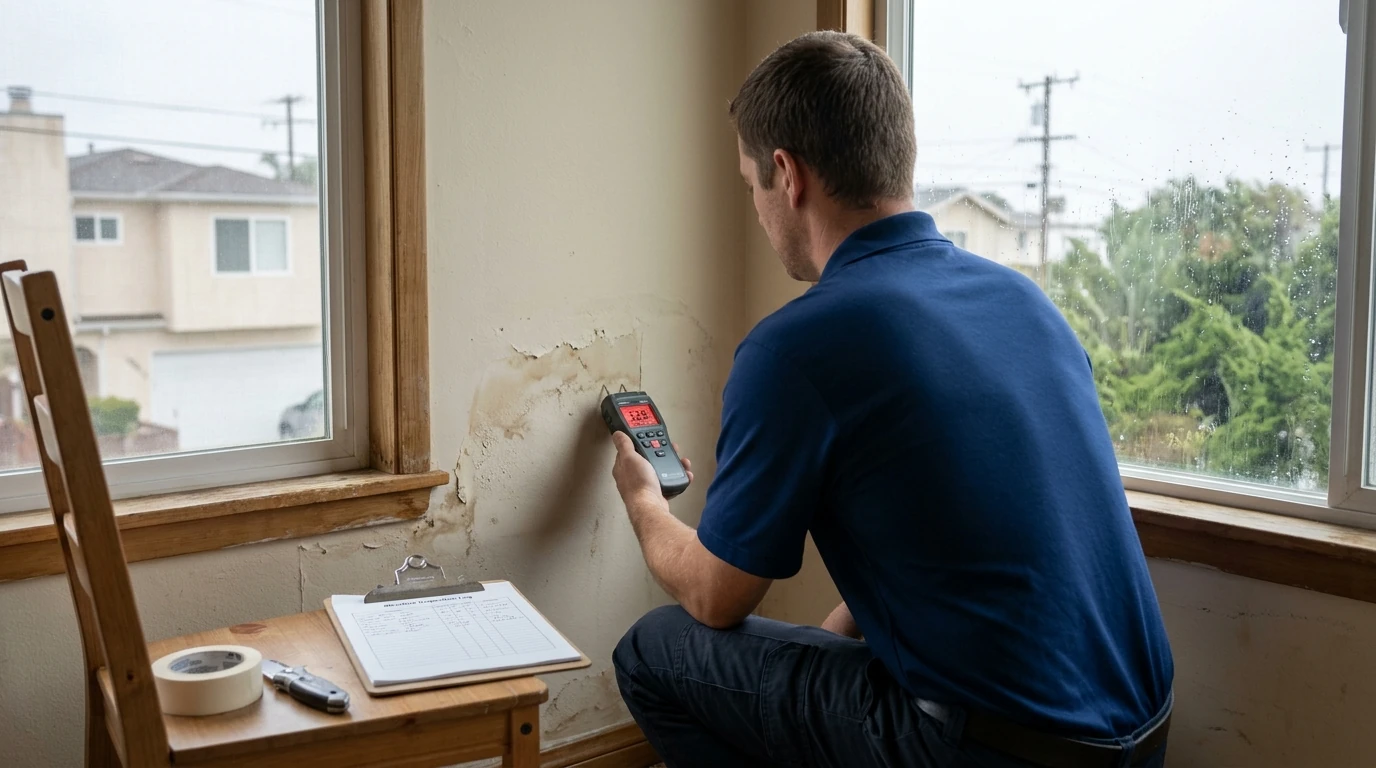
TL;DR: Rain water leaking through a wall, window, or roof penetration in San Marcos is often covered as sudden water damage when wind-driven rain caused the opening, but water seeping up through a slab from groundwater or hydrostatic pressure is typically treated as a flood peril that a standard policy excludes. Call a certified water damage restoration company first to stop the spread and dry the structure, then call whoever caused the leak (a roofer, window installer, or foundation specialist) as a separate job. Wet drywall can start growing mold in 24 to 48 hours, so the first call matters.
If rain is tracking down a wall, pooling at a window sill, or showing up as a damp patch on the slab somewhere in San Marcos tonight, the first call matters more than the fifth. Call Flood Fixers at (855) 204-1124: the team is IICRC-certified, takes calls 24/7, and can get a moisture assessment and drying equipment started before the water spreads further into the drywall, insulation, and flooring underneath.
Who do you call first: a restoration company, a roofer, or your insurer?
Call a certified water damage restoration company first. Stopping water from spreading through drywall, insulation, and flooring is the time-sensitive part; finding and sealing the leak source is a separate, non-urgent call you make once the interior is stabilized.
A restoration crew doesn’t patch roofs or reseal window flashing, and a good one will tell you that plainly instead of pretending to cover it. If the water is coming through a roof penetration, that’s a roofer’s call. If it’s tracking in around a window frame, that’s a window or door installer. If it’s seeping up through a slab after days of rain, that may point to grading or a foundation issue that needs its own specialist. The restoration side is what happens to the structure once water is already inside: moisture mapping, extraction, drying, and the rebuild if materials were cut out.
Call your insurer third, after the restoration crew has documented the damage with photos and moisture readings. An adjuster responds better to a dated moisture log than a description over the phone.
What actually causes rain to leak through a wall, window, or slab?
Rain gets in through small failures that only show up under pressure: wind-driven rain forced past a window seal, a hairline stucco crack behind a downspout, or hydrostatic pressure pushing groundwater up through a slab crack after days of saturation.
San Marcos has a lot of stucco-clad tract construction from the 1980s and 90s, and stucco cracks and worn window caulking are common failure points once a storm brings sustained wind. Hillside lots near Lake San Marcos and properties graded toward the house instead of away from it see more slab and foundation seepage during multi-day rain, because water has nowhere else to go. A single hard rain rarely causes this kind of leak on its own; it’s usually a small existing gap that a storm finally pushes water through.
How fast does mold start after a rain leak, and does that change what you do?
Mold can begin growing on wet drywall within 24 to 48 hours, according to the EPA, so the clock starts the moment the wall gets wet, not when you notice the stain.
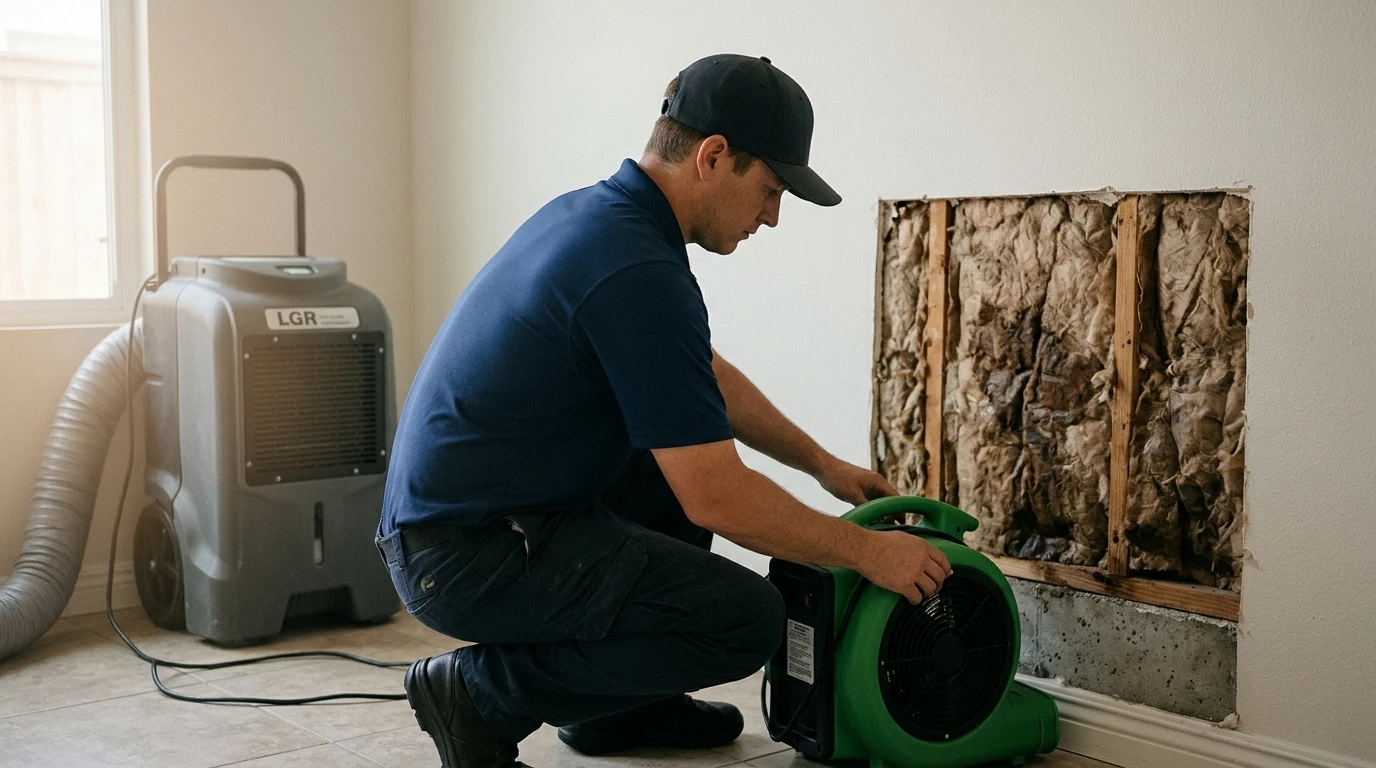
That window is why drying equipment goes in the same day a restoration crew arrives, not after a quote is approved. Air movers and a dehumidifier running against a damp wall for 24 to 72 hours can often save the drywall; a wall that sits wet for a week usually has to come out. If you want the longer timeline on what happens when water sits too long, see How Quickly Does Mold Grow After Water Damage?
Will insurance pay for rain water damage in San Marcos?
Most homeowners policies cover rain damage when wind created the opening, like a storm tearing loose a shingle or breaking a window, but they typically deny damage that built up slowly from worn caulking, cracked stucco, or a roof leak nobody repaired for months.
The line insurers draw is sudden versus gradual. A storm that physically damages your roof or siding and lets rain in that same day is usually a covered peril. A slow seep through an aging window seal that’s been there for two years looks like deferred maintenance, and most standard policies exclude that, per the Insurance Information Institute. Photos from the restoration crew’s first visit, dated and tied to the storm, are what make that case for you. For the fuller breakdown of what a standard policy actually covers, see Does Homeowners Insurance Cover Water Damage?
What happens after you call, and when does the rebuild start?
The visit starts with a moisture assessment: a technician uses a moisture meter to map how far the water traveled behind the wall, not just where it’s visible on the surface.
From there, the crew extracts any standing water, sets up air movers and a dehumidifier, and removes drywall or insulation that’s too saturated to dry in place, following the IICRC S500 standard for drying. Drying typically runs a few days with daily moisture checks before the space is confirmed dry. If materials were cut out, reconstruction is where drywall, paint, trim, and flooring go back in, ideally handled by the same team that mapped the moisture, instead of handing the job to a second contractor who has to re-diagnose everything.
If you’re dealing with an active leak right now, start with a water damage assessment or the San Marcos water damage team and get the drying started before the next storm adds to it.
About the restoration team
This water damage restoration team is IICRC-certified and EPA Lead-Safe certified, operates on a 24/7 emergency basis, and holds a 5.0 rating from local customers. Crews cover San Diego County, including San Marcos, Escondido, Vista, and Carlsbad, and handle water damage restoration, burst pipe repair, flood damage restoration, flooring installation, general contracting, and reconstruction, coordinating the drying and the rebuild under one crew instead of handing the job off between contractors.
Need help now? Call Flood Fixers at (855) 204-1124.