TL;DR: Water damage restoration typically costs between $1,500 and $15,000, depending on how much water entered, what category of water it is, how many square feet are affected, and what materials need to be replaced. Category 1 (clean water) jobs on the lower end run $1,500 to $4,000. Category 3 (sewage or floodwater) losses with structural damage can exceed $15,000. Most homeowners insurance covers sudden, accidental losses, but the specifics matter.
If you’re staring at a soaked floor and trying to figure out what this is going to cost before you call anyone, this breakdown is for you. The range is wide because the variables are real: a slow-drip refrigerator line caught in 48 hours is a fundamentally different job than a sewage backup that sat over a weekend. Understanding those variables helps you evaluate any estimate you receive and know what your insurer is likely to cover.
What Does Water Damage Restoration Actually Cost in 2026?
Most water damage restoration jobs fall between $1,500 and $15,000, with the national average around $3,500 to $5,000 for a mid-sized residential loss. That range reflects the enormous variation in job scope, not padding by contractors.
Here’s a rough breakdown by job size:
- Small loss (under 100 sq ft, Category 1): $1,500 to $3,500. Think a dishwasher leak caught quickly, or a supply line that ran for a few hours. Drying equipment, moisture mapping, and possibly replacing a small section of flooring or drywall.
- Mid-size loss (100 to 400 sq ft, Category 1 or 2): $3,500 to $7,500. A burst pipe that affected a bathroom and hallway, or a washing machine overflow that spread into an adjacent room. Includes extraction, structural drying, and material removal.
- Large or complex loss (400+ sq ft, or any Category 3): $7,500 to $15,000+. Basement flooding, sewer backups, or losses that spread through multiple rooms and floors. Structural drying alone can run 3 to 5 days with multiple air movers and commercial dehumidifiers.
These are mitigation costs only. If reconstruction is needed, new drywall, flooring, cabinetry, that’s a separate line item. See the section on rebuild costs below.
What Factors Drive the Cost Up or Down?
Five variables account for nearly all the price variation in water damage restoration estimates.
1. Water category. The IICRC S500 standard classifies water losses into three categories. Category 1 is clean water from a supply line or appliance, the cheapest to remediate. Category 2 (also called gray water) comes from sources like washing machine discharge or toilet overflow without solid waste, it requires more aggressive drying protocols and antimicrobial treatment. Category 3, also called black water, includes sewage backups, groundwater flooding, and any water that has sat long enough to become grossly contaminated. Category 3 jobs require full PPE, containment, and often the removal of porous materials like drywall and insulation that can’t be dried in place. Expect Category 3 costs to run 40 to 80 percent higher than an equivalent-size Category 1 job.
2. Affected square footage. Restoration pricing is partly per-square-foot. Extraction, drying equipment placement, and moisture monitoring all scale with area. A 200 sq ft bathroom loss is a different job than a 1,200 sq ft basement. Per-square-foot rates for mitigation (not including rebuild) typically run $3 to $8 per square foot, depending on category and materials.
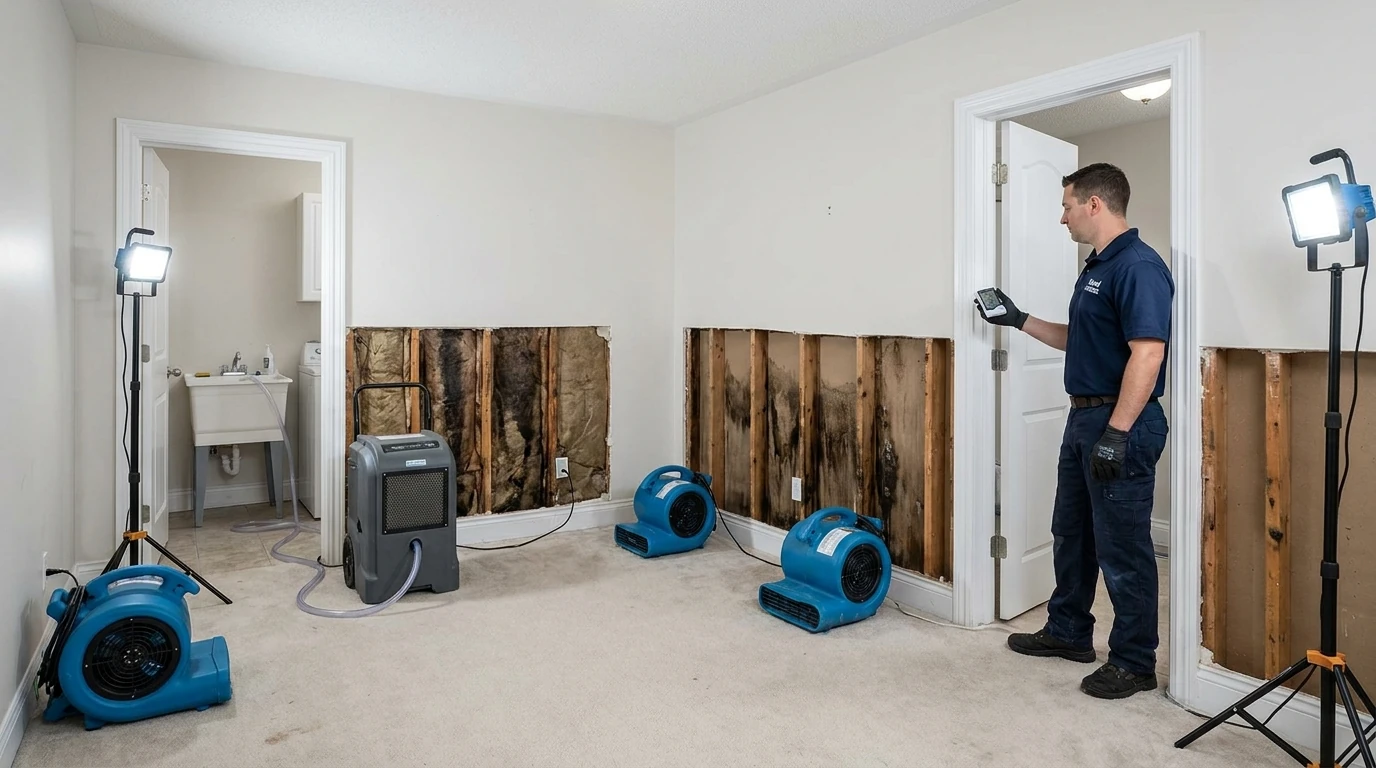
3. Materials affected. Hardwood floors are expensive to dry in place and often need to be replaced. Engineered wood and laminate almost always need to go. Concrete and tile are far more forgiving. Drywall below the waterline is typically removed to allow wall cavities to dry, that’s called flood cutting, and it’s standard practice under the IICRC S500. Insulation behind wet walls is almost always replaced because it holds moisture and can’t be dried effectively. Each material type adds or removes cost.
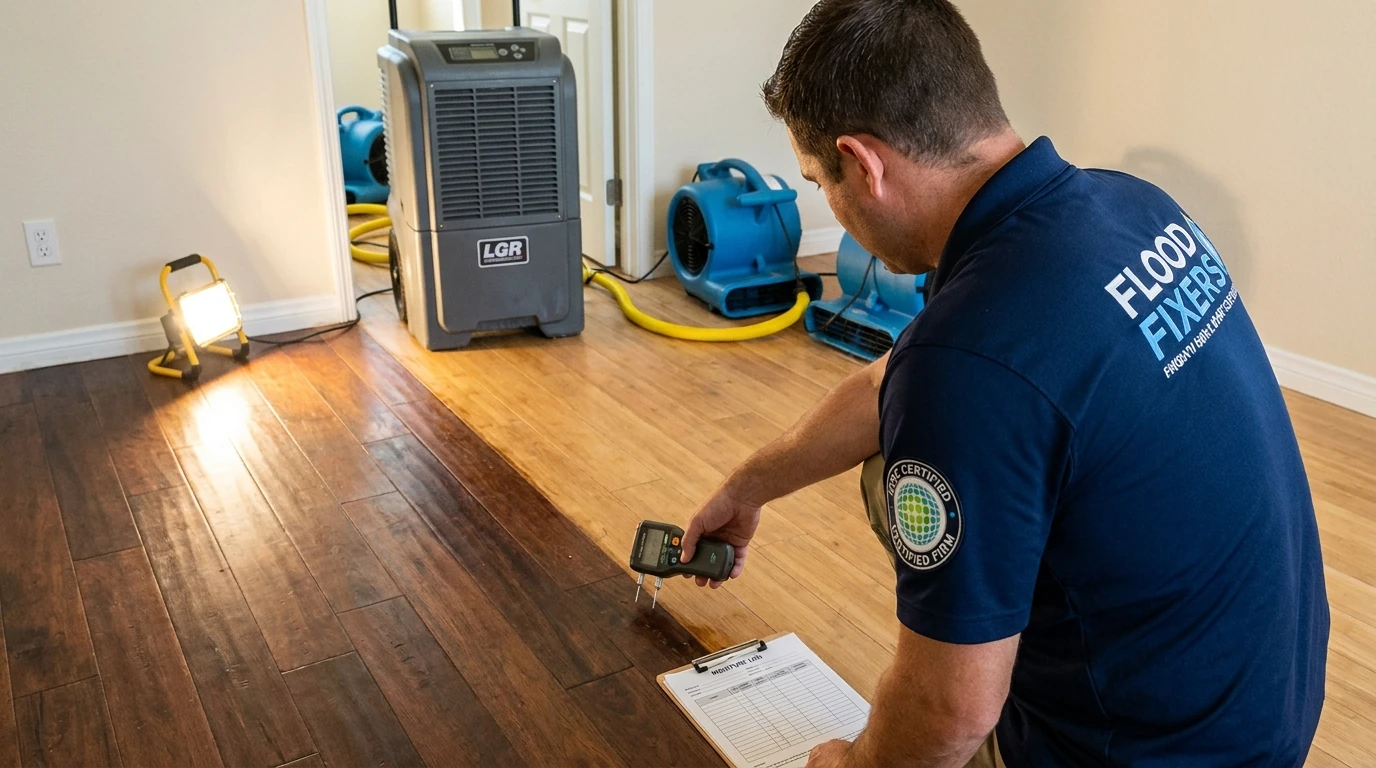
4. Drying time. Standard structural drying takes 3 to 5 days for most residential losses. Each day of drying means another day of equipment rental, commercial LGR dehumidifiers run $100 to $200 per day each, and a mid-size job might need 3 to 6 units plus 10 to 20 air movers. Jobs with dense materials, poor airflow, or high ambient humidity take longer. If you’re reading this in July, note that summer heat can actually accelerate drying in well-ventilated spaces, but humidity matters more than temperature.
5. Mold presence or risk. If water sat for more than 24 to 48 hours before mitigation started, mold growth is possible. Mold remediation is a separate scope of work with its own costs, typically $1,500 to $5,000 for a contained area, more for widespread growth. Our post on how quickly mold grows after water damage covers the timeline in detail. Catching a loss early is the single best way to keep mold off your invoice.
How Much Does Reconstruction Add to the Total?
Mitigation (extraction, drying, demolition) and reconstruction (replacing what was removed) are billed separately. Many restoration companies handle both, Flood Fixers offers reconstruction services so you’re not coordinating two separate contractors.
Typical reconstruction add-ons after water damage:
- Drywall replacement: $2 to $4 per square foot installed, plus finishing and paint
- Flooring: $4 to $12 per square foot depending on material (tile on the low end, hardwood on the high end)
- Cabinetry: Highly variable. A single base cabinet run under a kitchen sink can run $500 to $2,000 depending on whether you’re matching existing stock or custom.
- Insulation: $1 to $3 per square foot for standard batt replacement
- Painting: $2 to $4 per square foot for affected walls and ceilings
A mid-size loss that requires flood cutting and floor replacement in a 250 sq ft area could add $5,000 to $10,000 in reconstruction on top of the mitigation cost.
Does Insurance Pay for Water Damage Restoration?
Homeowners insurance typically covers sudden, accidental water damage, a burst pipe, a failed appliance supply line, an overflowing washing machine. It generally does not cover gradual leaks, maintenance failures, or ground-level flooding (which requires a separate NFIP or private flood policy).
For covered losses, your insurer will typically pay the mitigation and reconstruction costs minus your deductible. The adjuster will review a line-item estimate, which is why having a restoration company that documents thoroughly (moisture readings, equipment logs, daily drying reports) matters for your claim. Our post on homeowners insurance and water damage walks through what’s covered, what’s excluded, and how to document a claim.
Category 3 losses from sewer backups are often excluded from standard policies unless you added a sewer backup rider. Check your declarations page before assuming coverage.
If you’re dealing with flooding from a storm or rising groundwater, that’s a flood insurance claim, not a homeowners claim. FEMA’s National Flood Insurance Program covers structural damage from flooding for policyholders who opted in.
What Should You Do Right Now?
The most expensive thing you can do after water damage is wait. Every hour of standing water increases the affected area, raises the category risk, and moves mold growth closer to the 24-hour threshold. The steps that keep costs down are also the steps that protect your claim:
- Stop the source if you can (shut off the water supply valve or main).
- Document everything with photos and video before anything is moved or dried.
- Call a restoration company for an emergency assessment, not a general contractor.
- Notify your insurance carrier and get a claim number before major work begins.
If you’re not sure what you’re dealing with yet, our burst pipe emergency checklist covers the first steps in detail.
For a written scope and cost estimate on your specific loss, contact Flood Fixers, we respond 24/7 and can typically have a crew on-site for an initial assessment the same day.
About Flood Fixers
Flood Fixers is an IICRC Certified, EPA Lead-Safe Certified restoration company serving San Diego and surrounding communities including Chula Vista, Oceanside, Escondido, Carlsbad, and El Cajon. Licensed and insured, the team handles water damage mitigation, flood cleanup, burst pipe response, basement flooding, and full reconstruction. Available 24/7 for emergency response. Reach the team at (855) 204-1124.