
24/7 Emergency Water Damage Restoration in Vista
24/7 emergency water damage restoration in Vista, CA. IICRC-certified, insurance billing accepted. Call (855) 204-1124.
Our IICRC-certified technicians are dispatched from our San Diego, CA headquarters and are typically on-site in Vista within 60 minutes of your call.
Water damage emergency in Vista? We answer 24/7. Call now and our crew heads out to stop the water and start drying your property.
Vista sits in one of North San Diego County’s more climatically unpredictable corridors, marine layer mornings, dry Santa Ana winds by afternoon, and occasional winter downpours that overwhelm drainage systems built for a drier era. When a water heater fails overnight, a supply line lets go behind a cabinet, or a storm pushes water under a slab, the damage clock starts immediately. Mold can begin colonizing porous material in as little as 24 to 48 hours, and in Vista’s older ranch-style homes, many built during the city’s growth boom of the 1960s and 70s, that means saturated subfloor and wall cavities that hide moisture long after the surface looks dry.
Why Vista Properties See More Water Damage Than Owners Expect
Vista’s topography works against homeowners in ways that aren’t obvious until something goes wrong. The city’s rolling terrain funnels runoff toward low-lying streets and foundations, particularly in established residential pockets where original grading has settled over decades. Older neighborhoods closer to downtown Vista, streets lined with single-story homes on concrete slabs, frequently see water intrusion at the slab perimeter when soil becomes saturated after a heavy rain event. The clay-heavy soil common across much of inland North County doesn’t drain quickly; it holds water against foundations and under slabs for days after a storm passes.
The housing stock adds another layer of complexity. Many Vista homes in the 92083 and 92084 ZIP codes were built before modern moisture barriers were standard practice. Crawl spaces, if present, are often inadequately vented. Galvanized supply lines in homes from the 1960s corrode from the inside out and fail without warning. When those pipes go, water spreads fast through original hardwood floors, plaster-over-lath walls, and insulation that was never designed to be dried in place.
Our Water Damage Restoration Process in Vista
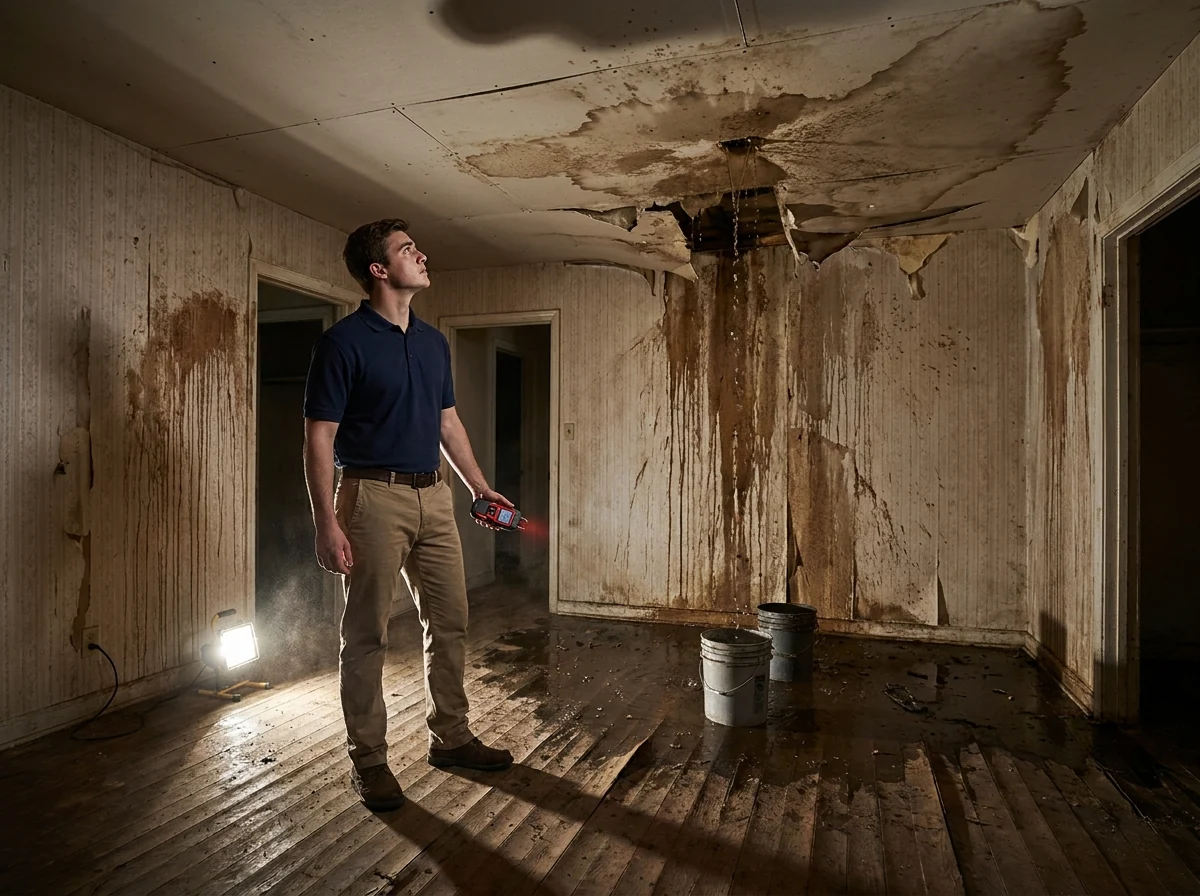
When Flood Fixers arrives on-site, the first priority is stopping ongoing damage, shutting off the water source if it’s still active, then mapping the full extent of saturation before a single piece of equipment is placed. We use thermal imaging cameras and calibrated moisture meters to trace water migration behind walls and under flooring. In Vista’s slab-foundation homes, that often means checking for moisture wicking up through the concrete itself, which standard visual inspection misses entirely.
Extraction comes next. Truck-mounted extraction units pull standing water from flooring and cavities far more efficiently than portable units alone. Once bulk water is removed, we establish a drying system using commercial-grade dehumidifiers and high-velocity air movers positioned to create directed airflow through the structure. Drying typically takes three to five days depending on material density and ambient humidity, Vista’s coastal influence means outdoor humidity can slow evaporation, so we monitor conditions daily and adjust equipment placement based on psychrometric readings, not guesswork.
Documentation runs throughout the entire process. Every moisture reading is logged with a timestamp and location, which matters when you’re filing a claim with your homeowner’s insurance carrier.
Response Time to Vista from San Diego
Flood Fixers dispatches from San Diego, and Vista is a direct run up Interstate 15, typically 35 to 45 minutes under normal traffic conditions. From the I-15 and Highway 78 interchange, we can reach most of Vista’s residential areas within 10 to 15 minutes. For properties on the eastern side of the city near Shadowridge or off East Vista Way, we route via the 78 to avoid surface-street delays. Call (855) 204-1124 and a technician will give you an honest ETA based on current conditions, not a marketing promise.
Vista Insurance & HOA Coordination
Many Vista properties in planned communities, particularly those developed in the late 1980s and 1990s, fall under HOA oversight that can affect how restoration work is scoped and documented. Some HOAs require advance notice before exterior work begins or have specific vendor approval processes. We’ve worked through these situations before and can communicate directly with your HOA management company to keep the project moving without putting you in the middle of a paperwork dispute.
On the insurance side, we document damage using industry-standard software that adjusters recognize, which reduces back-and-forth and speeds up approvals. We work with all major carriers and can speak directly with your adjuster if questions come up about scope or methodology.
Local Note
One thing that catches Vista homeowners off guard: the city’s older ranch homes with original terrazzo or saltillo tile floors often show no visible surface damage after a water event, because those materials don’t warp or bubble the way laminate does. But the mortar bed underneath, sometimes two to three inches thick, absorbs and holds enormous amounts of water. We’ve pulled moisture readings from mortar beds that were still saturated two weeks after the visible leak was repaired. If your home has original tile floors and you’ve had any kind of water event, don’t assume the floor is fine just because it looks dry on top.
If you’re dealing with water damage in Vista right now, whether it’s a burst pipe, an appliance failure, or storm intrusion, call Flood Fixers at (855) 204-1124. We’ll walk you through what’s happening in your home, give you a realistic picture of the drying timeline, and get the right equipment in place before the damage compounds.
Serving Vista from our San Diego headquarters — ★ 5.0 · 9 Google reviews
“Absolutely blown away by Flood Fixers! ⭐⭐⭐⭐⭐ They swooped in after our disaster like a team of caffeinated superheroes and brought a level of creative flair I didn’t even know my home needed. The floors? Let’s just say they now have a one-of-a-kind, “you’ll never see this anywhere else” finish. The…” — Jeffrey, May 2026Read our reviews on Google →
Water Damage Restoration in Vista: Service Coverage
Frequently Asked Questions
How fast can you arrive for water damage restoration in Vista?
How quickly can Flood Fixers reach a water damage emergency in the 92083 ZIP code?
Vista's soil holds water for a long time after rain — does that affect how long structural drying takes?
My Vista home was built in the 1960s and has original plaster walls — does that change the water extraction process?
Does my Vista HOA need to be notified before water damage restoration work starts on my property?
How do I know if water has reached under my slab in a Vista ranch-style home?
Will my homeowners insurance cover water damage restoration in Vista?
Watch: Water Damage Restoration in Vista
Water Damage Restoration response in Vista
Most Vista calls see a technician on-site within 60 minutes from our San Diego headquarters.